


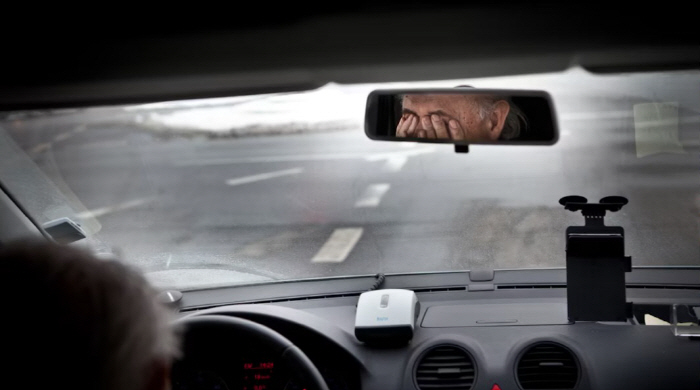
[Sportschosun Reporter Jang Jong-ho] Drunk driving remains a persistent crime that continues to threaten society. The moment a person gets behind the wheel while intoxicated, the car turns into a weapon. The victim is not the driver but innocent citizens, and the damage can destroy an entire family’s life. The social cost is also enormous. Medical expenses, insurance payouts, and accident-related costs are ultimately borne by the public.
The problem is that drunk driving often does not end with a single mistake. In the National Police Agency’s 2025 data on repeat drunk-driving offenders, there were offenders caught seven times or more. If someone keeps driving again even after being punished, it is hard to explain that behavior simply as carelessness or a lack of willpower.
Alcohol impairs the brain’s judgment, attention, reaction speed, and motor control. Even more dangerous is that it also reduces a person’s ability to objectively recognize their own condition. Although actual driving ability has declined, the person may still think, "This is fine," or "It’s a short distance, so it’s not a problem."
Heo Seong-tae, director of the psychiatry department at Da Sarang Central Hospital, said, "Drunk driving is clearly a crime and an act that carries responsibility toward victims and society." He added, "However, repeated drunk driving should also be viewed as a medical issue, because alcohol disrupts the brain’s decision-making circuits and impairs impulse control."
Repeated drinking can also affect how the brain judges danger and stops behavior. Even if a person knows they should not drive after drinking, repeated episodes of driving after drinking can make them more likely to fall back on familiar behavior rather than stop and assess the risk.
In particular, the orbitofrontal cortex, a part of the frontal lobe, plays a role in predicting the consequences of behavior and stopping dangerous actions. It helps a person think about the risks of drunk-driving accidents, punishment, license revocation, and financial loss, and conclude, "I should not drive now." But this function can weaken in people with alcohol use disorder or those who repeatedly binge drink over long periods.
When the orbitofrontal cortex is impaired in this way, even past punishment or financial losses from drunk driving may no longer work as a brake on current behavior. Despite knowing the risks, a person may still get behind the wheel again, thinking, "Just this once is okay."
In an internal survey conducted by Da Sarang Central Hospital of 224 drivers hospitalized for alcohol use disorder treatment, 135 people, or 60.3 percent, said they had driven under the influence. Among them, the share of repeat offenders who had driven drunk two times or more was also high, confirming the significant risk of repeated drunk driving.
The issue also comes up frequently in family counseling sessions. Families of patients with alcohol use disorder often complain about the financial burden caused by drunk driving, including fines, settlement payments, license revocation, job loss, and accident-related costs. Drunk driving can become a social problem that threatens not only the driver but also the family’s livelihood and the lives of others.
Heo Seong-tae advised, "Habitual drunk driving cannot be viewed on the same level as ordinary traffic violations." He added, "To reduce repeat offenses, we need strict punishment, but we also need to accurately assess whether alcohol use disorder is present and combine that with treatment, abstinence programs, and family counseling."
Jang Jong-ho bellho@sportschosun.com