

[Sportschosun Jang Jong-ho] A new possibility has opened up for the early screening of pediatric emergencies such as intussusception using only abdominal X-rays.
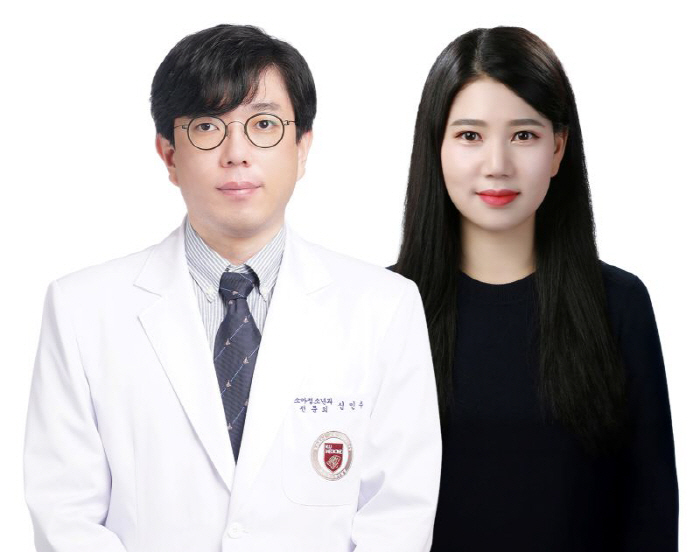
A research team led by Professor Minsu Shin of the Department of Pediatrics and Adolescent Medicine at Korea University Ansan Hospital and Professor Ham, Sung Won of the Biomedical Research Center developed an artificial intelligence (AI) model that screens for intussusception and splenomegaly using only pediatric abdominal X-ray images, and proved its performance.
Intussusception is the most common cause of bowel obstruction in infants and young children. It occurs when part of the intestine folds into an adjacent section, and if treatment is delayed, it can lead to bowel necrosis or perforation. Rapid diagnosis is critical, but early detection is often difficult because symptoms are nonspecific, such as abdominal pain, vomiting, and irritability. It is usually diagnosed with abdominal ultrasound, but the test is often unavailable or delayed depending on the examiner's skill and the clinical setting.
Splenomegaly can be an early sign of various systemic diseases, including infectious diseases, blood disorders, liver disease, and malignant tumors, but it is often difficult to assess accurately through physical examination alone. It is usually confirmed with ultrasound or CT scans, but access to testing and reading experience can limit diagnostic accuracy.
The study used 26,552 pediatric abdominal X-ray images taken from 2012 to 2022 at seven tertiary hospitals in South Korea. The team developed a deep learning-based AI model and conducted internal validation using data from six of the institutions. The remaining institution's data, which were not used for AI training, were classified as an external validation dataset.
In internal validation, the model correctly identified about 83% of patients with intussusception and about 81% of those with splenomegaly. It also distinguished normal patients at rates of about 85% and 83%, respectively.
In external validation, it identified about 80% of intussusception cases and about 78% of splenomegaly cases, while also distinguishing normal patients at levels of 83% to 84%. The results show that the AI model is not optimized only for a specific hospital setting, but could also be used in a variety of clinical environments.
The model's overall diagnostic performance, measured by the area under the curve (AUC), was 0.851 in internal validation and 0.818 in external validation for intussusception. For splenomegaly, the AUC was 0.834 and 0.806, respectively. In general, an AUC above 0.8 is considered to indicate excellent performance.
Professor Minsu Shin said, "The greatest significance of this study is that it confirmed the possibility of early screening for pediatric emergencies such as intussusception and splenomegaly using only a simple abdominal X-ray, which is commonly performed at most medical institutions." He added, "We expect this to help medical staff make faster decisions and protect the golden time for patients, especially in settings where pediatric imaging specialists are scarce or ultrasound cannot be performed immediately."
Professor Ham, Sung Won also said of the findings, "We verified the stability and generalizability of an AI system for screening pediatric emergencies based on large-scale data collected from different medical institutions." He added, "We will continue expanding the scope of our research to various pediatric diseases and develop medical AI technologies that can be used in real clinical settings."
Meanwhile, the study was published in the official international journal of the Society for Imaging Informatics in Medicine (SIIM), the Journal of Imaging Informatics in Medicine (JIIM).
Jang Jong-ho, bellho@sportschosun.com