

[Sportschosun Jang Jong-ho] Lung cancer, often called the "silent fear," is the leading cause of cancer deaths in South Korea.
It also ranks second among cancers in men, behind prostate cancer.
According to Statistics Korea, lung cancer accounts for about 22% of all cancer deaths. In other words, more than one in five cancer deaths is caused by lung cancer. Thanks to advances in medical technology, the five-year survival rate has improved from the 10% range in the past to around 40% recently. Even so, it remains a cancer in which early diagnosis and the right treatment strategy largely determine the prognosis.
Recently, more women who do not smoke have also been diagnosed, driven by environmental factors such as secondhand smoke and fine dust. Family history also plays a role. According to several meta-analyses and large-scale epidemiological studies, people with a first-degree relative who has lung cancer face a risk that is about two to three times higher.
One reason lung cancer is often detected late is that the lungs have very few sensory nerves that feel pain. Even as the cancer progresses, pain may not appear, so many patients are diagnosed only after the disease has already advanced. Symptoms such as coughing and fatigue are often nonspecific, making the disease easy to miss if it is not suspected early. People with risk factors such as a smoking history or family history should consider screening for lung cancer.
Fortunately, since lung cancer screening was introduced into the national cancer screening program in 2019, more cases have been detected early through low-dose CT. Because it can identify small nodules that are difficult to see on X-rays, regular screening is recommended for high-risk groups even if they have no symptoms. In early-stage lung cancer detected by low-dose CT, the five-year survival rate is known to exceed 80%, indicating a much better prognosis.
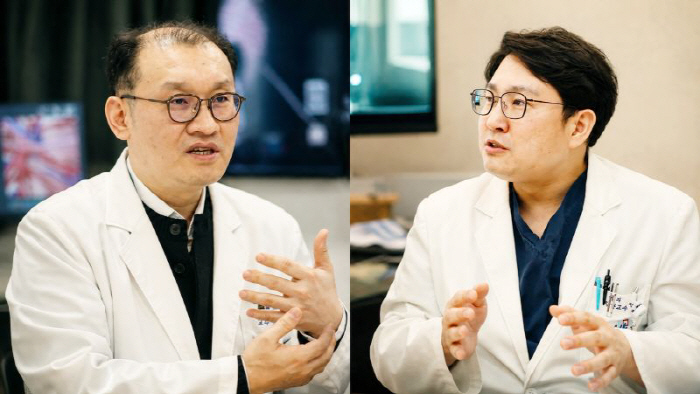
Heo Jin-young, a professor in the Department of Pulmonology and Allergy at Chung-Ang University Gwangmyeong Hospital, explained, "The surest way to cure lung cancer is not to wait until symptoms appear, but to find it early through screening."
Lung cancer is broadly divided into non-small cell lung cancer and small cell lung cancer, with non-small cell lung cancer accounting for about 80% to 85% of cases. In the past, treatment decisions were relatively simple, with surgery or chemotherapy chosen depending on the stage. Today, however, doctors must also consider genetic mutations such as EGFR and ALK, PD-L1 expression levels, and the patient's lung function and overall condition. Even patients at the same stage may require different treatment strategies.
Professor Han Guk-nam of the Pulmonology and Esophageal Surgery department at Chung-Ang University Gwangmyeong Hospital said, "Stage 2 and 3 lung cancer, in particular, is the most complex area in terms of treatment strategy." He added, "Depending on the patient's condition, doctors must decide strategically whether to shrink the tumor first and then operate, or to proceed with surgery first." He noted that the use of immunotherapy as neoadjuvant treatment before surgery is also increasing. In this way, lung cancer treatment is becoming less about what to do and more about the order in which to do it.
For early-stage lung cancer, the standard operation is lobectomy, but segmentectomy may also be chosen depending on the tumor's size, location, and the patient's lung function. Lobectomy is known for producing excellent long-term outcomes, while segmentectomy has the advantage of preserving more healthy lung tissue. However, if the extent of resection is insufficient, the risk of local recurrence can increase, so a comprehensive assessment of the patient's condition is necessary.
These treatment decisions are made through multidisciplinary discussions involving Pulmonology and Esophageal Surgery, the Department of Pulmonology and Allergy, Hemato-Oncology, the Department of Radiology, and the Department of Radiation Oncology.
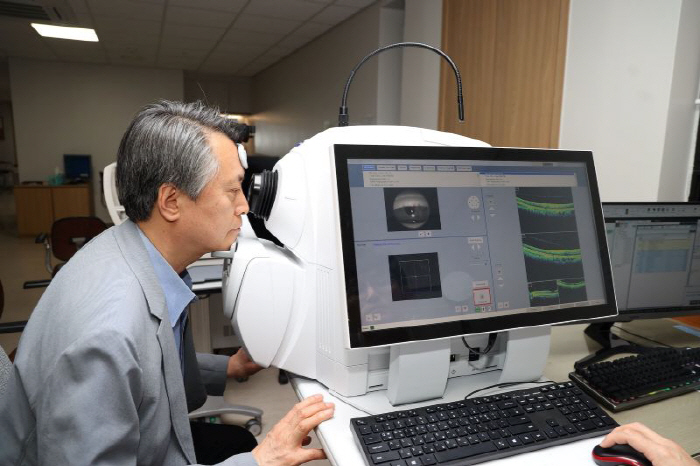
Chung-Ang University Gwangmyeong Hospital operates a multidisciplinary lung cancer care system centered on Professor Han Guk-nam of Pulmonology and Esophageal Surgery, Professor Heo Jin-young of the Department of Pulmonology and Allergy, and Professor Lee Dae-geun. Through its "one-stop lung cancer care" system, which connects diagnosis, treatment decisions, surgery, chemotherapy, and follow-up care into a single process, the hospital is minimizing the time needed to decide on treatment.
Once imaging studies, biopsy results, and molecular genetic test results are collected, the treatment strategy is quickly finalized through multidisciplinary discussion, and the surgical and medical teams coordinate the treatment schedule at the same time. From the diagnostic stage, the system reviews both surgical feasibility and systemic treatment options together.
Professor Han said, "Lung cancer treatment is not simply about deciding whether to operate. It is the process of designing the most favorable treatment sequence for each patient." He added, "With the development of immunotherapy and targeted therapy, treatment options have become more diverse, so it is important to build a strategy by comprehensively analyzing the patient's stage and molecular genetic characteristics."
Because lung cancer surgery removes part of the lung, it is important to preserve and restore lung function sufficiently after the operation. From the preoperative stage, doctors must carefully assess how the patient's lung function will affect daily life after surgery. To do this, they perform basic pulmonary function tests as well as exercise stress tests to determine whether surgery is possible and how much tissue should be removed.
During the immediate postoperative hospitalization period, active sputum clearance and respiratory rehabilitation are important. When patients repeatedly take deep breaths using breathing devices, it helps the remaining lung expand fully. Proper pain control after surgery is also a key part of care.
Early ambulation and respiratory rehabilitation programs can also help maintain lung ventilation and speed recovery. The multidisciplinary team at Chung-Ang University Gwangmyeong Hospital continuously monitors patients' breathing status and provides customized rehabilitation treatment to prevent complications such as pneumonia or atelectasis after surgery.
Heo said, "Lung cancer surgery is not simply about removing the tumor. It is a treatment that also includes the process of helping the patient regain stable respiratory function after surgery." She added, "Systematic management from preoperative evaluation to postoperative rehabilitation is important for improving long-term treatment outcomes."
Lung cancer treatment is no longer the domain of a single department. Rather than separating surgery, chemotherapy, and immunotherapy, the era has come to plan the entire treatment process as one integrated flow. The key to lung cancer treatment is no longer deciding whether to operate. What matters now is analyzing each patient's cancer characteristics and overall condition to find the most effective treatment strategy and sequence.
Jang Jong-ho, bellho@sportschosun.com