

[Sportschosun] Reporter Jang Jong-ho reported that South Korea has a total of more than 109,000 people with kidney disabilities, and that Gyeonggi Province has the largest number of dialysis patients by region, with 19,410. The Korean Society of Nephrology, chaired by Park Hyung-cheon, announced the 'Chronic Kidney Disease-Dialysis Specialist Fact Sheet 2026' at its annual academic conference, KSN 2026.
The fact sheet, published for the first time in two years since 2024, combines data on chronic kidney disease prevalence released by the Korea Disease Control and Prevention Agency (KDCA) in March this year and statistics on people with kidney disabilities from the Population Census.
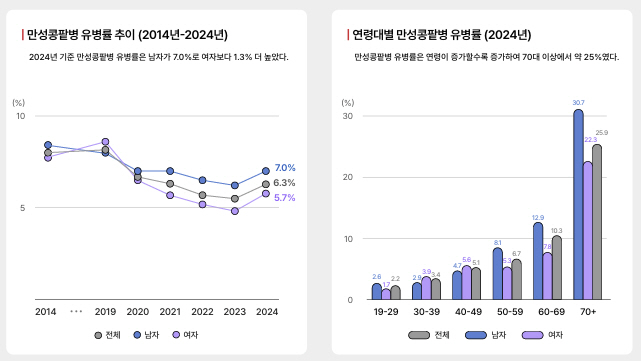
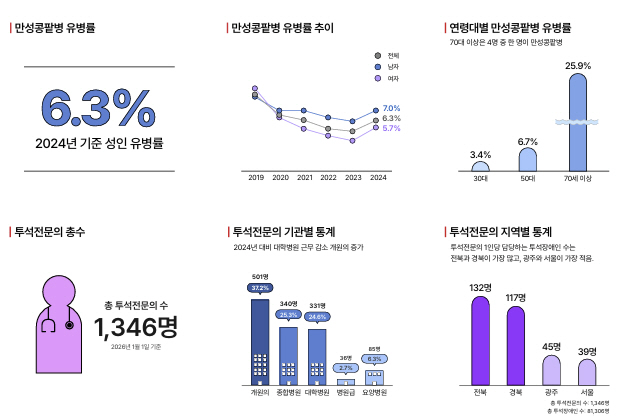
As of 2024, the age-standardized prevalence of chronic kidney disease among adults aged 19 and older was 6.3% overall, with a higher rate among men than women (7.0% for men, 5.7% for women).
The prevalence of chronic kidney disease rose with age and was about 25% among people in their 70s and older. It fell from 8.0% in the 2019 report to 5.5% in 2023, but the 2024 national health statistics showed a rebound to 6.3%, marking an increase from the previous year.
Based on 2024 Population Census data, South Korea had a total of 109,035 people with kidney disabilities, including 81,306 dialysis patients classified as having 'severe kidney disability' and requiring hemodialysis or peritoneal dialysis. That translates to a high rate of 1,569 per 1 million people.
By region, Gyeonggi Province had the most dialysis patients at 19,410, while Sejong Special Self-Governing City had the fewest at 351.
By contrast, when the number of dialysis patients in each region was divided by the number of dialysis medical institutions registered with HIRA, Ulsan had the highest number at 74 patients per institution, followed by Daejeon and Gangwon State with 66 each. Daegu (52) and Seoul (54) were found to have relatively more dialysis medical institutions compared with their dialysis patient populations.
The number of dialysis specialists responsible for dialysis treatment for patients with end-stage kidney disease stood at 1,346, meaning each specialist cares for about 40,000 people.
The number of dialysis specialists increased by about 75 from 2024, but the pace of growth slowed somewhat amid the medical crisis, which reduced the number of specialists and fellows.
A dialysis specialist refers to a doctor who is either a nephrology subspecialist among internal medicine or pediatrics specialists, or a physician who completed at least one year of training in hemodialysis after obtaining board certification in internal medicine or pediatrics. It also includes doctors who earned their internal medicine or pediatrics certification before the subspecialty system was introduced and have at least three years of experience in hemodialysis treatment. They are frontline medical resources whose expertise helps save the lives of critically ill patients.
According to a large domestic cohort study released in 2022, hemodialysis centers where dialysis specialists participated in treatment had significantly lower mortality rates than centers without such specialists.
A follow-up of more than 35,000 dialysis patients from 2016 to 2019 found that the crude mortality rate at centers with dialysis specialists was 69.6 deaths per 1,000 person-years, lower than the 85.8 deaths at centers without specialists. Even after adjusting for various risk factors, the risk of death remained about 10% to 13% higher in non-specialist care settings.
Shin Ho-sik, director for dialysis at the Korean Society of Nephrology and a professor at Kosin University College of Medicine, said, "Chronic kidney disease is one of the first diseases that should be checked in an aging population, and patients with end-stage kidney disease on dialysis are linked to a wide range of other conditions. Dialysis specialists can review a patient's overall condition and help improve survival rates." He added, "Because national policy must be based on accurate data, I hope that the national registration system included in the Chronic Kidney Disease Management Bill submitted to the National Assembly of the Republic of Korea will be implemented as soon as possible."
Jang Jong-ho, bellho@sportschosun.com