

[Sportschosun Reporter Jang Jong-ho] "Pediatric care, and pediatric and adolescent medicine, are treated as 'essential care' when they are needed. But when systems are designed, they are placed in the 'back room,' where they are considered last. As a result, pediatric medicines are in the back room, pediatric equipment is in the back room, and fees for nighttime and holiday care are also in the back room."
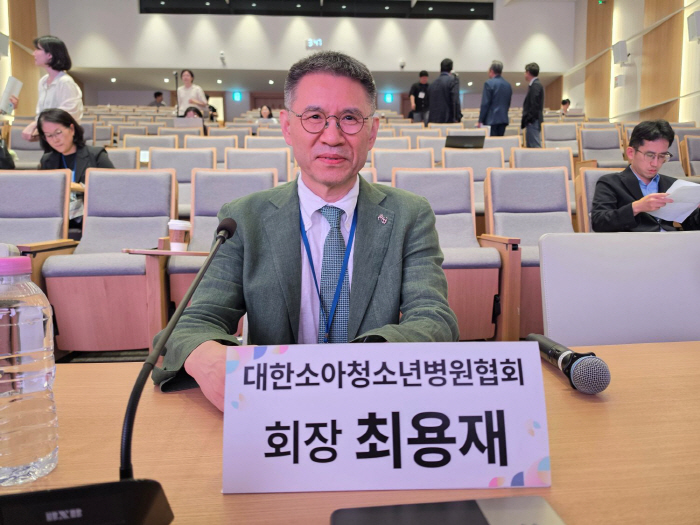
Choi Yong-jae, chairman of the Korea Children's Hospital Association and director of Uijeongbu Ttunttun Children's Hospital, made the remarks on the 11th at a symposium titled 'Are the Institutional and Legal Crises Facing Pediatric Care Acceptable as They Are?' held by the Korean Pediatric Society at CJ Hall of Seoul National University Children's Hospital.
◇"The supply of essential pediatric medicines must be solved by systems, not by people"
At the panel discussion that day, Choi first explained why essential pediatric medicines are treated like they are in the back room. Using Ativan as an example, he thanked the Ministry of Food and Drug Safety officials for their hard work, while pointing to the lack of a system as the core problem.
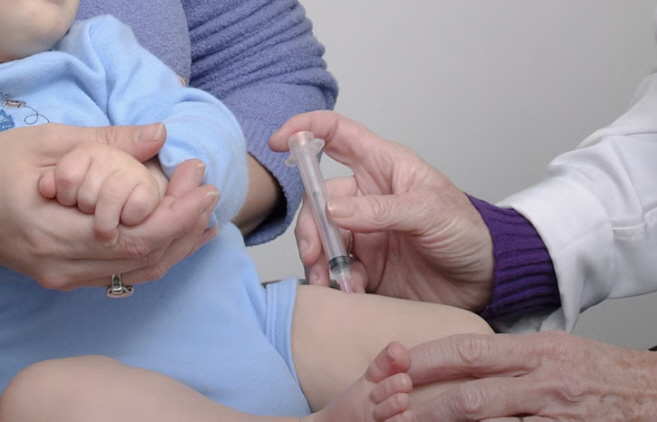
Choi said Ativan (lorazepam, 782 won per ampoule) and Cortisolu injection (hydrocortisone, 410 won per dose), the first-line drugs for emergency treatment of pediatric seizures and adrenal shock, had recently faced a supply suspension crisis. He said the crisis was narrowly avoided thanks to the dedicated efforts of MFDS officials, but questioned how long the system could continue to rely only on their efforts. He stressed, "We need to shift to a structure that solves problems through systems, not people."
He added that supply disruptions and shortages of pediatric medicines are not isolated accidents, but part of a recurring structure. If nothing changes, he warned, supply suspensions and shortages will simply keep repeating.
He argued that the solution is not to raise the prices of essential pediatric medicines that have been suspended or run out of stock. Instead, he said the safest measures are full state coverage of production and management costs, direct government stockpiling, and public contract manufacturing.
◇Pediatric equipment supply is also in crisis, and the damage falls on young patients
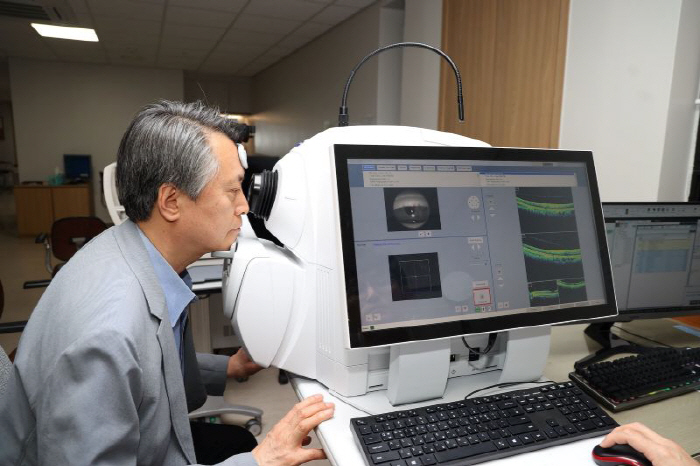
Choi went on to say that pediatric medical equipment is quietly disappearing under the same structure.
He said the disappearance of such equipment happens so quietly that even public attention is never formed, and no one notices.
Adults generally need only one standard size, but children range from newborns weighing 1 kilogram to teenagers weighing 60 kilograms. In terms of business viability, he said, that makes pediatric equipment no different from essential pediatric medicines.
Examples include pediatric endotracheal tubes in 0.5 mm increments, umbilical venous catheters for premature infants, intravenous infusion sets for infants and toddlers, pediatric oxygen masks and nebulizer kits, and pediatric laryngeal mask airways. All of these are low-volume, high-variety, and low-margin products, he said.
Just as pharmaceutical companies lose money when they make ultra-low-priced essential medicines, medical device makers also lose money when they produce small pediatric sizes. As a result, products are discontinued or become dependent on a single importer, and when global supply chains wobble, the supply is cut off entirely.
He said pediatric medical equipment, like essential pediatric medicines, often has no child-specific size. In practice, he added, medical staff end up cutting adult equipment to fit or forcing a larger size into use, and the risks fall entirely on the smallest patients.
Choi therefore said supply measures for pediatric equipment must be prepared together with those for pediatric medicines. Neglecting either side would mean solving only half of the crisis, he added.
◇Low fees drive specialists away, while high legal risks make the field unattractive
He described pediatric reimbursement rates as "shameful."
A single chest X-ray for a dog costs between 30,000 and 120,000 won, while the National Health Insurance reimbursement for a child's chest X-ray is only 8,000 to 15,000 won, he said.
Choi said the reality of pediatric care today is a total mess: medicines are cut off because of low drug prices, pediatric specialists leave because of low fees, and emergency rooms are avoided because of high legal risks.
He argued that pediatric care, which is classified as essential care, is facing a crisis in supply, staffing, and law, and that it needs urgent intervention and structural reform.
As a solution, Choi proposed an automatic trigger system that would begin working immediately once a report is filed.
He said a joint government response should be automatically activated on the day a supply suspension is reported, or D+0. By D+30, candidate alternatives should be identified; by D+90, price compensation should be decided; and by D+180, a production line should be secured. He said this would prevent cases like Ativan, which remained unresolved even after 16 months.
He also suggested that the list of essential pediatric medicines be finalized at 20 to 30 items by 2026, and that it must include not only oral medicines but also injections, inhalation drugs, and pediatric-specific medical equipment.
He again emphasized that ultra-low-priced, low-demand essential medicines should receive full state coverage of production and management costs.
He proposed that when unit costs rise, drug prices should automatically rise as well. For medicines like Ativan and Cortisolu injection, where the market cannot solve the problem even if prices are raised, he said the state should operate a dedicated track that fully covers production and management costs.
◇An integrated control tower is needed... urgent supply measures for regional and dedicated pediatric hospitals
Above all, Choi said an integrated control tower is needed, including a permanent consultative body under the Office for Government Policy Coordination to close the gaps between ministries.
He said Korea should build a system modeled on the U.S. SAPIR model, with direct state stockpiling and public contract manufacturing. When supplies run short, he added, priority should go first to regional pediatric hubs and dedicated pediatric hospitals.
Choi said, "An adult becomes a true adult only when they fulfill their role and responsibility as an adult," and added, "For the sake of future generations, I sincerely hope that all adults in Korea will become true adults." He stressed, "Our country's children will never be protected from the back room."
Reporter Jang Jong-ho bellho@sportschosun.com