

[Sportschosun Reporter Jang Jong-ho] Running has recently been gaining popularity, especially among younger people.
Running is a representative aerobic exercise that helps improve cardiorespiratory endurance and manage weight. However, repeated use of the lower body can lead to a variety of musculoskeletal disorders. Common examples include patellofemoral pain syndrome (PFPS), iliotibial band syndrome, and patellar tendinitis (jumper's knee). Pes Anserine Bursitis, which causes pain on the inner side of the knee, is another condition that requires attention.
On the inner side of the knee is the pes anserinus, formed where the sartorius muscle, gracilis muscle, and semitendinosus muscle attach together to the medial tibia. Around this area is a bursa that helps reduce friction and pressure between tissues during joint movement. When the bursa becomes inflamed due to repeated irritation or overuse, the condition is called Pes Anserine Bursitis.
When the knee repeatedly flexes and extends, continuous stress on the tissues around the pes anserinus can trigger inflammatory changes in the bursa. It is relatively common among athletes who frequently run, change direction suddenly, or jump, but it is not limited to athletes. It can also develop in people who spend long periods walking, running, or hiking, or when exercise intensity increases suddenly.
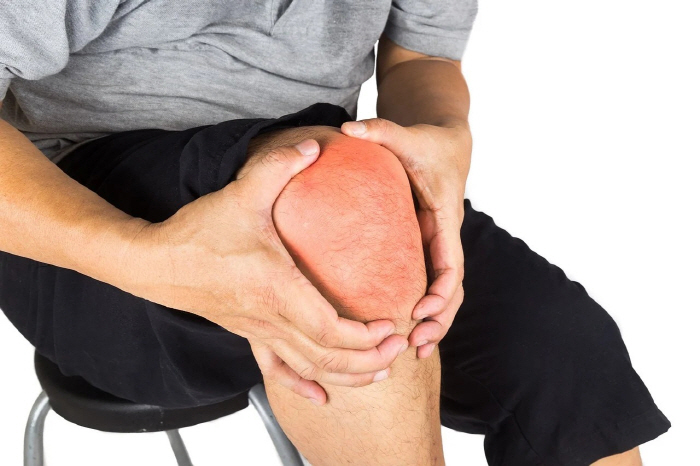
Main symptoms include a dull ache and tenderness on the inner side of the knee, and swelling or warmth may also occur. Pain tends to worsen during movements that repeatedly bend the knee, such as climbing stairs or standing up from a seated position. Joint movement may also become limited during daily activities or exercise.
Pes Anserine Bursitis is diagnosed based on the symptoms the patient reports and a physical examination. If necessary, X-ray, Ultrasound, and magnetic resonance imaging (MRI) tests may be performed. In most cases, improvement can be expected through conservative treatment such as rest and medication, but additional treatment may be needed if symptoms persist for a long time.
Seo Jin-hyeok, head of the Daedong Hospital Joint Center and an orthopedic specialist, said, "Starting to run for your health is a good thing, but increasing your workout volume without considering your own fitness level, or continuing to exercise too intensely without sufficient preparation, can actually raise the risk of injury." He added, "In particular, if repeated stress is placed on the knee joints due to being overweight, or if there are risk factors such as reduced hamstring flexibility or degenerative arthritis, continuous strain can build up around the pes anserinus, so caution is needed."
Whatever the exercise, it is important to begin gradually at a level that matches your physical condition. Understanding in advance the characteristics of the muscles and joints most used during exercise, and learning enough about possible injuries and how to prevent them, can help reduce the risk of injury.
Be sure to stretch adequately before and after exercise. Also, avoid activities that place excessive strain on the knees whenever possible, and strengthen the muscles around the knees. If pain develops after exercise, rest sufficiently rather than pushing through the activity. If symptoms do not improve afterward, it is important to see an orthopedic specialist early to identify the exact cause.
Jang Jong-ho, bellho@sportschosun.com