

[Sportschosun Jang Jong-ho] Many people spend long hours sitting for study, work, or gaming.
A sedentary lifestyle does more than cause simple fatigue. It can also make it easier to miss the early signs of spinal disorders such as a herniated disc or spinal stenosis.
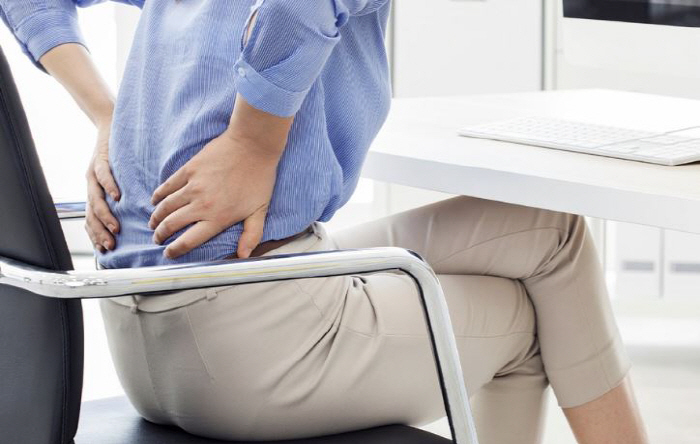
Sitting places more pressure on the lower back than standing or walking. The problem becomes worse when people repeatedly hunch their backs or use smart devices with their heads bent forward. Over time, the muscles and ligaments around the spine weaken, and the discs are placed under constant strain. The issue is that these changes are often mistaken for temporary fatigue or age-related symptoms until the pain becomes severe.
In the early stages of a herniated disc, lower back pain may appear intermittently, or the back may feel stiff when standing up after sitting for a long time.
Some people also feel a pulling discomfort in the buttocks or the back of the thigh, but because the pain is not intense, many leave it untreated.
By contrast, spinal stenosis is common in middle-aged and older adults. Symptoms typically worsen with prolonged standing or walking, causing numbness or pain in the legs, while sitting or bending forward brings relief.
These symptoms are not always easy to distinguish from simple muscle pain, but if detected early, improvement can often be expected without surgery.
In the early stages, basic conservative treatments such as medication, physical therapy, and exercise therapy are used to control pain. If needed, nerve block injections may also be added to reduce inflammation around the nerves. Along with these treatments, correcting daily habits and posture can also help ease symptoms. However, leaving the condition untreated may interfere with daily life, so caution is needed.
Min Seong-hoon, director of the Spine Center at Bareunsesang Hospital and a neurosurgeon, advised, "If back pain keeps recurring or discomfort persists whenever you change your posture, it may be an early sign of a spinal disorder rather than simple muscle fatigue. When symptoms are still mild, getting an accurate diagnosis and correcting your daily habits are important to reduce the burden of treatment."
If you must sit for long periods, the basic preventive measure is to stand up briefly every hour, stretch lightly, and check the height of your monitor and the position of your chair so that your lower back is not overburdened. The longer you sit, the more signals your back sends. Rather than dismissing them as simple fatigue, it is worth checking whether the pain may be an early warning sign.
Jang Jong-ho, bellho@sportschosun.com