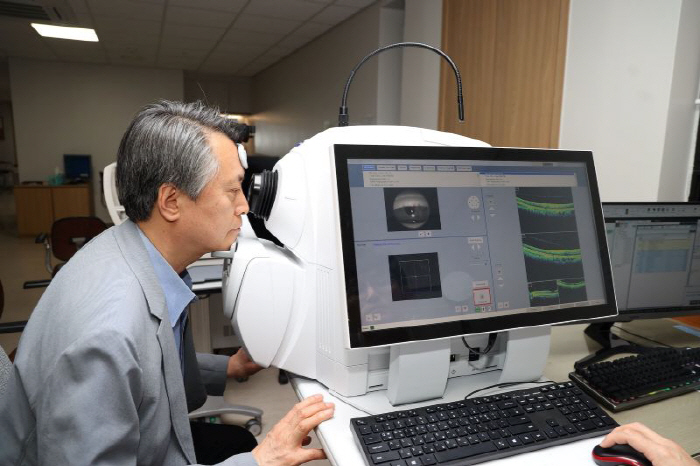



[Sportschosun Jang Jong-ho] A gene variant in aldehyde dehydrogenase 2 (ALDH2), which is known to cause facial flushing after drinking alcohol, does not appear to increase the risk of developing chronic kidney disease (CKD).
Aldehyde dehydrogenase 2 (ALDH2) is an enzyme that breaks down acetaldehyde, a toxic substance produced during alcohol metabolism in the body. The ALDH2 rs671 variant, which is common among East Asians, reduces enzyme activity and is known to cause the alcohol flush reaction.
Although its links to various conditions, including cardiovascular disease, hypertension, and diabetic complications, have been reported, its effect on the development of chronic kidney disease has not been clearly established.
A research team led by Professor Kwon Soon-hyo of the Department of Nephrology at Soon Chun Hyang University Seoul Hospital (SCH Seoul Hospital), including Heeyeon Lee, Lee Hae-kyung, Kim Hyung-rae, Jeon Jin-seok, and No Hyun-jin, announced the results of a large cohort study of Korean adults that analyzed the association between the ALDH2 rs671 polymorphism and the risk of developing chronic kidney disease.
The team followed 5,369 adults aged 40 to 69 who were enrolled in the Korean Genome and Epidemiology Study (KoGES) for an average of 11.7 years, and up to 18 years, to assess how ALDH2 genotype and drinking habits affected the development of chronic kidney disease.
The follow-up found no significant association between the ALDH2 rs671 polymorphism and the onset of chronic kidney disease. Among the participants, 1,396 people, or 26.0%, were newly diagnosed with chronic kidney disease, but there was no significant difference in risk between those with the ALDH2 rs671 variant and those without it.
No difference in risk was also observed according to alcohol intake, and no interaction was found between genotype and drinking amount. The same result held when men and women were analyzed separately.
Professor Kwon said, "This study confirms that the ALDH2 rs671 variant does not act as a new risk factor for chronic kidney disease in the general population," adding, "ALDH2 may be involved not so much in the onset of kidney disease itself as in inflammation, oxidative stress, and fibrosis progression in already damaged kidneys, so further research is needed."
The paper, titled 'Association of ALDH2 rs671 Polymorphism with the Incidence of Chronic Kidney Disease in a Population-Based Korean Cohort,' was recently published in the international journal Scientific Reports.
Jang Jong-ho, bellho@sportschosun.com