


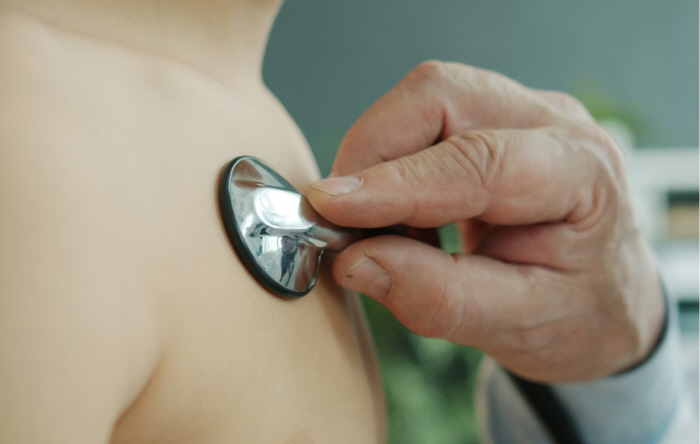
[Sportschosun Reporter Jang Jong-ho] "My child felt warm, so I thought it was just a cold. But the next day, red rashes appeared on the palms and soles, and he could not even eat."
That is a story now commonly heard among parents sending their children to daycare centers and kindergartens.
As early summer begins, one of the infectious diseases that raises a red flag for infant and toddler health is hand, foot and mouth disease (HFMD). As the name suggests, it causes blisters on the hands, feet and inside the mouth. The number of cases rises sharply every June and peaks in July and August.
◇HFMD cases from June to August account for 84% of the annual total ... easy to mistake for a cold
The number of HFMD cases among infants and toddlers has recently been rising. According to KDCA sentinel surveillance, suspected HFMD cases reached 4.3 per 1,000 outpatients as of the end of May this year, nearly five times higher than a month earlier. The increase was especially pronounced among children aged 0 to 6.
Health care big data also showed that the total number of HFMD patients in 2024 reached 391,376. Of those, 327,570, or about 84%, occurred between June and August.
The problem is that the infection can spread quickly, especially in group settings such as daycare centers and kindergartens.
Kim Min-seong, a pediatrician at The Catholic University of Korea Incheon St. Mary's Hospital, warned that "because it is highly contagious, if one child gets infected, others can easily catch it too."
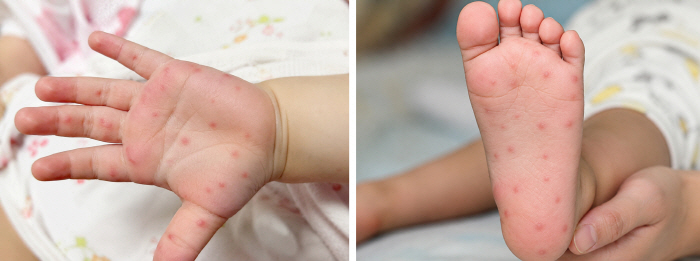
HFMD often begins much like a feverish cold. A child suddenly develops a fever, becomes fussier than usual, or refuses to eat. Some children complain of a sore throat or drool more than usual. Parents may easily mistake it for a simple cold or tonsillitis. However, if small blisters or vesicular rashes appear on the palms, soles, lining of the mouth, tongue or gums a day or two later, HFMD should be suspected.
◇Most cases recover naturally, but some can be fatal ... watch for dehydration
The cause is usually coxsackievirus and enterovirus, both of which belong to the enterovirus family.
It spreads mainly through saliva, nasal discharge, cough droplets and feces from infected people. In daycare and kindergarten environments, where children often share toys and put their hands in their mouths, the virus is especially contagious. Transmission is highest during the first few days after infection, and the virus can still be shed in feces for weeks after symptoms disappear.
Fortunately, most HFMD cases are not severe. In many cases, the fever subsides and the blisters heal, allowing for natural recovery within 7 to 10 days.
The problem is the complications that occur in some children.
HFMD caused by Enterovirus A71 in particular carries a relatively higher risk of progressing to severe illness.
If a high fever persists, the child becomes lethargic, or repeated vomiting, severe headaches, breathing difficulties or seizures occur, it should not be dismissed as a simple cold. In rare cases, it can lead to serious complications such as meningitis, Bickerstaff's brainstem encephalitis, acute flaccid paralysis and pulmonary edema.
The most common emergency situation in HFMD is dehydration.
That is because the mouth blisters can be so painful that children often cannot even drink water.
Professor Kim Min-seong stressed that "if a child is not eating well and has not urinated for more than eight hours, dehydration should be suspected. If the fever is severe and the child complains of head or stomach pain, vomits or becomes lethargic, meningitis or myocarditis may be suspected."
◇No vaccine or treatment available ... 'everyday hygiene' is key
If a child contracts HFMD, the key to treatment is to feed them well and keep them well hydrated. Foods that irritate the mouth, such as spicy or salty dishes and hot soups, should be avoided. Cold, soft foods are better. Rice porridge, yogurt, pudding, chilled rice gruel and fruit puree can help. If diarrhea is not severe, ice cream may also help relieve pain.
Fever reducers can be used when the child has a high fever. However, if the fever does not go down, parents should avoid mixing multiple medicines together in an attempt to force it down.
One of the questions parents ask most often is, "When can I send my child back to daycare?"
It is best to delay daycare or school attendance until the fever has completely gone down and the mouth blisters have improved. Adults who develop symptoms are also advised not to go to work until the symptoms disappear.
Unfortunately, there is still no vaccine or specific treatment for HFMD. In the end, the best defense is everyday hygiene. The basic rule is to wash hands with soap under running water for at least 30 seconds after going out, before and after meals, and before and after changing diapers. Toys, play equipment and door handles, as well as other objects children frequently touch, should be disinfected often. It also helps to avoid sharing cups or towels among children. Parents should keep in mind that even a single small blister can be the start of a summer cluster infection, and should focus on hygiene management.
Jang Jong-ho, bellho@sportschosun.com
※Four key rules for preventing HFMD
-Wash hands thoroughly: with soap under running water for at least 30 seconds
-Practice proper cough etiquette: cover your mouth and nose with a tissue or the upper sleeve
-Maintain strict environmental hygiene: disinfect toys, play equipment, utensils and door handles, and wash clothes contaminated with patient excrement thoroughly
-If symptoms are suspected, seek medical care immediately and self-isolate