

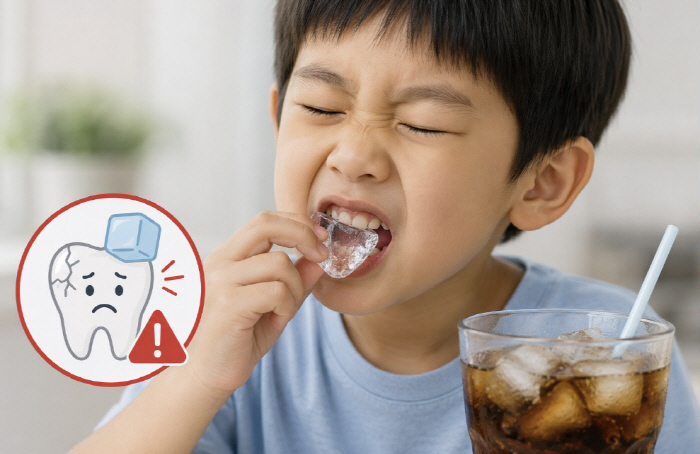
[Sportschosun Jang Jong-ho] During the hot summer months, it is common to see children chewing on the ice left in their drinks with a satisfying crunch. But repeatedly biting hard ice should not be dismissed as harmless, as it can create tiny cracks in teeth or cause damage.
Tooth enamel is one of the hardest tissues in the human body, but it can still be damaged when subjected to repeated strong impact. Ice is especially hard and delivers a sudden, forceful blow to the teeth, which can lead to microcracks or fractures.
In children, teeth that have been injured by a fall or impact, teeth that have undergone cavity treatment, and permanent teeth that have not fully developed may be more vulnerable to damage. Even if there are no visible problems, repeated impact can accumulate over time, causing microcracks that later appear as sensitivity or chipped teeth.
Chewing ice can also cause resin fillings or previously treated dental work to come loose or become damaged. In particular, if the tip of a front tooth chips or a molar cusp fractures, additional treatment may be needed.
If a tooth develops a crack or fracture, sensitivity to cold foods or pain while chewing may occur. In severe cases, the crack can deepen enough to require root canal treatment. For that reason, anyone who has a habit of chewing ice should try to cut back as much as possible.
Byeon Hee-seok, head of the Dental Health Center at Seongbuk Woori Children’s Hospital, said, "Chewing ice may seem like a simple habit, but it can place considerable stress on the teeth. In particular, children’s teeth during the growth period can develop microcracks or fractures from repeated strong force, and teeth that have already been treated require even more caution. Tooth cracks may not cause obvious symptoms at first, so if you often chew ice, it is best to change the habit. If you experience sensitivity or pain, I recommend getting a dental checkup."
Jang Jong-ho, bellho@sportschosun.com