

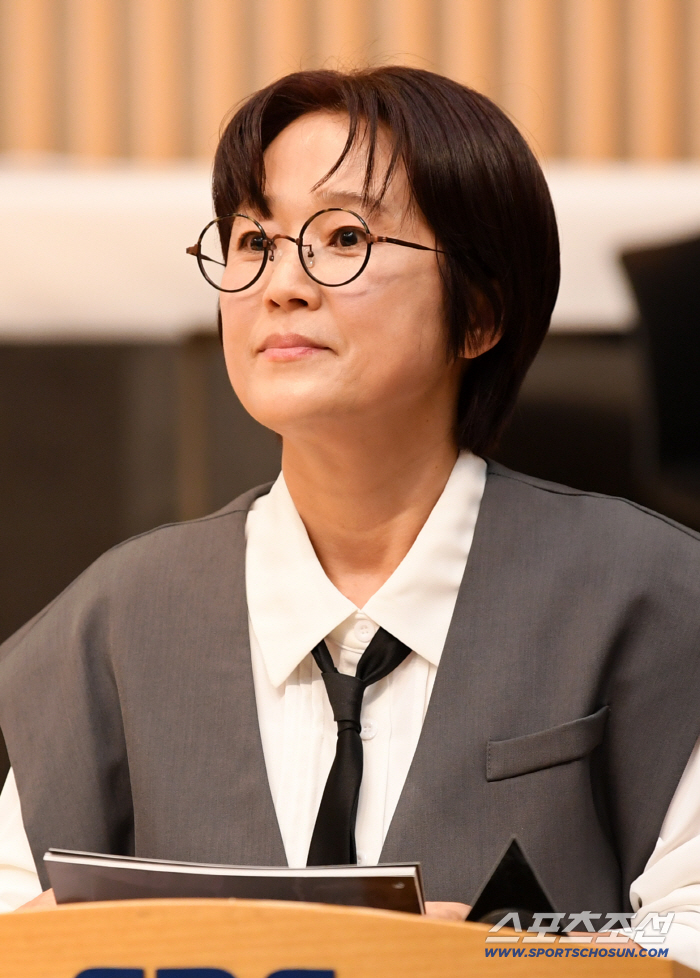
※ <Jung Bit's Just, Light> As Korean variety shows continue to expand globally, reporter Jung Bit shines a spotlight on the variety stars who deserve to be seen.
[Sportschosun reporter Jung Bit] "Unnie, I was suddenly cut the night before filming, just like that."
One night, a woman heard this shocking complaint from her junior, Kim Sook. It was a harsh time when female comedians were losing their place amid the fierce flood of male-centered variety shows, and even she, with more than 20 years since her debut, had to spend a year and a half as, in effect, unemployed. Instead of blaming others in the face of crisis, she responded with resolve.
"Then let's make a show so we won't get cut." That was the moment Song Eun-i, the figure who introduced the great paradigm of the "content producer" to Korea's variety industry, began her towering legend. As Song Eun-i decided to rebuild the stage instead of giving in to frustration, the course of variety show history began to change.
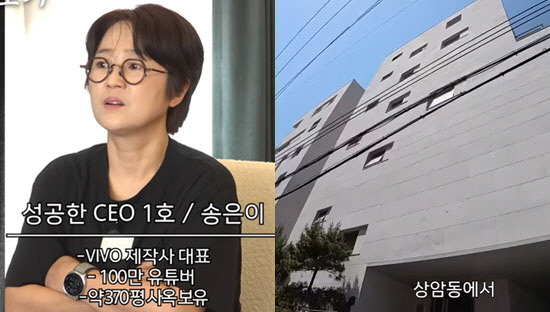
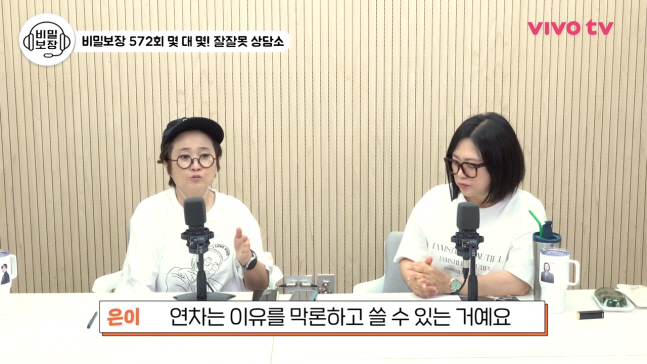
She is now known as the head of a content company with about 50 employees and the owner of a sleek new headquarters in Sangam-dong, but Song Eun-i's start was truly from scratch. In April 2015, she invested her own money and launched the podcast "Song Eun-i and Kim Sook's Keeping Secrets" with just four people: Song Eun-i, Kim Sook, one staff member, and one writer. It became the first major new-media content project led by a first-generation Korean celebrity.
Keeping Secrets gained traction within five weeks of its launch, and advertising soon followed. By November that year, it had expanded to SBS Love FM radio. The two women, once pushed to the margins, turned the margins themselves into the center of the stage.
That is because the planning behind Keeping Secrets always scratched exactly where the public itched. As Song Eun-i has long believed, "If you want to survive in a red ocean, you have to put in a lot of energy at the beginning," and she built the show on thorough communication and harmless values.
Her philosophy that she wants to create content that is, at the very least, harmless even if it is not especially useful, lies at the heart of Song Eun-i's work. In an era of intense competition for shock value, she brings up the word value rather than views. That is why, in VIVO content, empathy comes before sharp criticism, and solidarity comes before competition.
Above all, Song Eun-i's great leadership is not about the scale of her Sangam-dong headquarters, whose asset value reaches 15.7 billion won. What shines even brighter than the building she built is the leadership centered on people that fills that space.
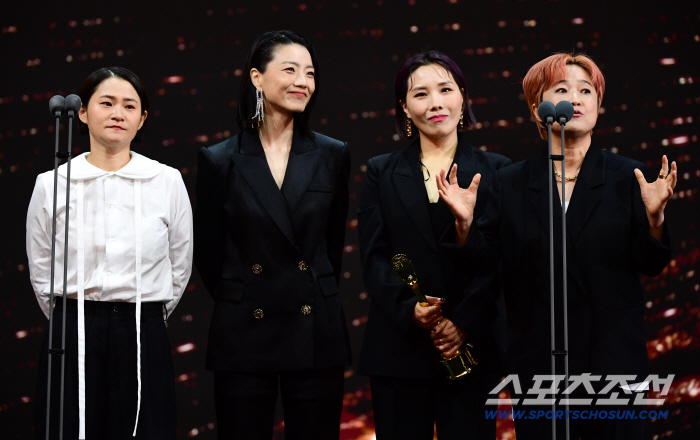
At a time when major cliques in the variety industry, such as the Yoo line, Kang line, and Gyu line, were largely dominated by male broadcasters, the so-called "Song Eun-i faction" she built became a strong bulwark for female entertainers who had been sidelined and for non-mainstream broadcasters who held on in public-hall comedy stages. Along with Kim Sook, top comedians of the era such as Ahn Young-mi, Shin Bong-sun, and Kim Shin-young all grew under the nourishment of this towering figure.
In fact, her outstanding leadership and depth had already been proven long ago. In 2007, when pure female variety shows were disappearing from terrestrial television, Song Eun-i firmly led the legendary cable variety masterpiece Infinite Girls and showed the power of a true heavyweight. We also remember how she was urgently brought in as a rescue pitcher for Invincible Youth in 2010 and stabilized the chaotic program in just one episode.
It is also worth noting the surprising success of Celeb Five, the girl group that shook up both the music and variety industries with the blood, sweat, and tears of comedians in their 40s on average. Led by captain Song Eun-i, Kim Shin-young, Shin Bong-sun, and Ahn Young-mi came together and danced in perfect unison barefoot in a daring challenge. It went beyond a one-time laugh and gave the public a thrilling sense of catharsis and liberation. Celeb Five proved the message of solidarity in an idol-centered market, showing that "we can do it too," and eventually won the Female Variety Performer Award at the first Blue Dragon Series Awards.
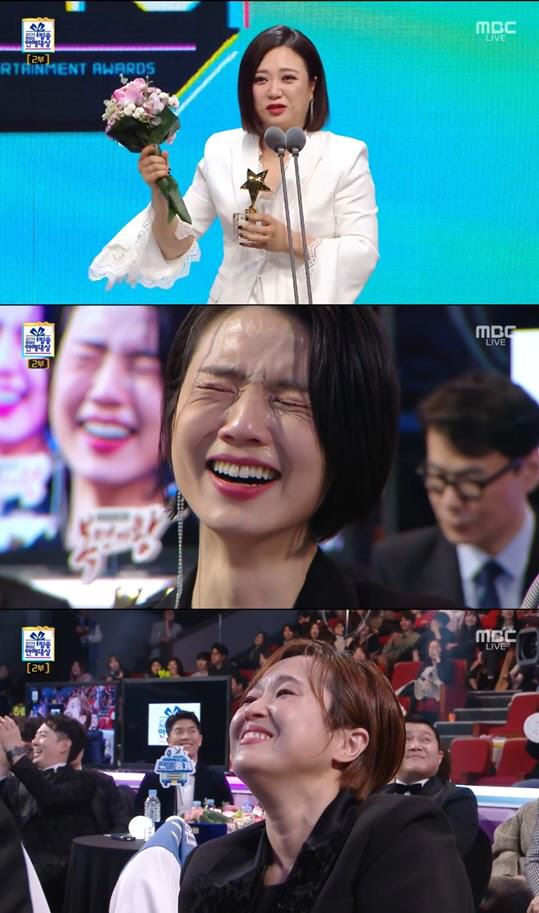
Because of the stage Song Eun-i built, her juniors finally learned how to stand on their own, found the fields they do best, and are now standing at glorious peaks. Ahn Young-mi, who shed tears in her acceptance speech and said, "If my senior had not called me, I would not be who I am today," and Kim Shin-young, who confessed, "I went independent because I wanted to keep seeing her as my senior for a long time." These moments prove that Song Eun-i's leadership was more than business. It was sincerity.
Even a look at how the company is run shows that this sincerity is no empty slogan. Her welfare philosophy, which includes exchanging money before vacations and handing employees foreign-currency envelopes, as well as supporting 10-year veteran entertainers with special leave and travel allowances, reflects Song Eun-i's family-like leadership. At the same time, her cheerful yet disciplined management sense is evident in her remark that "people with big appetites should not keep eating endlessly, so meal expenses are capped at 15,000 won." It shows why Song Eun-i has survived the longest in this harsh jungle as a successful CEO.
What makes her especially remarkable is not the number of artists under her label, but the breadth of their spectrum. Media Lab Seesaw currently brings together Jo Hye-ryeon, Ahn Young-mi, and Shin Bong-sun, as well as actors Bong Tae-gyu, Jeon Mi-do, Ok Ja-yeon, and Lim Hyung-joon. It also includes director Jang Hang-jun, who drew 16 million viewers with the film Masquerade, writer Kim Eun-hee, who wrote Signal and Kingdom, writer Park Chun-hyu of the musical Maybe Happy Ending, which won six Tony Awards on Broadway, and Kwon Il-yong, Korea's first profiler.
In other words, a company founded by comedians has brought together experts in film, drama, musicals, and crime content under one roof. It is no exaggeration that Kwon Il-yong called Song Eun-i "a CEO who saw the future."
More recently, she also took on film production with director Jang Hang-jun for Open the Door. In this way, Song Eun-i is writing the most complete answer sheet in the entertainment industry for how a broadcaster and female CEO can carve out her own territory.

From unemployed to a 10 billion won CEO. The vast gap was ultimately filled by people. Song Eun-i has never said that her success was hers alone. Her humility in saying, "It is possible because the staff members are all working hard in their own positions," sounds even more weighty.
Even during the crisis years when female variety shows were disappearing from terrestrial television, Song Eun-i survived by dominating cable and new media. Rather than being trapped by the glass ceiling of being a female entertainer, she built her own sturdy castle with her own hands. Her VIVO spirit, meaning "alive," is expected to remain the most solid and warm lighthouse illuminating Korea's variety market for years to come.
Reporter Jung Bit rightlight@sportschosun.com