

![Source: Korean Urological Oncology Society [Sportschosun Reporter Jang Jong-ho] "The introduction of a national PSA (Prostate-Specific Antigen)](https://www.sportschosun.com/article/html/2026/06/17/2026061701001193800077251.jpg "Source: Korean Urological Oncology Society [Sportschosun Reporter Jang Jong-ho] \"The introduction of a national PSA (Prostate-Specific Antigen)")
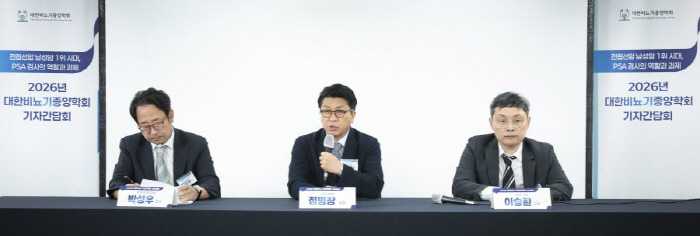
" The Korean Urological Oncology Society (President Jeong Byeong-chang) held a press conference at the Korea Press Center on the 16th and announced the '2026 Prostate Cancer Fact Sheet. ' On this day, President Jeong Byeong-chang (Department of Urology, Samsung Seoul Hospital) stated, "Although prostate cancer has already become a critical healthcare issue, ranking first in incidence among men in Korea, a national early screening system remains absent.
" He added, "I hope this Fact Sheet will serve as an opportunity to objectively demonstrate the disease burden and the realities of diagnosis and treatment for prostate cancer in Korea, and to expand social consensus on the importance of early screening. 6-fold in 10 years, 'Number 1 Cancer Among Men'.
3 Times Higher in Smokers of Over 30 Years Professor Yong-Hyun Park (Department of Urology, Seoul St. Mary's Hospital), who gave the first presentation, introduced the key contents of the '2026 Prostate Cancer FACT SHEET' and explained the current incidence of prostate cancer in Korea, risk factors, changes in the treatment environment, and the status of medical accessibility.
6 times over the past 10 years compared to 2014 (11,095). 8%) to become the most common cancer among men.
This demonstrates that prostate cancer has established itself as a representative type of cancer threatening the health of Korean men. 2 per 100,000 population in 2023, suggesting that the disease burden of prostate cancer itself is expanding beyond a simple phenomenon of population aging.
By age group, the increasing trend in crude incidence rates was pronounced among the elderly population aged 70 and 80 and older. 03 per 100,000 population).
The society analyzed that this difference likely reflects disparities in screening and access to medical care rather than differences in the incidence of the disease itself. At the treatment stage as well, differences in access to robotic surgery were confirmed based on region and income level, suggesting the possibility of disparities in medical access across the entire process of prostate cancer diagnosis and treatment.
Additionally, this FACT SHEET confirmed the impact of metabolic syndrome and lifestyle habits on the development of prostate cancer. The risk of developing prostate cancer was found to be significantly higher in men with metabolic diseases such as diabetes, hypertension, and dyslipidemia, and abdominal obesity and lack of exercise were also associated with an increased incidence.
3 times higher than that of early smokers, confirming that managing comorbidities and improving lifestyle habits are key factors for prevention and risk management. Professor Park Yong-hyun emphasized, "Prostate cancer is a disease expected to continue increasing in Korea as it enters a super-aged society," adding, "Given that not only is the number of patients increasing but the disease burden itself is growing, attention and response at the national level are necessary.
![Source: Korean Urological Oncology Society [Sportschosun Reporter Jang Jong-ho] "The introduction of a national PSA (Prostate-Specific Antigen)](https://www.sportschosun.com/article/html/2026/06/17/2026061701001193800077252.jpg "Source: Korean Urological Oncology Society [Sportschosun Reporter Jang Jong-ho] \"The introduction of a national PSA (Prostate-Specific Antigen)")
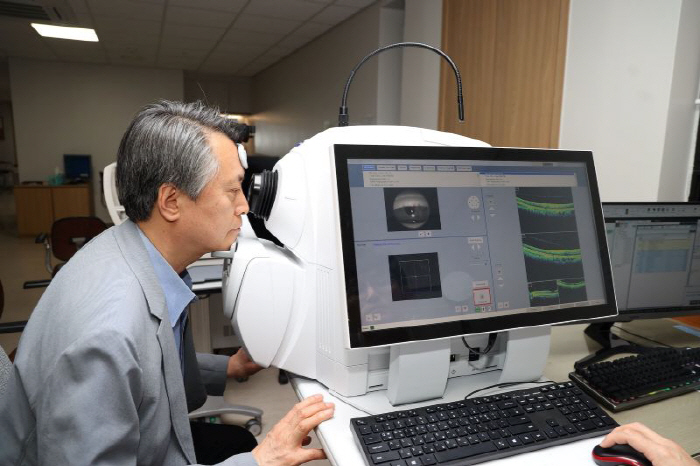
" ◇ 5-Year Survival Rate Over 95% with Early Detection. Need for a PSA Test-Based Screening System Professor Lee Seung-hwan (Department of Urology, Severance Hospital), who gave the second presentation, introduced the importance of early detection of prostate cancer and the clinical value of PSA testing under the theme of "Establishing an Early Prostate Cancer Screening System and the Role of PSA Testing.
" Prostate cancer has almost no early symptoms, so a significant number of patients are often diagnosed after symptoms appear. Because the prognosis is excellent—with a 5-year survival rate of over 95%—when detected in the early stages where cancer cells are confined to the prostate, regular screenings during the asymptomatic stage are considered a key factor determining the success or failure of treatment.
Since the PSA test is a simple blood test that places minimal physical and financial burden and offers high convenience, the academic community recommends regular screenings for men aged 50 and older. Particularly at a time when the incidence of prostate cancer among Korean men has surged to become the highest, it is evaluated as a realistic alternative for alleviating the social medical burden by detecting potential patients early.
Currently, prostate cancer screening in Korea is not included in the national cancer screening program, so it relies on voluntary screening based on individual choice and cost burden. Consequently, there are ongoing criticisms that a blind spot exists where many men are unaware of the necessity of the test itself.
According to actual academic and global clinical data, regular PSA-based screening has been proven to not only reduce the risk of developing metastatic prostate cancer by lowering the proportion of patients diagnosed after symptom onset, but also to significantly lower mortality rates from the disease. Professor Lee Seung-hwan explained, "Patient survival rates and quality of life for prostate cancer vary significantly depending on whether the disease is detected early, and international studies have objectively proven the effects of PSA-based screening in reducing metastatic cancer and mortality.
" He further emphasized, "Given that prostate cancer has become the number one cancer among men in Korea yet remains excluded from the national cancer screening system, urgent policy support and discussions are needed to introduce early screening at the national level so that citizens can receive testing at appropriate times regardless of their place of residence or economic circumstances. " The Korean Urological Oncology Society stated that, given the continuously increasing burden of prostate cancer, discussions on early screening policies based on objective evidence are necessary.
With the release of this FACT SHEET, the Society plans to continue its activities to raise public awareness of prostate cancer and support the healthy lives of patients through early detection and appropriate treatment. Reporter Jang Jong-ho bellho@sportschosun.