

Amid growing concern over the serious social crisis caused by drug misuse and addiction in South Korea, a practical addiction treatment and rehabilitation program optimized for the country's judicial and cultural environment has been developed through a government-funded national R&D project.
The Research Council on Drug Misuse and Addiction, supported by the Mental Health Research and Development Project Group under the Ministry of Health and Welfare (MOHW), said it has completed a "Korean-style cognitive behavioral therapy (CBT)-based addiction treatment program" that can be applied immediately in domestic clinical settings, based on research findings recently published in an international academic journal.
The achievement is being viewed as a meaningful step forward in drug addiction treatment and rehabilitation because it moves away from the previous practice of simply borrowing Western treatment models and manuals. Instead, it first secured scientific evidence to overcome Korea's own practical limitations and then derived a customized program from that foundation.
◇World's first meta-analysis proves the effectiveness of CBT alone
The scientific basis for developing the CBT-based program was established through a study by the team led by Professor Kim Jong-tae of the College of Medicine, The Catholic University of Korea, with Professor Lim Hyun-woo of the Department of Preventive Medicine as corresponding author. The systematic review and meta-analysis, published in Frontiers in Psychiatry in 2025, is the world's first meta-analysis to verify the effect of CBT alone in patients with stimulant use disorder.
In Western countries, treatments such as contingency management (CM), which uses financial rewards, and the community reinforcement approach (CRA) are commonly used because their effectiveness has been proven. But in South Korea, where budget, infrastructure and institutional constraints are significant, it has not been easy to combine them. By rigorously reviewing randomized controlled trials (RCTs) involving a total of 849 participants, Kim's team demonstrated for the first time in the world that CBT alone, without support from other treatment elements such as CM or CRA, could significantly increase the short-term abstinence rate by 2.88 times compared with the minimum-treatment control group. This provides evidence for a practical alternative that is cost-effective and can be quickly expanded in domestic clinical settings.
◇Four standard programs developed by combining Korea's judicial and cultural context with the latest third-generation CBT
Based on this scientific evidence, the team led by Professor Na Eui-hyun at Soonchunhyang University College of Medicine finalized the development of a "Korean standard psychosocial treatment program for drug addiction" that reflects the real-life experiences and clinical needs of Korean patients and therapists.
During the development process, Na's team published the results of an in-depth qualitative study in the International Journal of Drug Policy in 2026, academically identifying the cultural and judicial context that should be reflected in the program.
The Korean-style standard program developed this time was designed as four separate versions so it can be flexibly applied depending on the characteristics of the institution and treatment environment. Specifically, it consists of a "community and outpatient brief interview program" for flexible use at community rehabilitation centers and outpatient clinics, a "first steps in treatment program" that improves patients' motivation and retention in treatment, a "craving management and alternative behavior enhancement program" for inpatient and intensive outpatient care, and an "emotional regulation program" that helps stabilize patients emotionally. Together, these can be implemented in a multidimensional way according to the characteristics of patients and treatment institutions.
These programs are based on the latest third-generation CBT techniques, including Mindfulness and Compassion. In particular, the researchers actively incorporated a unique qualitative finding that Korean patients view coercive and structured settings such as judicial treatment orders or protective hospitalization not simply as an infringement on autonomy, but as a "protective scaffolding" or safety net that helps hold them in place when they have lost self-control. This allows the latest third-generation treatment techniques to work in an integrated way within the positive functions of judicially controlled settings.
◇Field practitioner training completed... pilot study to begin in July
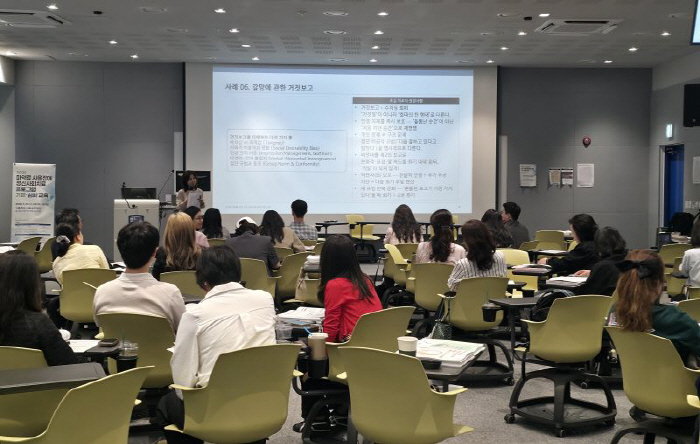
To help the completed program take root in the field, the research team successfully completed two rounds of training on program instruction and manual use for hospital and community practitioners nationwide.
Starting in July, a first pilot study will be conducted at Daegu Daedong Hospital and Incheon Chamsarang Hospital, two of South Korea's leading drug addiction treatment and protection institutions, to verify the program's effectiveness. The pilot study is expected to provide an opportunity to objectively confirm the real-world impact of the Korean-style program on patients' sustained abstinence and psychological recovery.
Professor Lee Hae-guk, head of the research council, said, "This achievement is an organic model case of a national R&D project, in which Professor Kim Jong-tae's world's first meta-analysis provided the foundation, Professor Na Eui-hyun's team completed four standard programs suited to domestic settings, and the project has now entered the stage of actual clinical validation."
He also proposed the need to address drug problems by introducing a public-health-based "Korean Tiered and Continuous Treatment-Rehabilitation System" that institutionalizes a judicial-treatment linkage system, ensuring that judicial control does not end with punishment, education or counseling alone but is mandatorily linked to step-by-step, systematic treatment and rehabilitation. He also called for expanded infrastructure for Korean-style CBT programs and broader clinical research, along with stronger efforts to train treatment and rehabilitation professionals so that proven Korean standard treatment programs can be widely distributed to psychiatric medical institutions and community centers nationwide.
Professor Lee said, "The drug problem can never be solved by relying only on judicial punishment or individual will." He added, "At the government level, investment in drug-related R&D should be concentrated not only on this Korean-style CBT program, but also on clinical research to verify the effectiveness of various treatment methods."
Meanwhile, Professor Lee's team has completed a draft of evidence-based clinical treatment guidelines for stimulant use disorder, the most common substance use disorder in South Korea, including multidimensional assessment, pharmacological treatment and psychosocial treatment. It has also begun presentations at academic conferences of domestic and international professional societies and started the certification process within the Korean medical community.
Reporter Jang Jong-ho bellho@sportschosun.com