

[The Sportschosun, Jang Jong-ho] Summer is the season when women who suffer from bunions often feel even more discomfort. As people wear open shoes such as sandals and slippers more often, foot deformities that had gone unnoticed become easier to spot. In addition, repeated friction between the protruding joint of the big toe and the shoe can worsen pain and inflammation.
According to the disease classification of the Health Insurance Review & Assessment Service (HIRA), there were 88,164 patients with acquired bunions in 2024. July recorded the highest number, with 8,087 patients. Women accounted for 82% of all cases, about 4.4 times the number of male patients.
Shin Dong-hyeop, head of orthopedics at Gangbuk Himchan Hospital, said, "Bunions are not just a cosmetic issue caused by a change in foot shape. They are a structural deformity that reduces weight distribution and walking function." He added, "When the big toe bends too far toward the little toe, it loses its function as a big toe. Other toes then have to take on part of that role, which puts strain on them when walking."
◇ Changes in gait can even lead to knee and lower back pain
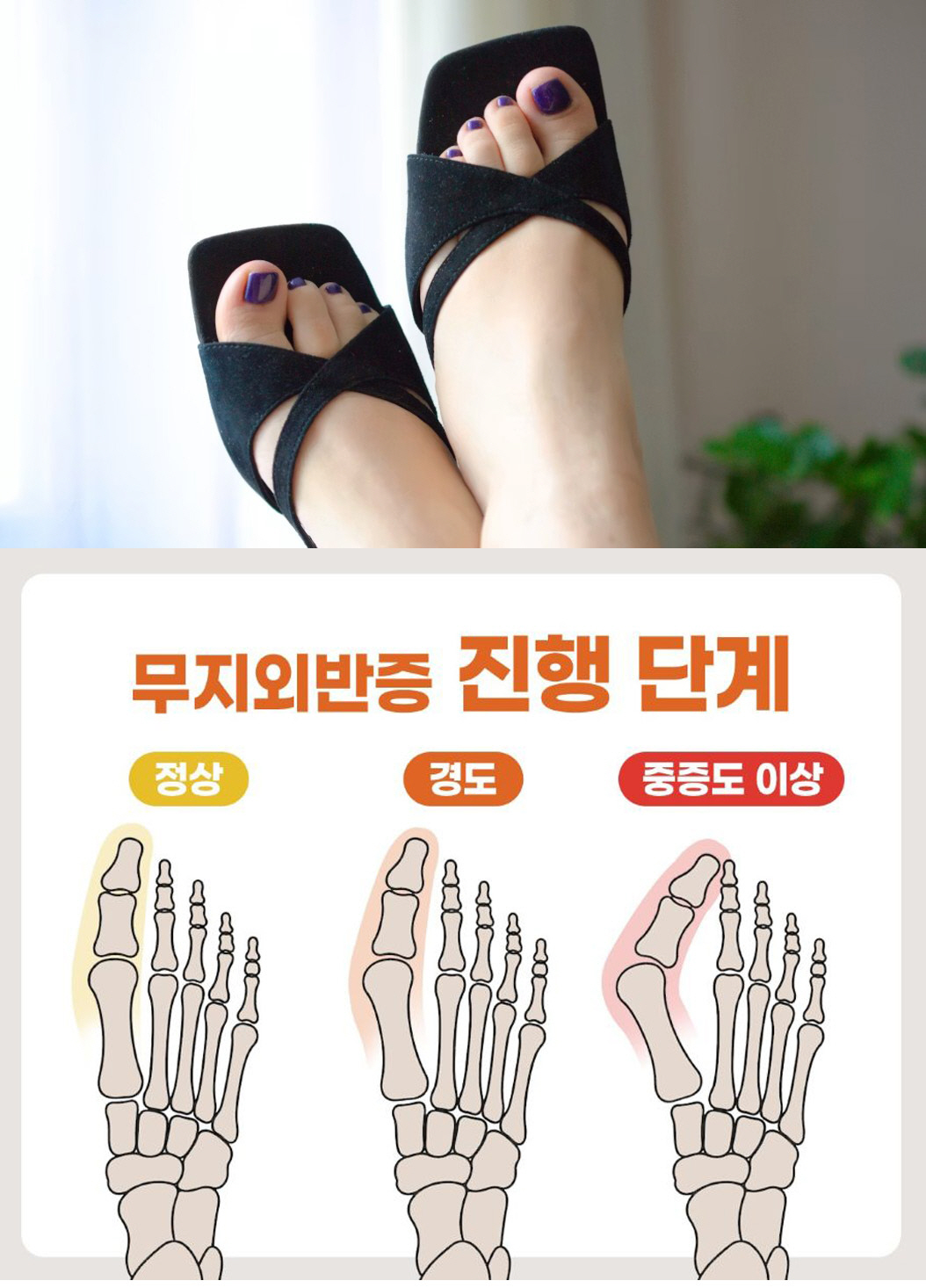
Severe bunions, in which the big toe protrudes outward, are easy to spot at a glance.
As the big toe bends, the protruding bone rubs against shoes and causes pain. Repeated irritation from footwear can make the skin thicken, swell, or turn red. The pain worsens when standing or walking for long periods, and repeated inflammation can make even short walks uncomfortable.
As the deformity progresses, the pain does not remain limited to the protruding area.
The big toe acts as the final lever that pushes the body forward while walking. When its alignment breaks down, that function weakens and body weight shifts toward the second and third toes. This can cause calluses on the front of the sole and repeated pain, while long walks may leave the entire foot easily fatigued. In severe cases, the big toe pushes up the second toe or overlaps with it, leading to additional toe deformities.
When pressure on the sole becomes unbalanced, the toe joints may become misaligned, increasing pain and instability during walking. Because the big toe can no longer provide enough push-off force, the gait changes from normal walking. If the toes cannot function properly, the center of the foot shifts backward. More importantly, as other toes take over the role of the big toe, knee and lower back pain may also develop.
The cause of bunions cannot be pinned down to a single factor. Genetic predisposition, family history, overly flexible feet, and an imbalance in joints and ligaments all play a role. Above all, wearing the wrong shoes increases the likelihood of developing bunion deformity.
◇ If walking problems and pain persist, surgical correction should be considered
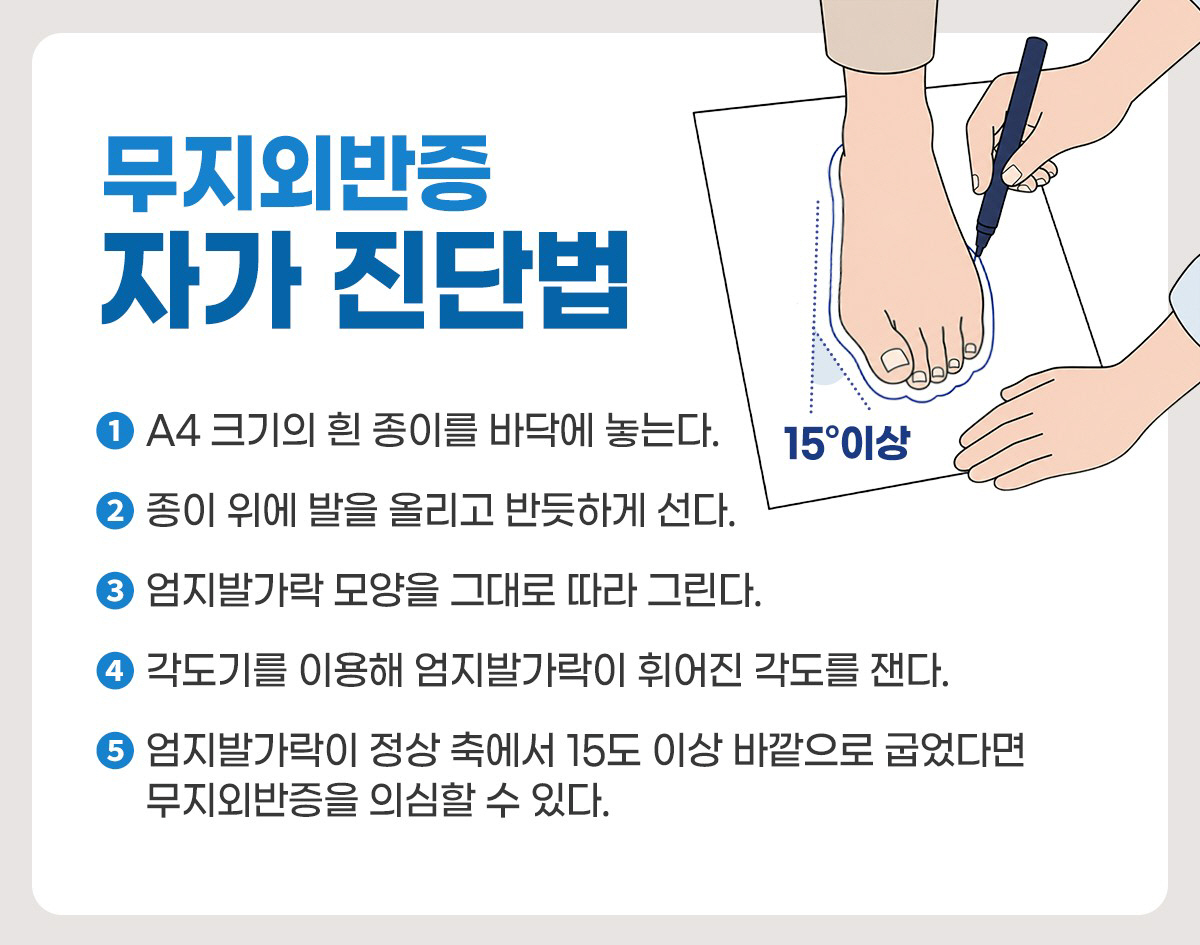
Treatment for bunions is determined by comprehensively considering the severity of the patient's pain and the extent of the deformity. To decide on a treatment plan, doctors check whether moving the joint causes pain and whether the deformity can be corrected easily. X-rays are also used to examine the degree of joint deviation, as well as whether arthritis or other conditions are present.
In the early stages, conservative treatment is used, such as wearing comfortable shoes that do not press on the painful area, using toe spacers, or wearing functional insoles that support the arch. Conservative care is intended to reduce pressure and inflammation and control pain, rather than reverse the deformity itself.
However, if pain continues despite sufficient conservative treatment, or if the deformity interferes with daily life and walking, surgical correction should be considered.
More aggressive treatment is especially needed when second-toe deformity is also present, or when calluses on the sole and pain in the front of the foot make it difficult to walk for long periods.
Surgery generally involves straightening the bent toe bone. Procedures include corrective surgery, which cuts and repositions the bone that has shifted inward or outward to correct the angle of the deformity, and soft tissue reconstruction, which lengthens shortened muscles and soft tissues. The goal is to guide the bone back into its original position and restore functional stability to the joint. If both feet are affected, surgery may be performed in stages, one side at a time, depending on the patient's condition and recovery plan.
Shin Dong-hyeop said, "Bunion surgery is not simply about shaving off a bent bone. It is a fundamental reconstructive process that restores alignment and weight distribution in the foot." He added, "As surgical techniques have advanced, correction is now possible through minimally invasive procedures known as MICA and MITA, and the risk of postoperative complications and pain has also decreased." He noted that if patients wait until the deformity becomes severe before visiting a hospital, the scope of surgery may become larger and recovery slower. If walking patterns change or pain keeps recurring, it is advisable to see a foot and ankle orthopedic specialist for an accurate diagnosis.
For prevention, it is important to wear shoes that fit well. Avoid pointed designs and narrow toe boxes, and make sure there is enough room for the toes to move comfortably. Heels should not be too high, and when standing or walking for long periods, it is best to avoid shoes that concentrate pressure on the front of the foot. For people with flat feet, using insoles that support the inner arch can help.
Toe exercises can also help prevent foot deformities from progressing. Exercises that use the toes and the muscles of the sole, such as rolling a can with the foot or pulling a towel with the toes, can be used as a supplementary way to maintain foot function.
Jang Jong-ho, bellho@sportschosun.com