


[Sportschosun reporter Jang Jong-ho] A new study has found that coffee taste can be influenced not only by the beans or the brewing method, but also by the texture people feel when they hold the cup.
Even a change in the roughness of the cup surface can make the same coffee seem more acidic or less acidic.
A research team at Chuo University in Japan published its findings in the international journal Multisensory Research after analyzing how the texture of a cup sleeve affects perceptions of coffee sourness.
Studies have consistently shown that the color, shape, and material of cups or glasses can affect how people evaluate the taste of a drink. However, it has not been clearly established how touch itself influences taste.
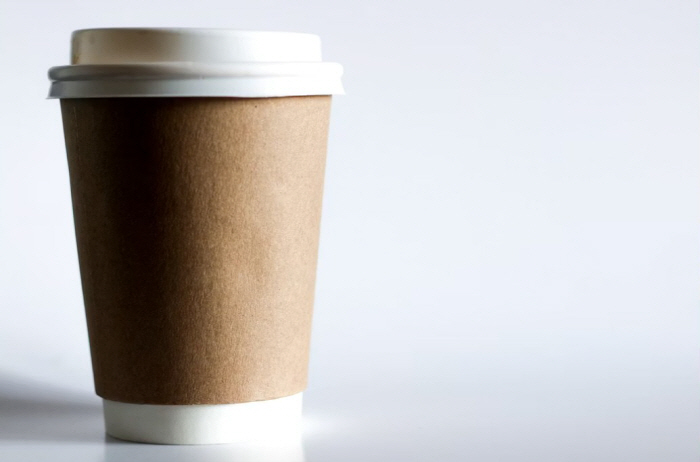
To test this, the team made two types of sleeves: one with a rough sandpaper-like surface and another made of smooth kraft paper. Each sleeve was placed on the same cup filled with black coffee at 68 degrees Celsius, and 92 participants drank from the two cups in sequence while blindfolded.
The results showed a clear tendency for participants who first touched the rough sleeve and then drank coffee from the cup with the smooth sleeve to perceive the coffee as less sour.
By contrast, participants who first touched the smooth sleeve and then drank coffee from the cup with the rough sleeve did not report a reduction in sourness.
The researchers explained that, in human perception, rough textures tend to be unconsciously associated with "strong acidity," while smooth textures are linked to "mild acidity." In particular, when people touch a rough surface and then a smooth one, the perception of "mild acidity" forms, and repeated tasting also creates a sensory adaptation effect that makes the coffee seem less sour than it actually is.
On the other hand, when people first experienced a smooth texture and then encountered a rough one, the "strong acidity" image associated with the rough surface offset the sensory adaptation effect, so the coffee was not perceived as less sour, the team said. Professor Atsunori Ariga of the Department of Psychology at Chuo University, who led the study, said, "This study could lead to a new way of choosing cups or sleeves that match individual preferences," and added, "If a culture of using one’s own cup or sleeve spreads, it could also help promote eco-friendly consumption for environmental protection."
Jang Jong-ho, bellho@sportschosun.com