

[Sportschosun Reporter Jang Jong-ho] Pain in our bodies sometimes appears first in a place other than the actual source.
When a problem develops in a specific organ or tissue, but the pain shows up somewhere else, it is called referred pain. Because nerves are interconnected, pain may be felt first in a different area from the actual lesion, so the location of the pain alone should not be used to determine the cause. Typical examples include applying a pain-relief patch for a stiff shoulder, only to later learn that a cervical disc problem was the real cause, or suspecting a shoulder disorder because of arm numbness, when the nerve was actually compressed in the neck.
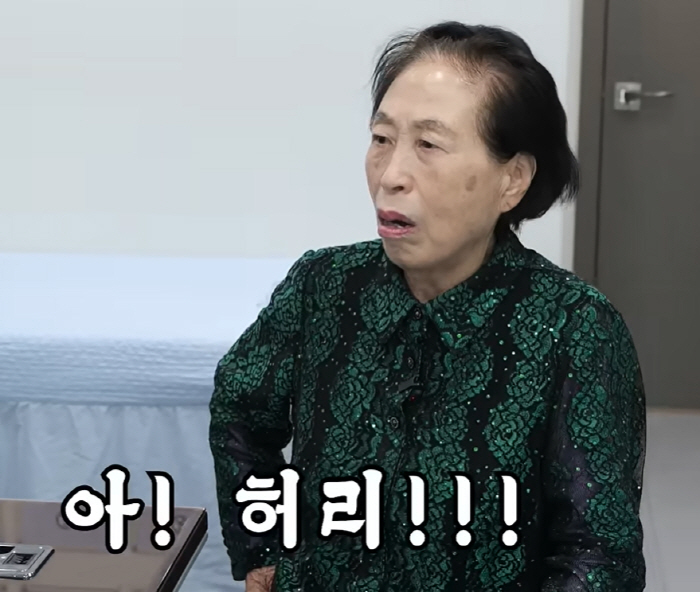
A recent case involving actress Jeon Won-joo is also considered a major example of referred pain. Through her YouTube channel, she shared a day in her life visiting a hospital. The visit was for a follow-up check after left hip surgery. The surgical site was healing well, with no major issues. But the area causing her discomfort was elsewhere. She was experiencing numbness in her right leg, the opposite side that had not undergone surgery.
An X-ray taken to find the cause produced an unexpected result. Her knees were in good condition for someone in her 60s, but the scan revealed spinal stenosis in her lower back. As the fourth and fifth lumbar vertebrae had sunk due to degenerative changes, the disc was compressed, leading to signs of spinal stenosis. In other words, her leg was numb, but the real problem was in her lower back.
Spinal stenosis is a degenerative disease in which the spinal canal, the passage through which nerves travel inside the spine, narrows and compresses the nerves. It can cause lower back pain, leg numbness, and intermittent neurogenic claudication. Because degenerative changes are the main cause, it is common among older adults, as in Jeon Won-joo's case.
British actress Miriam Margolyes, who played Professor Sprout in the 'Harry Potter' series, is also known to be struggling with walking because of spinal stenosis. In an interview with a media outlet, she said, "As the stenosis progressed and walking became difficult, I was registered as a person with a disability." She added, "I rely on a cane and a walker, and I may soon have to use a wheelchair." As such, spinal stenosis is regarded at home and abroad as a representative degenerative spinal disease that threatens mobility and daily life in older adults.
According to HIRA, the number of domestic patients with spinal stenosis rose by about 12% over four years, from 1,659,452 in 2020 to 1,856,224 in 2024. By age group, people in their 70s accounted for the largest share at 31.5% in 2024, followed by those in their 60s at 30.7% and those aged 80 or older at 19.3%. Patients aged 60 and above made up more than 80% of the total.
Above all, spinal stenosis often causes prominent leg pain, making it easy to mistake for vascular disease in the legs or knee arthritis. In addition, because symptoms progress slowly, many people initially dismiss them as a normal part of aging. Some also feel reassured when the pain eases after sitting down or bending forward. However, because it is a disease that compresses nerves, leaving it untreated can lead to permanent nerve damage and, as in the case above, make treatment and recovery more difficult.
If you have any of the following symptoms, you should suspect spinal stenosis and seek professional treatment: difficulty walking for more than 10 minutes, pain that improves only when bending forward or lying down, or severe pain in the legs and buttocks.
However, when treating spinal stenosis in older patients, the risks of surgery must be carefully weighed because recovery is slower and the burden of complications is greater. Surgery can cause side effects such as dural injury and hematoma, and it may also lead to failed back surgery syndrome (FBSS), in which pain persists even after the operation. Some studies have reported that as many as 30% of patients with FBSS continue to experience or see a recurrence of pain after spinal surgery.
In traditional Korean medicine, spinal stenosis is treated with integrated care that includes acupuncture, pharmacopuncture, and Chuna manual therapy. Acupuncture helps reduce pain by easing tension in stiff muscles and ligaments. Pharmacopuncture injects purified and extracted active ingredients from herbal medicines into acupuncture points to help relieve inflammation and support nerve recovery. Chuna manual therapy is performed directly by a Korean medicine doctor to correct misaligned spinal and joint balance and reduce pressure on the nerves.
A study published in the SCI(E)-indexed international journal Frontiers in Medicine (IF=3.0) found that integrated Korean medicine treatment significantly reduced surgery rates and opioid painkiller use among patients with spinal stenosis. Using HIRA big data, the research team followed 176,228 patients who were first diagnosed with spinal stenosis in 2015 for up to four years. The results showed that patients who received integrated Korean medicine treatment within one year of diagnosis had spinal surgery rates about 18% lower and opioid painkiller prescription rates about 19% lower than those who did not. The prescription rate for opioid medications was also about 24% lower.
The treatment effect has also been confirmed in clinical trials. According to the results of a randomized controlled trial (RCT) announced by the Spine and Joint Research Institute at Jaseng Hospital of Korean Medicine, pharmacopuncture was more effective than conventional treatments such as physical therapy and painkillers in reducing pain and restoring daily function in patients with spinal stenosis.
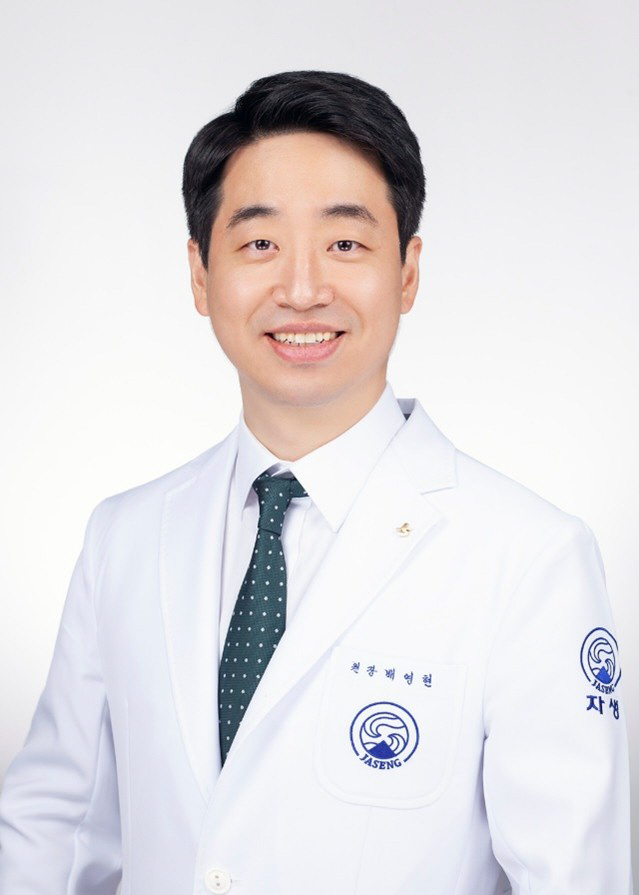
Baek Young-hyun, director of Ilsan Jaseng Hospital of Korean Medicine, said, "Leg numbness or pulling sensations often come not from the leg itself but from pressure on the nerves in the lower back, so it is important to diagnose the underlying lesion accurately rather than focusing only on the area where the pain appears." He added, "Integrated Korean medicine treatment is an effective option that can manage symptoms while reducing the burden of surgery and medication."
Reporter Jang Jong-ho bellho@sportschosun.com