


[Sportschosun reporter Jang Jong-ho] A study has found that the risk of suicide rises significantly among patients with atherosclerotic cardiovascular disease (ASCVD), which can cause myocardial infarction and Stroke when arteries become narrowed or blocked.
Suicide is one of the leading causes of death in South Korea and a major public health issue that places a heavy burden not only on individuals and families but on society as a whole. Myocardial infarction and Stroke are major cardiovascular diseases, and patients often experience reduced physical function and a lower quality of life. They also frequently suffer psychological distress such as depression and anxiety. However, there have been few large-scale studies that have tracked the suicide risk of patients with atherosclerotic cardiovascular disease over a long period.
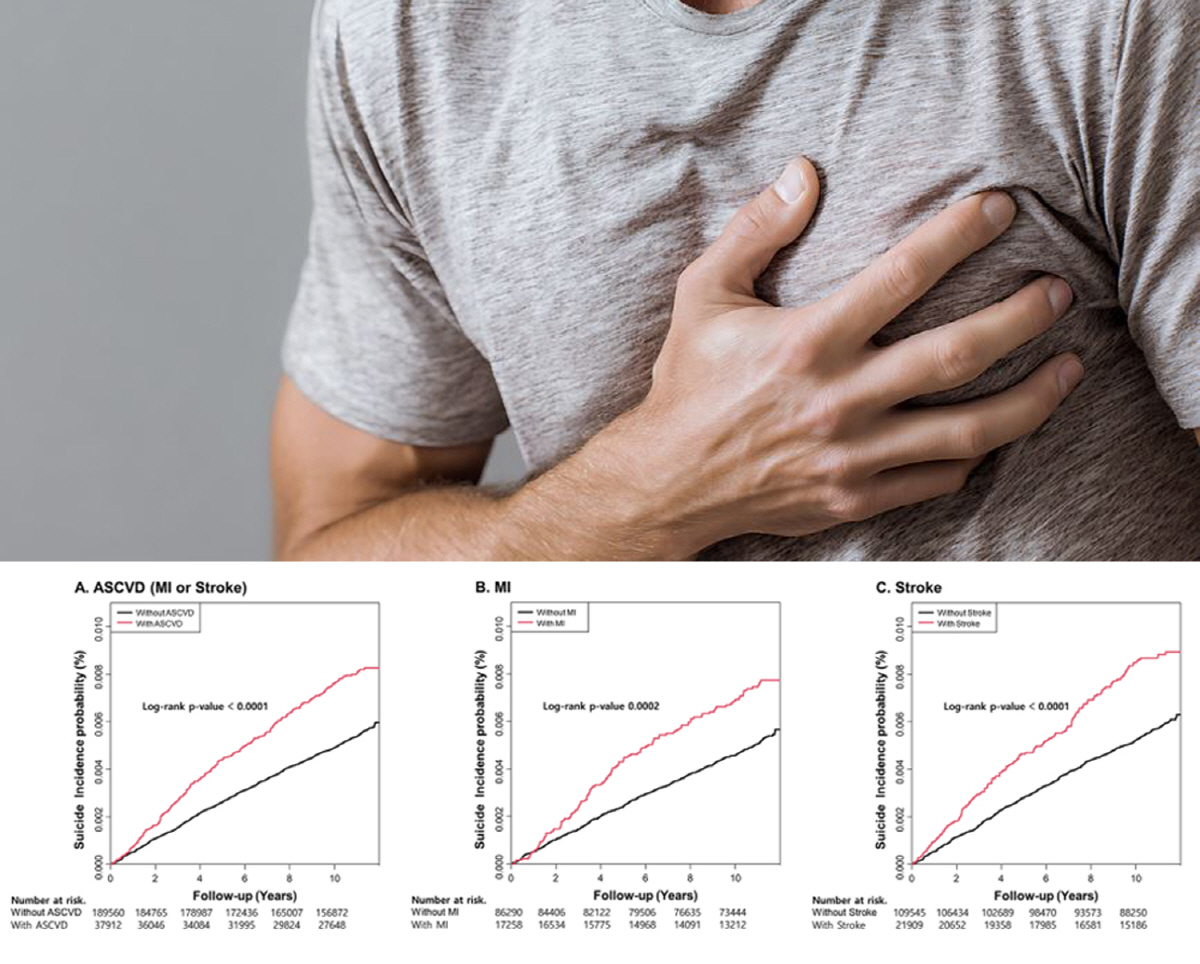
To address this, a research team led by Professor Bae Nan-young of the Department of Cardiology at Seoul National University Hospital Gangnam Center analyzed 227,472 adults using NHIS data. The group included 37,912 patients with atherosclerotic cardiovascular disease who had a history of myocardial infarction or Stroke and 189,560 matched controls selected at a 1-to-5 ratio by age and sex from adults who underwent health checkups in 2009. The participants were followed from 2009 to 2021, during which 1,250 suicides were recorded.
The analysis showed that the suicide risk among patients with atherosclerotic cardiovascular disease was 43% higher than that of the control group throughout the follow-up period. This pattern was consistently observed in patients with myocardial infarction and Stroke as well.
In particular, patients who had experienced both myocardial infarction and Stroke faced the highest risk, with suicide risk 85% higher than that of the control group. The findings suggest that myocardial infarction and Stroke each raise suicide risk on their own, and that the risk may be even greater in patients who have experienced both conditions.
This trend was consistent regardless of age, sex, or a history of depression. The study also found an increased suicide risk even among patients without a prior diagnosis of depression, suggesting that a history of cardiovascular disease may be linked to long-term mental health.
The research team suggested that physical decline after myocardial infarction or Stroke, anxiety about recurrence, and restrictions on social activity may be associated with psychological distress. They also stressed that mental health management is especially important for cardiovascular patients in South Korea, where the suicide rate is among the highest in OECD countries.
Professor Bae Nan-young said, "Myocardial infarction and Stroke are not only life-threatening diseases, but they can also have long-term effects on a patient's mental health." She added, "This study is meaningful because it confirmed, through nationwide long-term follow-up data, that atherosclerotic cardiovascular disease is associated with an increased risk of suicide."
She continued, "In the treatment process for cardiovascular patients, it is necessary to look at mental health issues such as depression and suicidal thoughts together and consider the need for proper assessment and management." She added, "It may be helpful to include mental health evaluation as part of cardiovascular care."
This study was an observational analysis using NHIS data to assess the association between atherosclerotic cardiovascular disease and suicide risk, and it does not directly prove causation. It was also conducted in a Korean population, so there may be limits to applying the findings to other populations. The study was published in the European Journal of Preventive Cardiology, the official journal of the European Society of Cardiology.
Jang Jong-ho bellho@sportschosun.com