


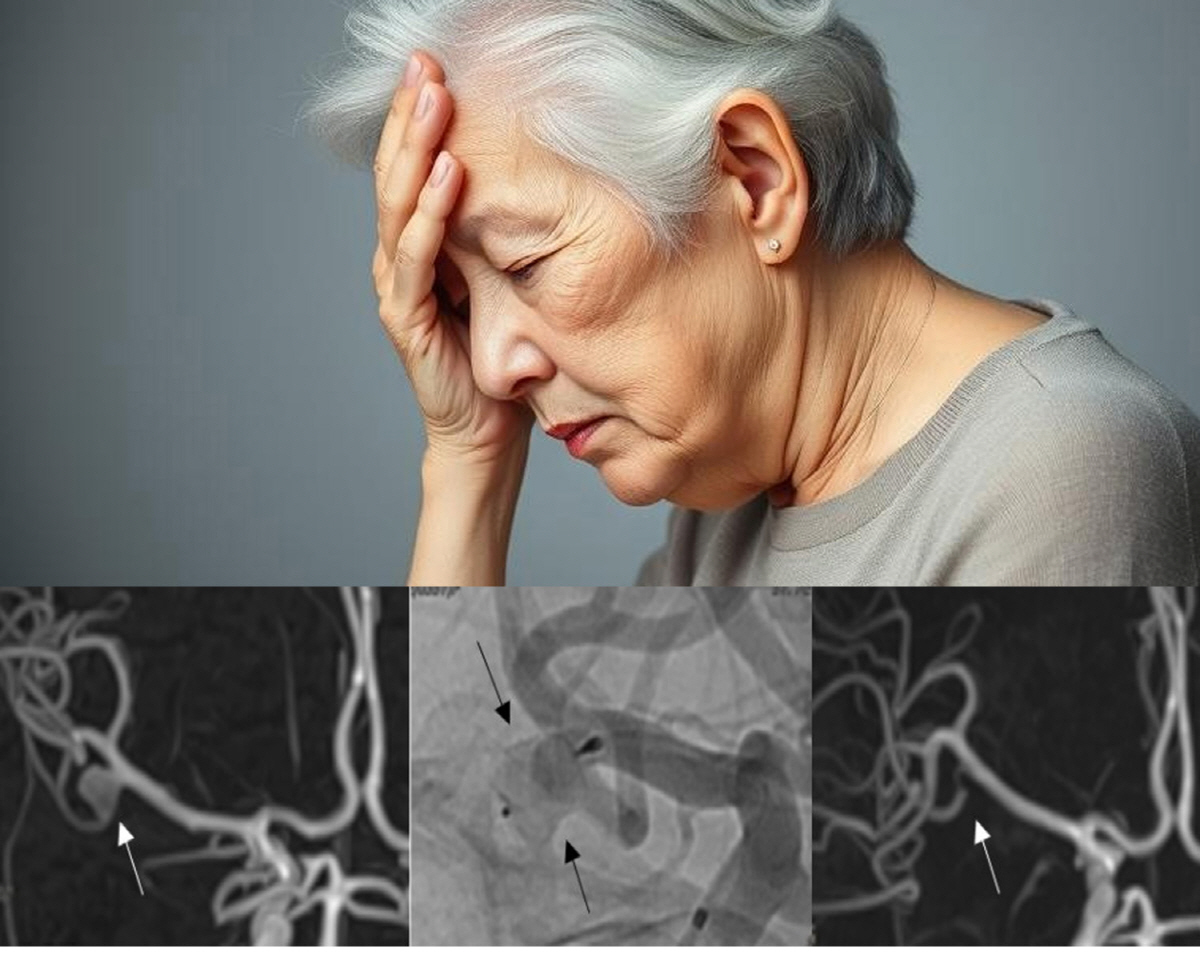
[Sportschosun reporter Jang Jong-ho] There is a disease that usually causes no noticeable symptoms, but can become fatal the moment it ruptures: an intracranial aneurysm, in which part of a brain blood vessel wall quietly bulges outward. If it ruptures, it can lead to serious brain bleeding such as Subarachnoid Hemorrhage, making it a life-threatening emergency that can cause death and neurological complications. In fact, about 15% of patients die before reaching the hospital after an aneurysm ruptures, and among the remaining patients, about 28% die during treatment.
However, intracranial aneurysms often show no warning signs until just before rupture. Most unruptured intracranial aneurysms are asymptomatic, and only 10% to 15% are known to cause symptoms. Because they are so difficult to detect yet so dangerous when they rupture, they are also called a "silent time bomb."
That is why intracranial aneurysms require careful monitoring of risk factors in everyday life, even before symptoms appear. In particular, people in their 40s and older, when the risk of cardiovascular and cerebrovascular disease rises, should consult a specialist to determine whether preventive screening is needed, even if they have no symptoms, especially if they have risk factors that can raise blood pressure.
Seo Dae-cheol, professor in the Department of Neurointervention at Gangnam Pedro Hospital, said, "It is difficult for patients to detect an asymptomatic unruptured intracranial aneurysm early on by themselves." He added, "In summer, blood pressure can fluctuate more sharply because of seasonal factors such as heat waves and air conditioning, so people at high risk for intracranial aneurysms need to pay closer attention to brain blood vessel health."
◇Mostly occurs in people in their 40s to 60s... rupture can even raise the risk of death
An intracranial aneurysm refers to a condition in which part of an artery wall in the brain bulges abnormally like a balloon. It is often found in the circle of Willis, a major arterial ring at the base of the brain. Most are smaller than 10 mm, but giant aneurysms larger than 25 mm can also occur. Depending on their shape and cause, they are classified as saccular aneurysms, fusiform aneurysms in which the artery swells throughout, and dissecting aneurysms in which a hematoma forms between the inner and outer layers of the vessel wall.
The prevalence is estimated at about 2% to 4% of the total population, and they are most often found in people in their 40s to 60s. Professor Seo explained, "The exact mechanism behind intracranial aneurysms has not yet been clearly identified, but the main cause is believed to be ongoing blood pressure against a weakened vessel wall, leading to damage and reduced elasticity."
When a brain hemorrhage occurs due to a ruptured intracranial aneurysm, the patient experiences an extremely severe headache, like a thunderclap. Nausea, vomiting, and neck stiffness may also occur. In severe cases, seizures, loss of consciousness, and even cardiac arrest can happen. A ruptured intracranial aneurysm is also the most common cause of Subarachnoid Hemorrhage. Related cases occur at a rate of about 10 per 100,000 people each year, and the condition is highly dangerous, with one-third of patients dying immediately from the bleeding.
If symptoms suggest a ruptured intracranial aneurysm, it is important to go to the emergency room immediately. In patients with a ruptured aneurysm, rebleeding often occurs within 24 hours of the first hemorrhage. If rebleeding happens, the mortality rate can reach 70%, making rapid treatment essential. Because complications such as vasospasm and hydrocephalus can also occur, diagnosis and treatment should be provided as quickly as possible.
◇Most cases are asymptomatic... preventive screening and blood pressure management are necessary
The problem is that, as noted above, most unruptured intracranial aneurysms show no clear symptoms before they burst. For people in their 40s and older who have risk factors such as hypertension, a family history, or a history of smoking, it is advisable to consult a specialist and undergo tests such as brain CT, MRI, and MRA, even if they have no symptoms.
In summer, it is also important to pay close attention to blood pressure control and hydration. Heat, dehydration, and sudden temperature changes can all have a combined effect on blood pressure. Repeated exposure to these factors can widen blood pressure fluctuations and increase the burden on blood vessels, so people at high risk are advised to manage their condition carefully.
However, the number of ruptured intracranial aneurysms has been declining in recent years. In the past, many cases were diagnosed only after rupture had already progressed, but the number of preemptive diagnoses and treatments for unruptured intracranial aneurysms has steadily increased each year. According to the Health Insurance Review & Assessment Service (HIRA), the number of patients with unruptured intracranial aneurysms in 2025 reached 209,242, up about 69% from 123,579 in 2020.
When an unruptured intracranial aneurysm is diagnosed, surgery or a procedure is selected according to the patient's condition. In the past, aneurysm neck clipping, in which the skull is opened through craniotomy and the aneurysm neck is directly clipped and blocked, was mainly performed. More recently, embolization procedures have also been widely used, in which a catheter is inserted through the femoral artery in the groin to access the brain artery and platinum coils or other devices are used to block the aneurysm without an incision.
In particular, embolization procedures that insert a device into the blood vessel to block internal blood flow and reduce the risk of rupture have advanced rapidly in recent years. Among them, embolization using the WEB (Woven EndoBridge), a mesh-like flow diverter, is drawing attention as a treatment that helps overcome the limitations of coil embolization. Seo Dae-cheol's team in the Department of Neurointervention at Gangnam Pedro Hospital is also continuing related research, including analysis of WEB strategies according to aneurysm type, in an effort to expand treatment options.
Professor Seo said, "The most important thing is to manage an intracranial aneurysm before it ruptures." He added, "If an unruptured aneurysm is found early, it is possible to lower the risk of rupture by setting up an appropriate treatment strategy for the patient's condition, including follow-up imaging, surgery, or procedures, so active and preventive management should be considered."
Jang Jong-ho, bellho@sportschosun.com