

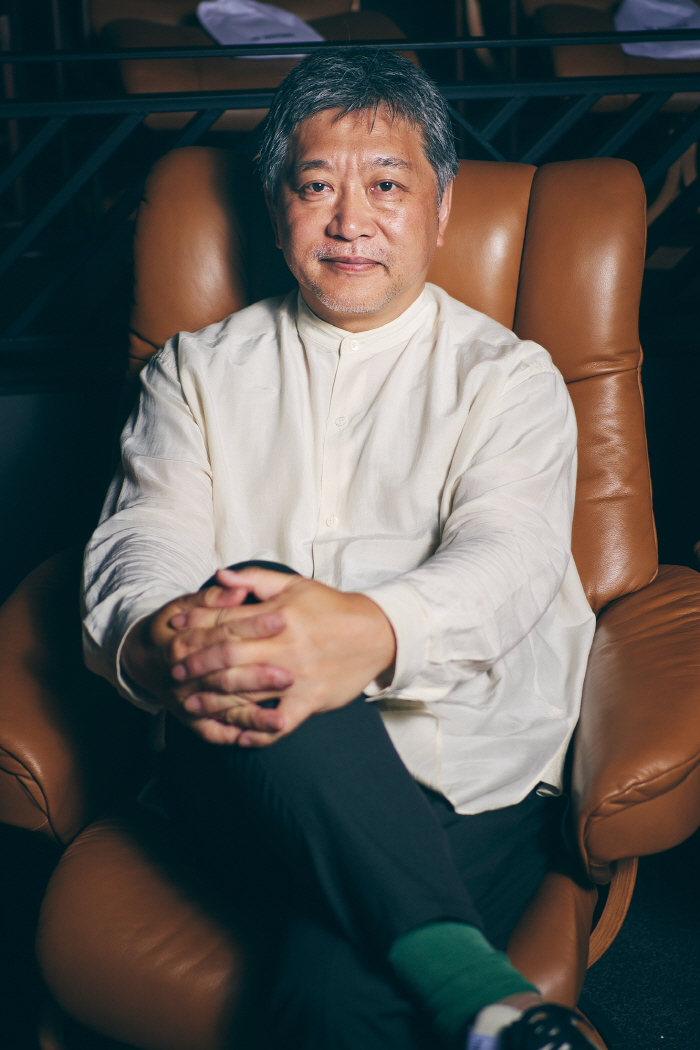
[Sportschosun reporter Ahn So-yoon] Japanese master director Hirokazu Kore-eda, 64, has told a family story centered on a humanoid in his film 'Sheep in the Box.'
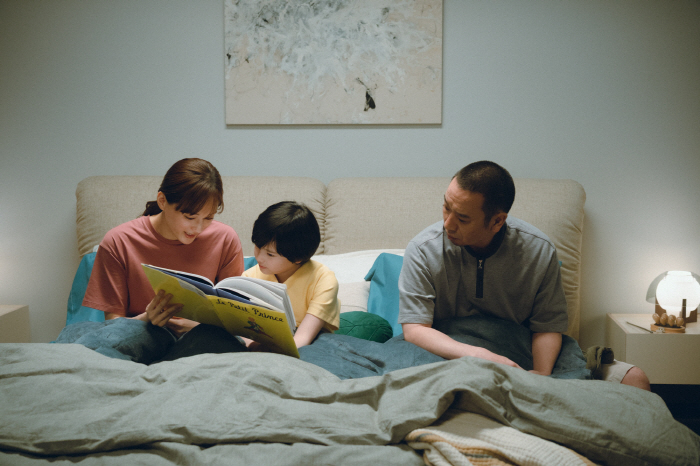
'Sheep in the Box,' which opened on the 10th, follows a 7-year-old humanoid who enters a household in place of a deceased child and comes to face both the joy of finally becoming part of a family and the fear of being abandoned again. Kore-eda, who directed 'Like Father, Like Son,' 'Our Little Sister,' 'Shoplifters,' 'Broker,' and 'Monster,' was behind the camera.
Ahead of the film's release, Kore-eda met with Sportschosun and explained, "There are many sci-fi novels and films that deal with a humanoid's sense of self. Our film does not focus on that. Instead, we tried to portray the human beings who want a humanoid. That does not mean I am not interested in the humanoid's self. I was curious about where their self-awareness begins. When I interviewed someone who creates cutting-edge AI in Japan, I asked about that too, and he said that if self-awareness could be defined, it could simply be deleted. But he also said it cannot be defined, and it is impossible to create a program for it. If a humanoid's self-awareness were to emerge, I wondered whether it might come from somewhere else. I thought about that while making the film."
Last month, 'Sheep in the Box' was also invited to compete in the official competition at The 79th Cannes Film Festival. Kore-eda said, "I did a lot of interviews with reporters at Cannes, and I was told I was overly optimistic. They were worried that AI might dominate humans and believed it could threaten human society. I had expected that to some extent, but I think there is a difference between the West and the East in that regard. The West tends to interpret things from a human-centered perspective. In 'Sheep in the Box,' humans come second. The humanoid comes first. In that sense, I think it may have seemed overly optimistic. In the end, the couple does not live forever happily in the forest; they eventually return to human society."
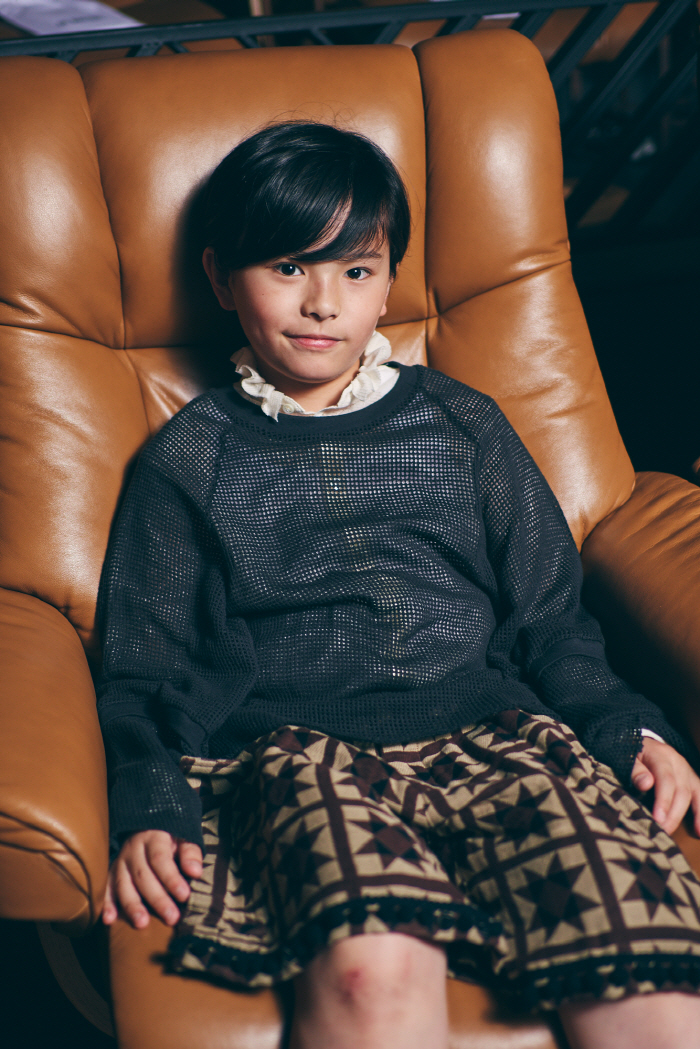
Rimu Kuwaki beat odds of 200 to 1 in auditions to land the role of Kakeru, a humanoid who looks exactly like a son who has passed away. Speaking about working with the acclaimed director, he said, "The director is incredibly caring and kind. I was grateful that he explained everything in such detail and with such warmth." He added, "Honestly, I did not realize what a great director he was. I just thought he was a very kind director, and I only learned that for the first time today."
Asked whether it was difficult to play a humanoid rather than a human, Kuwaki said, "First, I was told I should not sweat, so I paid attention to that. I also had to avoid running too fast when I ran." He added, "I did not eat food for the performance because I was worried it might get stuck in my teeth."
When asked about his future dream, he said, "Through acting in this project, I came to enjoy it. It was great to have such kind and warm directors and actors on set." He added, "My dream is to become a film director and work hard." When Kore-eda asked, "Is that because the director looked like he was having the most fun on set?" Kuwaki answered enthusiastically, "Yes!" drawing smiles.
In Hollywood, debate over AI has recently intensified. Arguments continue over the use of generative AI, copyright for creative works, and actors' rights to their likenesses. In response, Kore-eda said, "Even in Hollywood, there are voices saying AI should not be used. People are worried that actors will lose their jobs. But when you think about cost-effectiveness and efficiency, I believe the work people are doing now will be handed over to AI. In fact, AI is already replacing many tasks in South Korea and Japan. The same is true on film sets. But if that happens, won't all films start to look alike and become less interesting?" He added, "For example, when shooting a film, a car is parked and the background is composited later. If you watch too many films like that, you can quickly tell how they were made. From a safety and efficiency standpoint, filming in a studio may be the right choice, but as a creator, I have doubts."
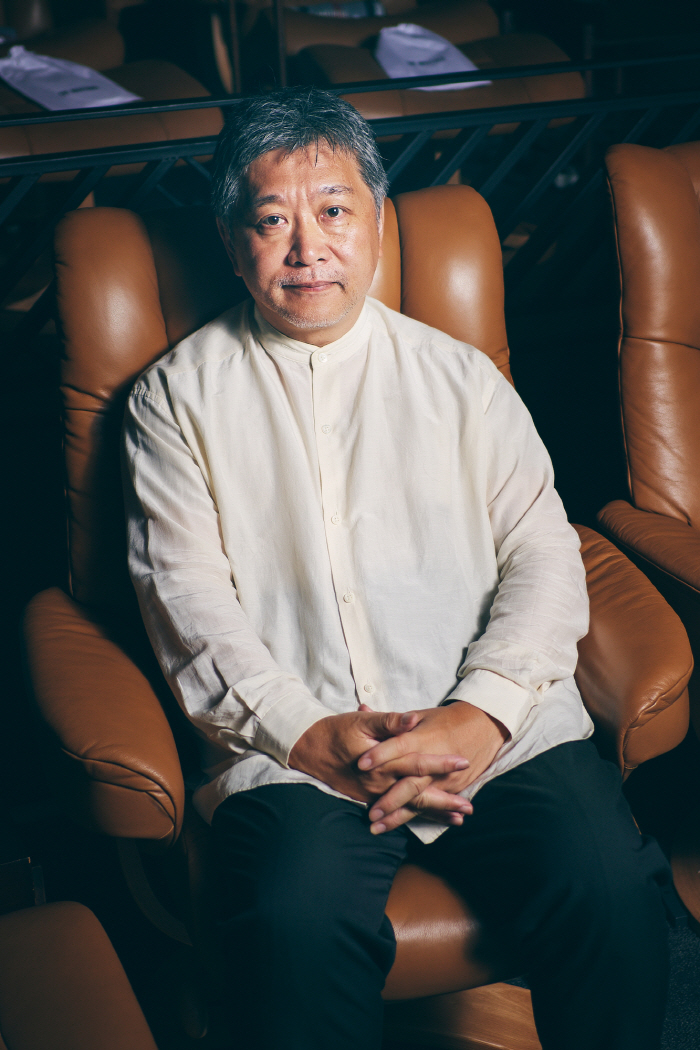
Kore-eda previously worked with Song Kang-ho, Gang Dong-won, Bae Doona, IU, and Lee Joo-young on his first Korean film, 'Broker,' which was released in 2022. He recalled, "I remember what Bae Doona said. When filming a car scene, she said she wanted to feel the wind while shooting, and I agreed with her."
He also shared his thoughts on facing Gang Dong-won as a competing release in South Korea at the same time. Kore-eda said, "I went to the cinema yesterday and saw the trailer for 'Wild Sing,' starring Gang Dong-won." He added, "While watching it, I felt very nostalgic and wanted to meet him. Gang Dong-won still seems as young as ever whenever I see him."
Finally, he spoke about his next project, saying, "If everything goes smoothly without any changes to the schedule, 'Look Back' is set for release this fall. That film has already been completed. My next project will be shot in the United States. The project I mentioned before, set in Asia with Korea, China, and Japan, has not been abandoned. I think I will do it later." He added, "I hope you will look forward to it."
Ahn So-yoon, antahn22@sportschosun.com