

"It is a battle. During tournament periods, it is not easy to secure decent accommodations. If a major event overlaps with the tourist season, teams sometimes end up staying in motels, and I understand that some have complaints. When youth athletes such as elementary, middle, and high school students use the lodging, people say it can be a concern. In some cases, teams stay in nearby cities and travel by car on competition days. Expanding lodging facilities is necessary, but attracting good accommodations is not easy." That was the answer from a tourism official I recently met at a local government office in South Jeolla Province when I asked whether lodging shortages are a problem during sports tournaments. The area where he works is classified as one of the leading sports marketing regions. It hosts an average of about 20 national tournaments every year and is often used as a winter training site because of its mild weather. When asked whether other regions face the same issue, he replied, "I understand it is the same unless it is a major city." Small and mid-sized local governments are pouring energy into attracting sports events as an alternative to regional decline, but the lack of lodging means that the spillover effects from visitors staying in the area end up flowing to nearby large cities. It is a contradictory situation. The problem is not limited to athletes competing in sports events. The same is true for tourists who come to enjoy the competitions or to experience local attractions. For sports marketing to grow in quality, experts say it is urgent to move beyond a simple competition over the number of events hosted and instead build long-stay lodging infrastructure where athletes, officials, and spectators can remain longer and spend more in the region.
Even local governments that are regarded as major domestic sports hubs are not free from lodging shortages. Yecheon, which hosts major national competitions in events such as track and field and archery every year, is also seeking ways to strengthen its lodging infrastructure by supplementing its training center with accommodation facilities.
Local governments that actively attract sports events are not ignoring lodging-related issues. However, finding a clear solution so far does not appear easy. A local government official who asked not to be named said, "We are trying to attract resorts and other facilities by offering a range of incentives to domestic large, mid-sized, and small companies that provide lodging services, but no one is stepping forward to invest in large-scale facilities in the provinces." He added, "Among some local residents, there are also voices of opposition, saying that if medium- to large-sized companies move in, they could lose their source of income and their livelihoods could be threatened," before trailing off.
So is it impossible for local governments to expand cost-effective group lodging, such as youth hostel-level accommodations, where dozens or even hundreds of athletes, parents, and officials can stay at once? The answer may be found in the tourism sector, where building long-stay infrastructure has become a core competitive advantage.
Tourism scholars have conducted research on regenerating closed school sites as a solution for revitalizing local tourism and lodging infrastructure. Most of the studies argue that such projects can create a virtuous cycle for regional economies through local tourism promotion, conversion into experience and lodging facilities, and use as sports and leisure venues. While they do not directly address lodging shortages caused by hosting sports events, some analyses suggest that these facilities can provide long-stay infrastructure for visitors from outside the area while also boosting local commercial districts and serving as a bridge to cultural spaces that are not centered on the capital region.
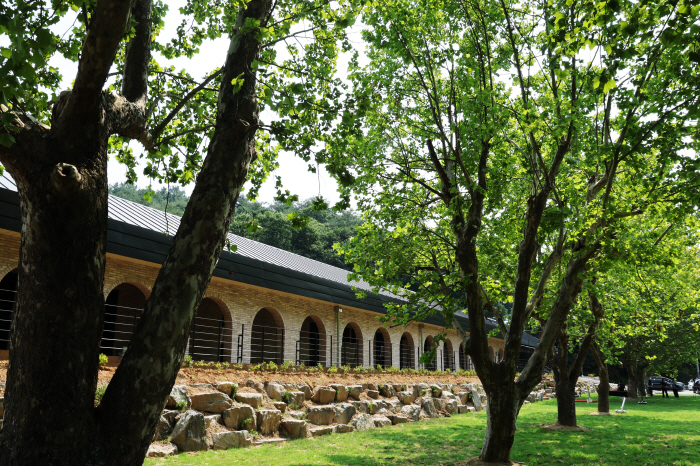
In that sense, building long-stay infrastructure by repurposing closed schools is being viewed as a realistic alternative for local governments that are actively pursuing sports marketing and trying to solve their lodging problems. Closed schools in areas affected by low birth rates and population outflows have sturdy structures, flexible interior layouts, and even playgrounds that can be used as training grounds, making them highly suitable as long-stay facilities for sports tourism.
It is also worth noting that public interest in sports has recently increased, and sports tourism, which combines sports and travel, is gaining momentum. The tourism industry believes that building sports-based long-stay infrastructure will help revitalize sports tourism and expand the economic ripple effects for local communities.
Of course, it is true that local governments face practical difficulties in converting closed schools into lodging infrastructure. There are many hurdles to overcome, including legal issues related to the use of public facilities, remodeling costs, and the need to secure and operate ongoing programs. However, the situation changed in May, when the Special Act on the Promotion of Utilization of Closed School Property was revised.
First, the administrative barriers that had blocked local governments from building tourism-oriented lodging using closed schools were lowered. A new category of "Integrated Support Facility" was introduced for multi-purpose stays centered on public service, and a "one-stop deemed approval" system was adopted, allowing changes to urban planning and other procedures to be resolved at once simply by publishing a utilization plan approved by the superintendent of education of a city or province. In particular, the Ministry of the Interior and Safety (MOIS) and the Ministry of Education of the Republic of Korea launched their first call for proposals on June 2 for a "Local Government-Education Office Joint Cooperation Project" using closed schools, while also beginning to provide funding so that closed schools can be reborn as regional hubs for education, culture, and industry.
Vice Minister of Education Choi Eun-ok said, "Based on a joint response system among ministries, we will support efforts so that closed schools can become new assets for local communities." She added, "We will identify and expand a variety of closed school utilization models that students and local residents can use together." Vice Minister of the Ministry of the Interior and Safety Kim Min-jae also said, "This will be the first step toward using closed schools as key assets for regional development through cooperation between local governments and education offices." He added, "We will actively support selected cases so they can bring vitality to local communities."
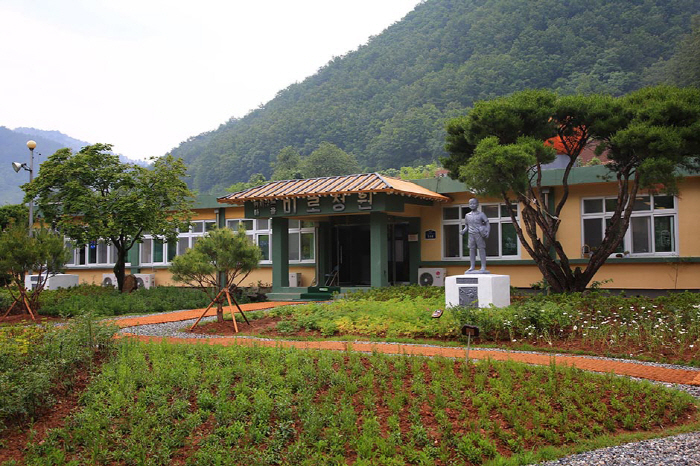
From an operational standpoint, local governments can work with specialized companies that produce content related to sportscation and Sports Education. In the case of Samcheok-si, it is actively promoting sports marketing through 3x3 basketball tournaments while also rolling out a range of programs, such as Sports Mentoring Career Camp, to help local youth address educational disparities. Before expanding its sports marketing efforts, Samcheok-si also used closed schools to build long-stay infrastructure such as Miro Garden.
Local governments’ sports marketing has now entered an era of "competition for stays" rather than simply "competition for hosting." Overseas, there are many examples of successful long-stay sports tourism models that combine lodging infrastructure with diverse programs centered on sports. These cases offer useful lessons for local governments in Korea that are considering long-stay sports tourism.
Se-hyoung Kim fax123@sportschosun.com