

One of the hottest ingredients in the dessert market these days is undoubtedly purple ube (purple yam).
Ube is a type of purple yam grown in tropical regions such as the Philippines, and it belongs to the root vegetable family, like sweet potatoes and potatoes.
Its vivid purple color has become a sensation on social media, and it is now recording explosive growth, enough to be dubbed the "Purple Gold Rush" as it takes over the baton from matcha, which had long dominated the dessert industry.
According to data from the Department of Trade and Industry of the Philippines, the country exported 1.7 million kilograms of ube last year, up more than 20% from a year earlier. More than half, or 56%, was shipped to the United States, while Japan and China were also among the major export destinations.
K-food is also turning purple. According to Listening Mind, monthly searches for the standalone keyword "ube" reached about 96,300 as of March, up 3,401% from the end of last year. Search growth for "ube powder," a key ingredient in product manufacturing, reached 32,744%.
Beyond its visual impact, ube is also gaining traction because it is seen as a "healthy dessert ingredient." Analysts say it fits the Healthy Pleasure trend among younger consumers who prefer natural ingredients.
First, anthocyanin, the pigment that gives ube its purple color, is known for its strong antioxidant properties and is said to help prevent aging, support eye, heart and brain health, and reduce inflammation. It also contains vitamin C and potassium, which may help maintain immunity and manage blood pressure. In addition, its rich dietary fiber may support gut health and prevent constipation, while also increasing satiety and helping to moderate sharp spikes in blood sugar. Another advantage for blood sugar control is that it contains resistant starch, which is not easily broken down by digestive enzymes and reaches the large intestine. Unlike matcha, it is caffeine-free, which is another reason people seek it out.
However, desserts made with ube can become high in calories because sugar, condensed milk and butter are often added for flavor. Cooked ube contains about 120 to 140 kcal per 100 grams, similar to steamed sweet potatoes. Still, commercially sold desserts may be high in sugar and fat, so overconsumption should be avoided.
In a recent report, KOTRA explained that ube's rise is not simply a trend in a specific dessert ingredient, but a sign of how local food culture is being industrialized in the global food market through color, flavor and storytelling. In the Philippines, ube has long been an ingredient rooted in traditional desserts such as Ube Halaya, Halo-halo and cakes. More recently, however, its use has expanded to cafe drinks, ice cream, bakeries and cookies. In particular, as major food and beverage brands in key consumer markets such as the United States and the United Kingdom have launched ube menus, and exports of yams including Philippine ube have risen since 2023, ube is being re-evaluated as a food material that combines consumer keywords such as "purple," "Asian flavor" and "natural color."
In the domestic market, which has been growing rapidly this year, ube's status appears to be rising even further as summer approaches. Its natural purple color gives off a refreshing, cool feeling that suits the season, while its distinctive vanilla aroma and subtle sweetness taste even better when paired with cold dairy products or tropical fruits than when eaten on their own.
As a result, not only the food and beverage and franchise industries but also the retail sector are launching a variety of ube-based products for the summer season.
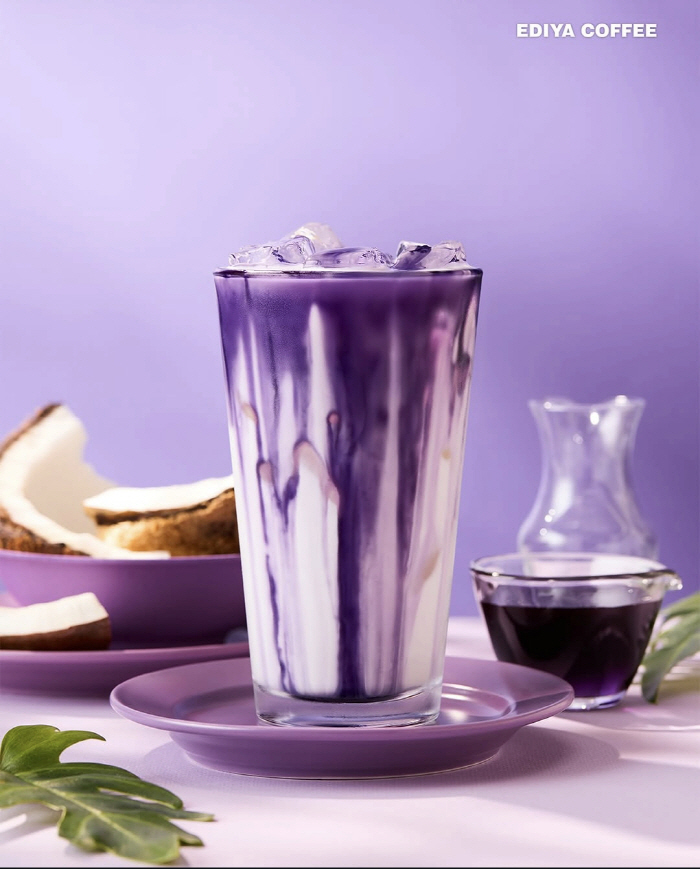
EDIYA COFFEE recently introduced "Ube Coconut" as a summer seasonal drink. The menu was designed to meet customer demand for a light and refreshing beverage in the sweltering heat, and the company said it adds a unique taste and visual appeal by combining the savory flavor of ube with the clean taste of coconut milk.
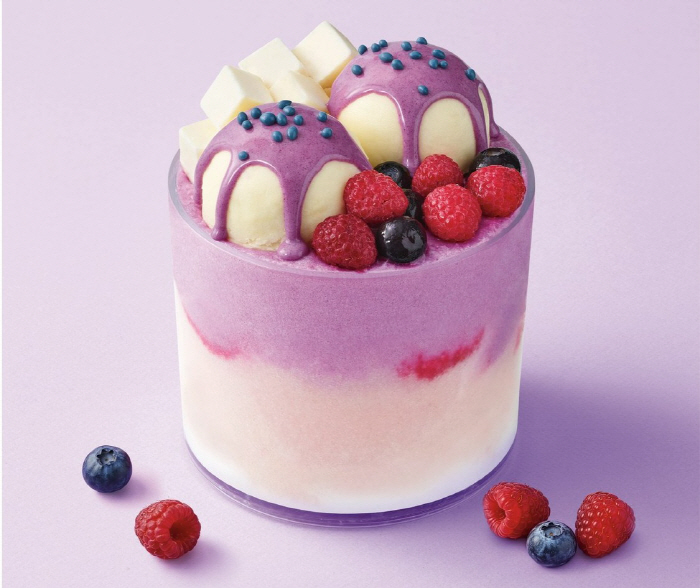
Sulbing is strengthening its summer lineup by unveiling three new items: Sulbing Ube Berry Cheese Bingsu and two ube drinks.
The Sulbing Ube Berry Cheese Bingsu, which stands out for its purple visual appeal, combines sweet ube, tangy berries and soft milk ice. It offers a smooth ube flavor that blends with the milk ice, along with a mix of sweet and tart tastes that change with every bite. The three brightly colored drinks — Ube Latte, Ube Cafe Latte and Ube Matcha Latte — are all served only as iced beverages.
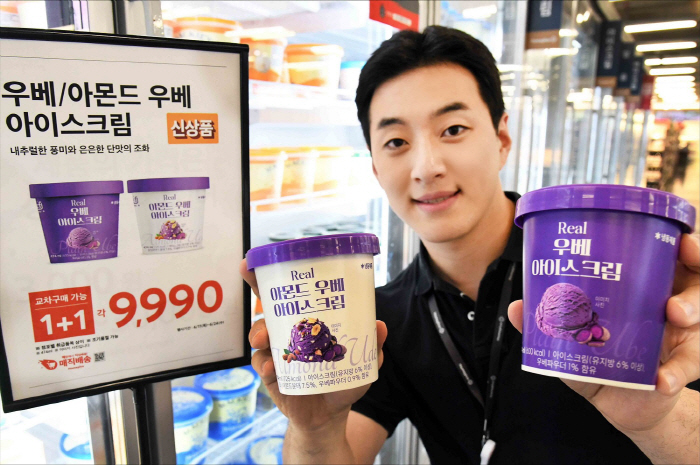
Homeplus recently launched two types of ube ice cream and is running a 1+1 promotional event to mark the release. It introduced the pint-sized "Real Ube Ice Cream," which captures the soft texture and sweetness of ube itself, and "Real Almond Ube Ice Cream," which pairs ube with savory almonds to maximize the chewy texture and mouthfeel.
An industry official said, "Thanks to the vivid color that comes naturally from the ingredient itself, ube is being consumed among Generation MZ as a visual culture phenomenon represented by the hashtag '#Ubecore.'" The official added, "For ube to establish itself as a steady seller, it needs purchase triggers such as distinctive recipes that go beyond its visual appeal."
Kim So-hyung, Sportschosun