

[Sportschosun, Jang Jong-ho] As the 2026 FIFA World Cup in North and Central America is underway, a supercomputer developed by British researchers has given Spain the highest chance of winning the tournament.
However, Spain drew 0-0 with underdog Cape Verde in its opening group-stage match on the morning of the 16th, Korea time, raising doubts about whether that prediction will come true.
Researchers at the University of Liverpool recently ran 1,000 World Cup simulations using a Machine Learning (ML)-based supercomputer and said Spain had the highest title probability at 26.1%.
England ranked second at 17.0%, followed by France at 13.5%, Argentina at 12.4%, and Portugal at 10.6%. The researchers also singled out Norway as a dark horse, giving it a 3.6% chance of winning.
Dr. Benjamin Holmes, who led the study, explained, "Our model also rated Spain as a title contender, just like bookmakers did, but Norway emerged as the most noteworthy dark horse."
What sets this prediction apart is that it goes beyond simple FIFA World Ranking comparisons or team strength assessments. It incorporates the latest machine learning technology, factoring in each player's ability, interactions within the team, and tactical compatibility with opponents. The model also included injuries, suspensions from accumulated yellow cards, scoring potential, and even weather and altitude conditions in host countries.
The researchers said the model has posted a relatively strong track record, including correctly predicting England's runner-up finish at UEFA Euro 2024.
In the Golden Boot forecast, Norway's Erling Haaland and Spain's Mikel Oyarzabal were analyzed as joint favorites, each averaging 5.2 goals.
England's Harry Kane was also listed among the top contenders in third place with a 12.2% chance.
The latest results are similar to, or different from, other supercomputer predictions released earlier.
First, a research team at the University of Reading in the UK analyzed all international matches played by national teams since January 2023 and predicted that Argentina had the highest chance of winning, ahead of France and Spain. Brazil and England followed, while Portugal, Colombia, the Netherlands, Germany and Uruguay also made the top 10.
Sports data company Opta Sports gave Spain a 16.1% chance of winning.
France followed at 13%, England at 11.2%, Argentina at 10.4%, Portugal at 7%, Brazil at 6.6%, Germany at 5.1%, and the Netherlands at 3.6%.
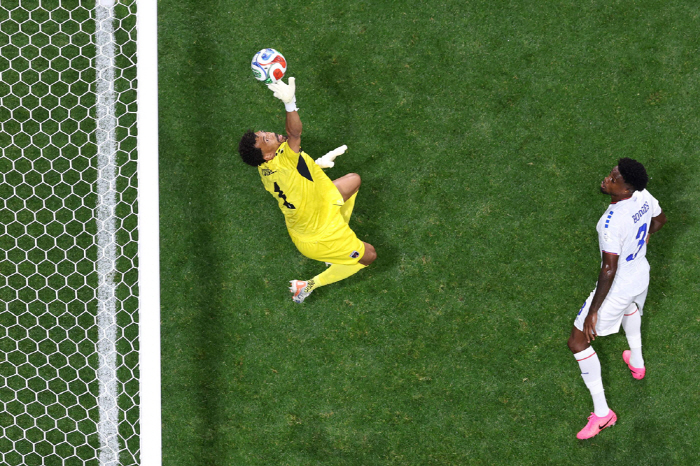
Despite those forecasts, Spain drew 0-0 with Cape Verde, Africa's first-ever World Cup participant, in its opening group match on the 16th and suffered an embarrassing setback.
By contrast, Cape Verde, ranked 67th in the FIFA World Ranking and home to 520,000 people, held La Roja to a draw with spirited play and a standout performance from goalkeeper Vozinha.
Experts said, "Given the many variables in a World Cup, the actual title probability for a favorite is usually only around 20%." They added that this tournament is also likely to produce surprises. In the end, because a football is round, no one can be certain of victory.
Jang Jong-ho, bellho@sportschosun.com