

A study has found that circadian rhythm is closely related to blood sugar control in patients with Type 2 diabetes (T2D).
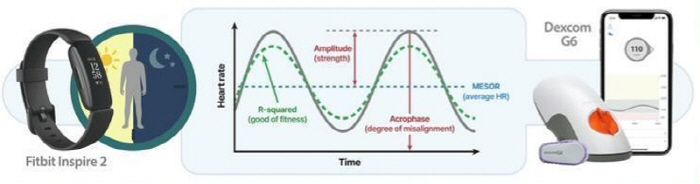
The study drew attention for empirically analyzing the link between circadian rhythm and glucose changes using a Continuous Glucose Monitor (CGM) and a wearable activity tracker.
A research team led by Lee Da-young and Kim, Nan Hee of the Department of Endocrinology at Korea University Ansan Hospital, Heon-Jeong Lee of the Department of Psychiatry at Korea University Anam Hospital, and Lee Jeong-bin of the Department of Computer Engineering at Sunmoon University conducted the study on 122 patients with Type 2 diabetes (T2D) who were receiving insulin treatment at Korea University Ansan Hospital between 2021 and 2024. Participants wore a CGM and a wearable activity tracker at the same time for 10 days, and the team collected data on glucose changes, sleep duration, physical activity, heart rate and other circadian rhythm-related indicators.
The analysis showed that the patient group with the highest circadian rhythm stability had a blood sugar management target attainment rate of 46.3%, about 2.3 times higher than the lowest group at 20.0%. Even after adjusting for major factors such as age, Body Mass Index (BMI) and glycated hemoglobin (HbA1c), higher circadian rhythm stability was associated with a greater likelihood of reaching blood sugar control targets.
The link between physical activity and blood sugar control also varied by time of day. The team divided the day into nighttime (00:00-06:00), morning (06:00-12:00), afternoon (12:00-18:00) and evening (18:00-24:00), then analyzed the relationship between step counts and glucose indicators in each period. As a result, activity in the afternoon showed the clearest connection with blood sugar management indicators. Patients who were more active during this period tended to spend more time within the target glucose range and showed lower glucose variability.
Sleep was also closely linked to blood sugar control. Patients who slept long enough had a lower risk of hypoglycemia and smaller fluctuations in blood sugar levels.
Professor Lee Da-young said, "Until now, diabetes management has focused on diet, exercise and medication, but this study shows the need to pay attention to circadian rhythm management as well." She added, "Maintaining a regular and stable daily rhythm can help with blood sugar control."
"Now that we have confirmed the link between circadian rhythm and blood sugar control, we plan to conduct follow-up studies to see whether actively helping diabetes patients adjust their lifestyle habits and restore their circadian rhythm leads to real improvements in blood sugar," she continued. "We also plan to identify the relationship between circadian rhythm and various diabetes complications, including diabetic kidney disease (DKD) and retinopathy."
Meanwhile, the study was recently published in the international journal Metabolism in the field of metabolic diseases and endocrinology, and was also featured in BRIC's Honored People Who Illuminate Korea. Hanbitsa is a platform that selects and publicizes outstanding Korean research published in world-class journals with an Impact Factor of 10 or higher or ranked in the top 3% of their field.
Jang Jong-ho