

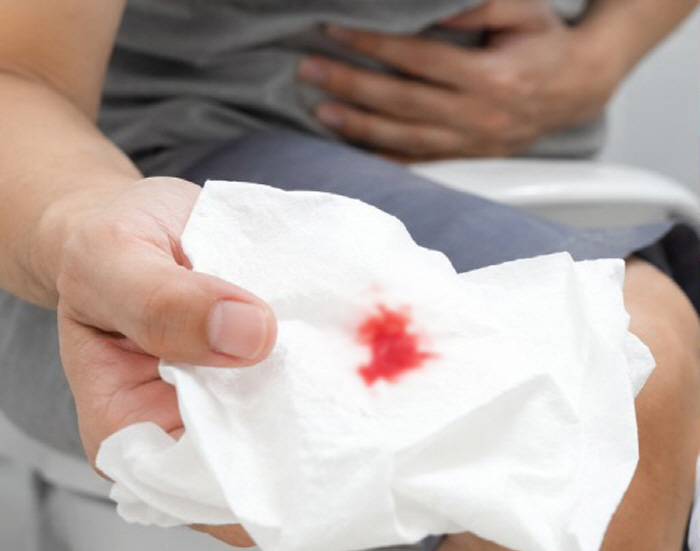
[Sportschosun Reporter Jang Jong-ho] Bright red blood on tissue after a bowel movement. Most people brush it off, thinking it is probably hemorrhoids, but repeated anal bleeding and pain can be a warning sign from the body. If the symptoms gradually worsen or do not improve with treatment, it is important to check for the possibility of another anal disease, not just simple hemorrhoids.
Anal cancer is a malignant tumor that develops in the anal area, the final part of the digestive tract. It is a separate disease from colorectal cancer (CRC) and rectal cancer, with different locations of occurrence, cell types, and treatment methods. The most common form is squamous cell carcinoma, but adenocarcinoma and malignant melanoma can also occur.
According to National Cancer Registration Statistics from the Korea Central Cancer Registry (KCCR), the number of new anal cancer patients in South Korea rose from 256 in 2011 to 325 in 2020, an increase of about 27%. While the annual number of patients remains around 300, making it a rare cancer, there are many cases in which diagnosis is delayed because bleeding and pain are mistaken for hemorrhoids.
Many cases of anal cancer, especially squamous cell carcinoma, are associated with Human papillomavirus (HPV) infection, and the disease is known to have a strong link to HPV 16 type. Other risk factors include immunosuppression, smoking, and a history of cervical cancer, vaginal cancer, or vulvar cancer. Chronic inflammatory anal diseases such as long-lasting Anal fistula may also be related, though rarely. By contrast, hemorrhoids are not known to have a strong direct connection to anal cancer.
In the early stages of anal cancer, symptoms may be absent or mild, making it difficult for patients to notice them on their own. The most common symptom is anal bleeding, which may be accompanied by anal pain, itching, a foreign-body sensation, or a feeling of a mass. As the disease progresses, changes in bowel habits, thinner stools, a sensation of incomplete evacuation, nonhealing ulcers, and enlarged groin lymph nodes may appear. Because symptoms alone make it difficult to distinguish the disease from hemorrhoids, persistent symptoms or a lack of improvement after treatment require a thorough examination.
Diagnosis of anal cancer begins with a digital rectal examination and is confirmed through lesion assessment using anoscopy, proctoscopy, and colonoscopy, followed by a biopsy. CT, MRI, and PET scans are then used to evaluate the stage and whether the cancer has spread. For squamous cell carcinoma, which accounts for most anal cancer cases, chemoradiotherapy has now become the standard treatment.
HPV vaccination, safe sexual practices, and quitting smoking can help prevent anal cancer. Early treatment of chronic inflammatory anal diseases such as long-lasting Anal fistula is also beneficial. After treatment, maintaining adequate nutrition and a balanced diet, along with following medical staff instructions for anal hygiene and sitz baths, can help recovery and relieve symptoms.
Professor Im Byeori of the Department of Surgery at Soonchunhyang University Seoul Hospital said, "Anal bleeding or pain is often dismissed as hemorrhoids, but if the symptoms recur or persist for a long time, it is essential to undergo an accurate examination." She added, "Although anal cancer is relatively rare, early detection makes it more likely that treatment can preserve anal function, and because treatment outcomes are generally good, it is important not to overlook even small changes in the body."
Reporter Jang Jong-ho bellho@sportschosun.com