


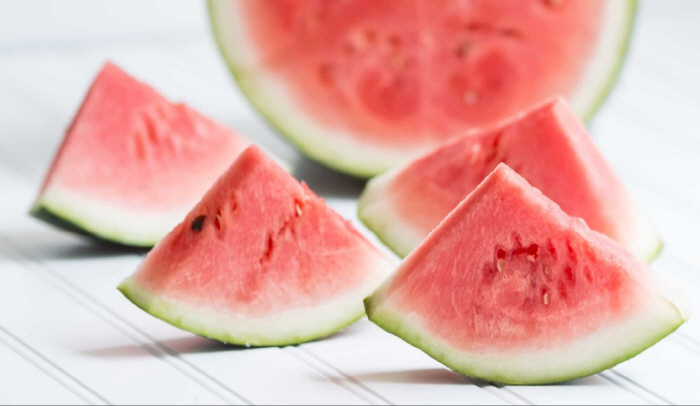
[Sportschosun reporter Jang Jong-ho] Watermelon, a signature summer fruit, is more than 90% water, making it highly effective in preventing thirst and dehydration caused by the heat.
It is also rich in antioxidants such as Lycopene and Vitamin C, which help prevent cell damage, slow aging, and may have a positive effect on preventing cardiovascular disease.
Some studies have reported that higher Lycopene intake may be linked to a lower risk of prostate cancer, but a causal relationship has not yet been clearly proven.
Experts stressed that while it cannot be said that watermelon prevents cancer, a diet that includes plenty of fruits and vegetables can help reduce the risk of developing various cancers.
The potassium and citrulline in watermelon help stabilize blood pressure, widen blood vessels, and improve circulation.
L-citrulline, an amino acid, is used in the body to produce nitric oxide. Nitric oxide relaxes blood vessels, supports blood flow, and may have a positive effect on blood pressure control.
However, most studies published so far have focused on high-dose citrulline supplements rather than watermelon itself, so it is difficult to expect the same effect from watermelon alone.
It is also high in dietary fiber, which promotes bowel movement and helps prevent constipation.
So which is better: eating watermelon whole or drinking it as juice?
Experts recommend eating watermelon whole.
When watermelon is blended into juice, much of its dietary fiber is removed. Its natural sugars are also classified as free sugar, so excessive intake should be avoided.
By contrast, whole watermelon retains its fiber, creates greater fullness, and is digested more slowly, which makes it better for blood sugar management.
Watermelon is safe for most people, but some should be cautious.
Because it is high in sugar, eating too much can cause a sharp rise in blood sugar for people with diabetes. Overeating it while it is cold may cause stomach pain or diarrhea, and its high potassium content can be a burden for people with weakened kidney function. Eating large amounts late at night can also lead to frequent urination due to excess fluid intake, which may reduce sleep quality.
Experts advise that two to three slices a day, or about 200 to 300 grams, is appropriate for adults, and that intake should be adjusted according to each person’s health condition.
In particular, people with diabetes and kidney disease need to limit their intake.
Jang Jong-ho, bellho@sportschosun.com