

The upcoming summer break and vacation season are the busiest time of year for eye clinics. In particular, college students who suddenly have more free time often consider vision correction surgery to escape the inconvenience of glasses and contact lenses.
The biggest trends in the vision correction market these days are clearly SMILE LASIK and SMILE Pro. Because recovery is fast and pain is minimal, many people can correct myopia with ease. However, to maximize satisfaction after surgery, the size of the corneal incision must be carefully considered.
SMILE surgery requires the removal of a lenticule, a small piece of corneal tissue cut from inside the cornea, so a precise incision is essential. The smaller the incision, the less damage there is to the eye's nerves, and the lower the risk of side effects such as dry eye. That makes it overwhelmingly advantageous for patients.
However, even advanced laser systems widely used around the world for SMILE surgery, such as the VisuMax 500 or VisuMax 800, are limited by a basic incision range of 2 to 4 mm. In other words, it is practically impossible to create an incision smaller than 2 mm using only the standard options provided by the equipment makers.
Even if the incision is forced to be smaller, existing surgical instruments were all designed for a 2 mm opening, creating another obstacle: the tools cannot fit through a narrower gap. Incisions under 2 mm were blocked by two barriers at once, the limits of the equipment and the limits of the instruments.
What broke through those technical limits was the 1 mm SMILE surgery independently developed by the author. Rather than relying on the equipment's default settings, a special laser-blocking filter was developed in-house and received approval from the Ministry of Food and Drug Safety (MFDS) as well as a patent. By precisely controlling the laser's irradiation range, the system overcame its technical limits and succeeded in creating a micro-incision of less than 1 mm, or about 0.9 mm.
The effort did not stop there. The surgical instruments themselves were also developed so that the lenticule could be safely separated through the narrowed incision.
At the center of this achievement is the proprietary micro-instrument LEMI (Low Energy Micro Incision), created through more than 10 years of continuous research and upgrades. It was the combination of independent laser-blocking technology and 1 mm-specific micro-instruments that turned the once unimaginable '1 mm SMILE surgery' into reality.
Still, no matter how popular or advanced SMILE surgery becomes, it cannot be applied to every patient.
Among college students seeking vision correction, many run into obstacles during detailed examinations.
Some have corneas that are naturally too thin, while others suffer from severe high myopia or ultra-high myopia, meaning too much corneal tissue would need to be removed. If too much of the cornea is cut away, it may no longer withstand intraocular pressure, leading to serious complications such as corneal ectasia, including keratoconus. For these patients, laser surgery on the cornea is ruled out.
For those whose corneas are too thin or whose ultra-high myopia makes SMILE surgery impossible, the implantable collamer lens (ICL) is a clear alternative.
Lens implantation preserves the cornea completely because it inserts a special lens into the eye without removing any corneal tissue.
Even if a problem were to arise, the lens can be removed and the eye safely restored to its pre-surgery condition. That gives the procedure a very high level of medical safety.
Recently, lenses with their own micro-openings have been used to help aqueous humor flow inside the eye. Unlike in the past, iridotomy can now be omitted, further improving patient convenience and safety.
What matters most is accurately understanding each patient's eye condition and finding an experienced hospital and medical team capable of safely performing everything from highly advanced 1 mm SMILE surgery to lens implantation for eyes that cannot undergo laser surgery.
If you are considering vision correction during the break, do not simply follow a one-size-fits-all surgical method. Instead, consult a specialist with outstanding technology and safety systems, and make the best choice for your own eyes.
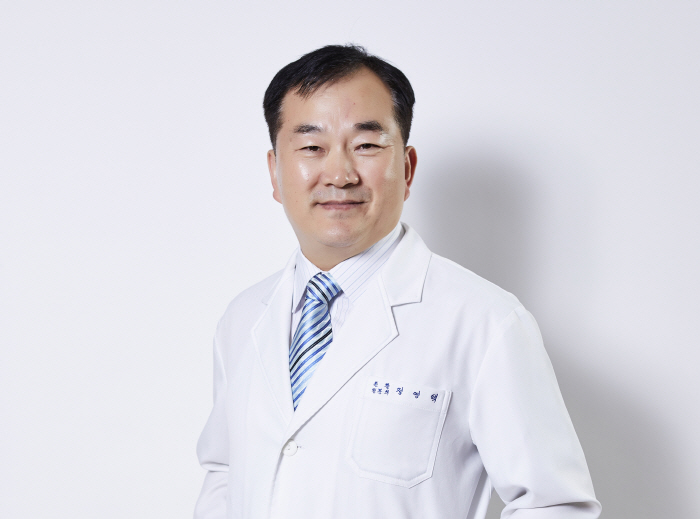
Courtesy of Jung Young-taek, hospital director, Jeonju Onnuri Eye Hospital