

[Sportschosun, Jang Jong-ho] Hallym University Sacred Heart Hospital, led by President Hyung-Soo Kim, said it shared advanced Korean examples of smart hospitals and digital healthcare with a Japanese advanced information society delegation on the 16th.
The visit was organized as part of the "Internet Columbus Project," led by Yeom Jong-soon, an adjunct professor at the Graduate School of Public Policy at Meiji University. The project aims to showcase Korea's use of ICT and explore potential technological cooperation between the two countries. The Japanese advanced information society delegation consisted of 14 digital transformation experts from both the public and private sectors, including information strategy consulting firms, e-government consulting firms, officials from Japan's Digital Agency, IT engineers, and a former mayor.
The delegation stayed in Korea from June 15 to 17 and visited major domestic companies, institutions and local governments to examine a range of digital transformation cases in administration, healthcare and education. The visit to Hallym University Sacred Heart Hospital was arranged to benchmark data-, AI- and robot-based innovations that are being applied in actual hospital operations in the fields of medical informatization and digital healthcare.
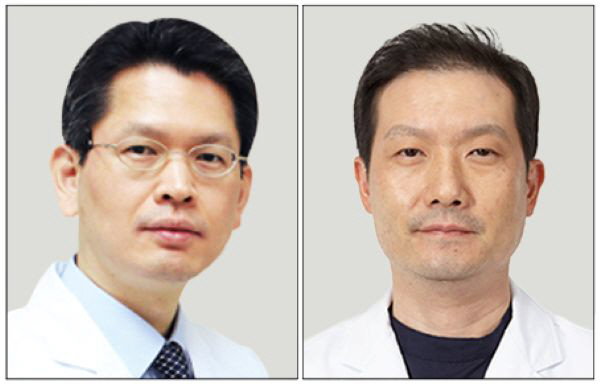
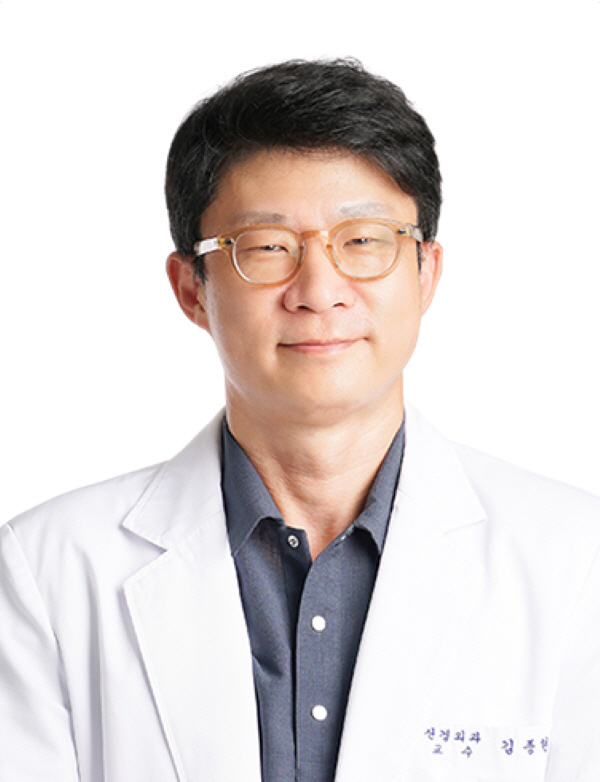
The event began with seminar presentations at Ilsong Culture Hall on the fifth floor of the Second Annex at Hallym University Sacred Heart Hospital. President Hyung-Soo Kim, Seo Young-kyun, head of the Big Data Center at Hallym University Medical Center and a professor in the Department of Family Medicine at Hallym University Sacred Heart Hospital, Lee Min-woo, a professor in the Department of Neurology at Hallym University Sacred Heart Hospital, and Jeon Jin-pyeong, a professor in the Department of Neurosurgery at Hallym University Chuncheon Sacred Heart Hospital, attended and shared their experience in building a smart hospital and the results of digital transformation.
The seminar consisted of three sessions. In the first session, Seo Young-kyun presented on "Current Status of Big Data Operations." He introduced the Big Data Center's organizational and operational structure, standardization of medical data, the data lake cloud platform "HERO," the data review system and data quality certification, explaining how medical data are produced, stored and used. He also shared the hospital's experience in building systems for data security, de-identification, standardization and quality management so that medical data can lead to real research and clinical innovation.
In the second session, Professor Lee Min-woo presented a case study on building a generative AI-based EMR draft writing system under the theme of "Medical Center Generative AI, HAI." HAI, or Hallym Artificial Intelligence, is a hospital-specific generative AI system embedded in the EMR. The presentation introduced a system that automatically generates draft EMR notes for the entire care cycle, from admission to discharge, based on a Large Language Model (LLM). It also showed how the system helps reduce writing time, standardize sentence expression, improve quality and minimize missing information.
In the third session, Professor Jeon Jin-pyeong presented his experience in building a teleconsultation platform for responding to acute brain diseases in Gangwon Province under the theme of "Medical Center DX Expansion Cases." He explained how the hospital built an AI-based teleconsultation platform alongside a social media-based transfer cooperation system among experts to reduce gaps in regional medical infrastructure. He stressed that for acute conditions such as cerebral hemorrhage, cerebral infarction and traumatic brain injury, rapid diagnosis and transfer decisions are critical, and that real-time cooperation between local medical institutions and tertiary hospitals can determine patient outcomes.
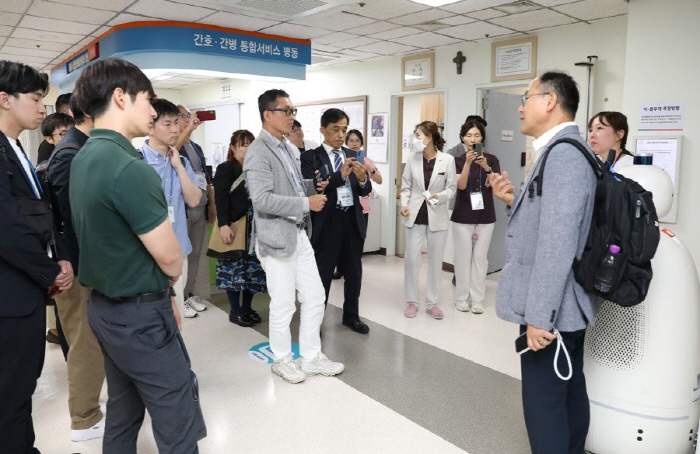
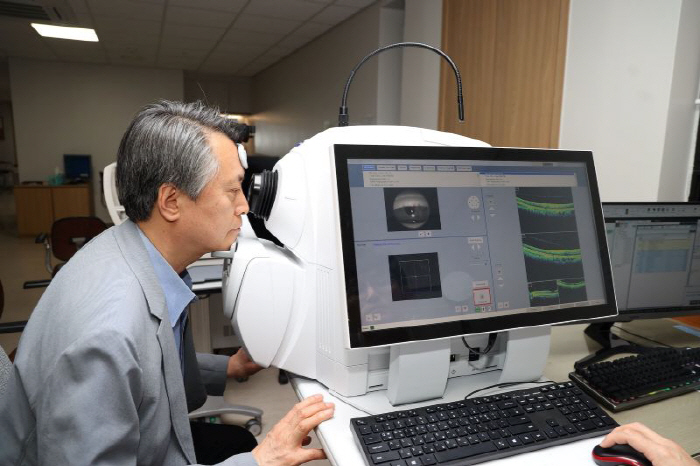
After the seminar, the delegation toured Hallym University Sacred Heart Hospital's major smart infrastructure. The visitors examined the Command Center on the 10th floor of the Second Annex, the Smart Ward in the main building and the hospital's medical service robots. At the Command Center, they saw how the hospital centrally monitors operations and manages key indicators such as beds, emergencies and patient flow based on data. In the Smart Ward, they reviewed the use of digital technologies, including a smart bed monitoring system, to improve patient safety and staff efficiency.
Yeom Jong-soon, who led the delegation, said, "Korea's examples of medical informatization and digital healthcare are important models that medical institutions and the public sector in Japan can learn from." He added, "It was meaningful to see firsthand how Hallym University Sacred Heart Hospital operates AI, big data, the Command Center and the Smart Ward in a real hospital setting." He said the delegation would actively introduce the cases it observed during the visit when discussing the future direction of medical informatization and digital healthcare in Japan.
President Hyung-Soo Kim said, "Hallym University Sacred Heart Hospital has developed digital technology not simply as a convenience feature, but as hospital infrastructure that improves patient safety, enhances medical quality and boosts staff efficiency." He added, "We hope this visit by the Japanese advanced information society delegation will serve as an opportunity to share medical informatization experience between Korea and Japan and broaden the scope for cooperation in digital healthcare."
Hallym University Sacred Heart Hospital plans to further advance core smart hospital technologies, including AI, big data, robots and the Command Center, to strengthen patient-centered digital medical services and expand its model for medical digital transformation through exchanges with domestic and overseas institutions.
Jang Jong-ho, bellho@sportschosun.com