

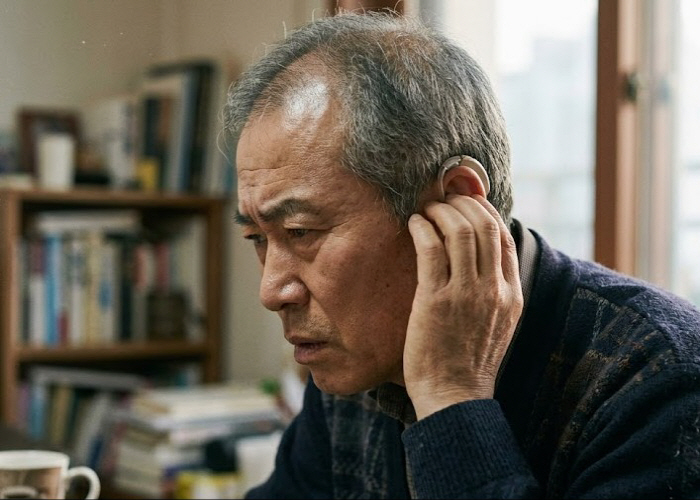
[Sportschosun Reporter Jang Jong-ho] A study has found that sudden sensorineural hearing loss, an emergency condition in which hearing in one ear suddenly declines, is linked to the hot and humid weather of summer.
A research team led by Kim Min-hee of the Department of Korean Medicine Ophthalmology, Otolaryngology, and Dermatology at Kyung Hee University Hospital at Gangdong analyzed 12 years of National Health Insurance Big Data covering 360,000 cases and confirmed for the first time in Korea a correlation between hot, humid weather and the onset of sudden sensorineural hearing loss. The study was published in the latest issue of the international journal The Laryngoscope.
◇Sudden Sensorineural Hearing Loss: Temperature and Humidity Are Major Risk Factors... 'Korean-Style Summer' Raises the Risk
Using data from 2007 to 2019, the research team analyzed how weather factors affect the onset of sudden sensorineural hearing loss. In a comparison with inguinal hernia, a condition not influenced by season, the incidence of sudden sensorineural hearing loss was lowest in winter and highest in summer. In particular, temperature and humidity affected not only the day of onset but also the conditions one to two days earlier. When temperature, humidity, and rainfall were analyzed together, the risk was highest on days when high temperature, high humidity, and precipitation occurred at the same time.
The main risk factor for sudden sensorineural hearing loss was not simply heat, but the 'Korean-style summer' climate, which shifts rapidly into a hot and humid environment over a short period. Previous studies in Taiwan and Greece, where temperatures are higher than in Korea but climate fluctuations are milder, did not show a clear link between weather and sudden sensorineural hearing loss. In Korea, however, where seasonal changes are more pronounced, the climate-related risk of onset was clearly confirmed.
Professor Kim Min-hee explained, "Most vascular diseases increase in winter, but the interesting finding of this study is that sudden sensorineural hearing loss shows a higher risk in summer."
◇Hot and Humid Weather Affects Microvascular Blood Flow... Immediate Diagnosis Needed for Sudden Hearing Loss
The exact cause of sudden sensorineural hearing loss has not yet been clearly identified, but the research team focused on the possibility that physiological changes in hot and humid environments may affect the microvessels of the cochlea.
When dehydration occurs in hot and humid weather, blood viscosity increases. If heat stress continues, blood vessel function itself may change or inflammatory responses may be triggered. The cochlea, which is responsible for hearing, receives blood only through extremely thin and delicate microvessels from the brain, making it highly sensitive to such changes in blood flow.
Sudden sensorineural hearing loss is a condition in which hearing in one ear drops sharply without a specific cause. It is diagnosed when pure-tone audiometry shows a hearing loss of 30 decibels or more across three or more consecutive frequencies within three days. Because it often occurs without warning signs, patients should seek medical care immediately if one ear suddenly feels blocked or loses hearing, if sudden tinnitus or dizziness occurs, or if sounds become distorted. In particular, treatment should begin within two weeks of onset to improve the chances of hearing recovery.
◇An Integrated Medical Approach That Considers Overall Balance Is Needed
Kyung Hee University Hospital at Gangdong operates an integrated medical system in which its Oriental medicine hospital and medical center work closely together. The otolaryngology department at the medical center provides hearing and imaging tests as well as initial standard treatment, while the Oriental Otolaryngology and Dermatology Clinic handles customized intensive care such as acupuncture, electroacupuncture, bee venom pharmacopuncture, and herbal medicine. Through this system, the hospital offers inpatient and outpatient programs for patients whose symptoms persist after initial treatment, effectively improving symptoms that did not respond to steroid therapy.
Professor Kim Min-hee emphasized, "Sudden sensorineural hearing loss should be understood not as a simple local ear disease, but as a condition related to systemic blood flow and environmental stress." She added, "Therefore, even when recovery is insufficient after initial treatment, it is necessary to actively consider an integrated treatment approach that restores balance throughout the body, rather than focusing only on treatment of the ear itself."
Jang Jong-ho bellho@sportschosun.com