


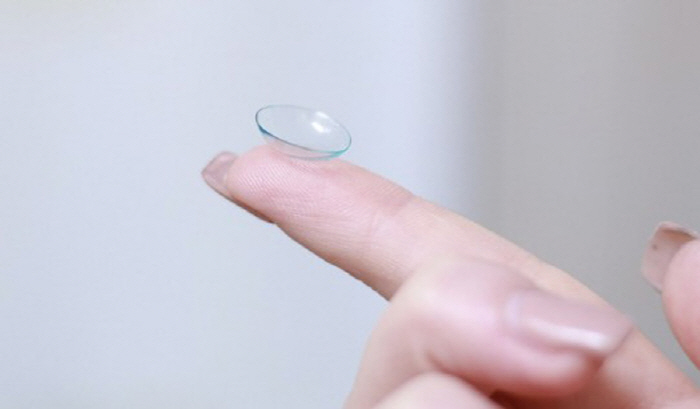
[Sportschosun Jang Jong-ho] As more people head overseas for summer vacations, doctors are warning that wearing contact lenses during long flights can seriously affect eye health. In the dry cabin environment, the risk of damage to the eye’s surface and infection can rise, making glasses the safer choice on long-haul routes.
In a recent interview with the New York Post, U.S. ophthalmologist Dr. Priya M. Mathews said, "If your eyes are healthy, the flight is short or medium-length, and you do not sleep during the flight, wearing contact lenses is generally not a major problem."
The situation is different on long-haul international flights. Because aircraft cabins operate at high altitude, the air inside is extremely dry. The longer passengers are exposed to that environment, the faster the tear film evaporates, leaving both the eyes and the contact lenses dry.
Dr. Mathews explained, "Many people feel dryness, a foreign-body sensation, redness, irritation, or pain after getting on a plane. In most cases, these symptoms are caused by dry eye getting worse in the cabin environment."
Cabin pressure is regulated to maintain a stable atmosphere, but that process also reduces the amount of oxygen delivered to the eyes. When dry air is added to the mix, contact lenses are more likely to stick to the cornea or cause tiny scratches on the eye’s surface.
Once small injuries occur on the eye’s surface, the risk of bacterial infection can also increase in the enclosed cabin space shared by many passengers. In severe cases, temporary vision loss may occur, and experts warned that permanent vision damage, though very rare, cannot be ruled out.
Another ophthalmologist, Dr. Arjan Khura, pointed out that sleeping while wearing contact lenses is even more dangerous.
He said, "Sleeping with contact lenses on greatly increases the risk of eye infection. If your eyes are already red, irritated, sensitive to light, or if you have an existing eye infection, you should definitely wear glasses."
If you must wear contact lenses during a flight, hygiene is essential. Experts advise washing your hands thoroughly before handling lenses, always using fresh cleaning solution, and keeping the lens case clean. They also said rinsing lenses with tap water should be avoided because it can raise the risk of infection.
If your eyes become dry, using artificial tears, switching to a fresh pair of lenses, or temporarily stopping lens wear can help. It is also important to follow your usual replacement schedule, even if you are traveling for a long time or taking multiple flights.
Experts agreed that if proper hygiene is difficult to maintain in the cabin, the safest option is to wear glasses from the start. They also recommended bringing a spare pair in case there are problems with your lenses, lens case, or cleaning solution.
They added that it is best to use a travel-size bottle of lens solution and keep it in its original container rather than transferring it to another bottle, since doing so can increase the risk of contamination.
Jang Jong-ho, bellho@sportschosun.com