

[Sportschosun Jang Jong-ho] Spinal stenosis, a representative degenerative spinal disease, has been steadily increasing among older adults as the population ages.
Many patients ask, "If I have stenosis, does that mean I will eventually need surgery?"
The short answer is no. A diagnosis of spinal stenosis does not automatically mean surgery. What matters more is not simply widening the narrowed spinal canal, but helping patients maintain healthy spinal function and stay active for as long as possible. The goal of spinal treatment is now expanding beyond pain relief to the concept of "spinal longevity."
◇Caused by narrowing of the space where nerves pass
Spinal stenosis is a condition that occurs when the spinal canal, the passage through which nerves travel inside the spine, becomes narrowed.
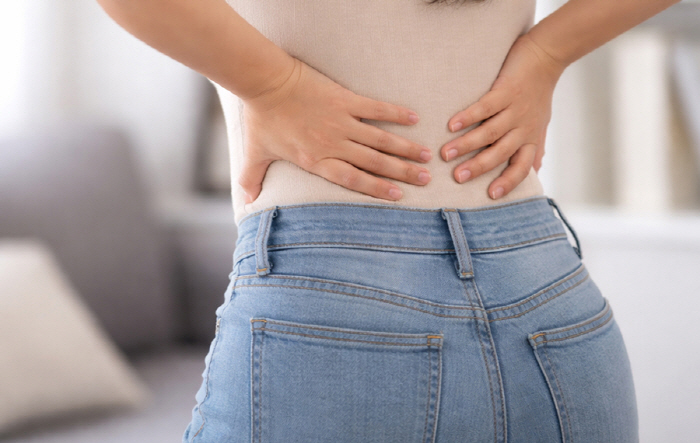
As people age, ligaments thicken, spinal joints enlarge, and degenerative changes in the discs progress, gradually narrowing the space for the nerves. When the nerves are compressed in this process, patients may experience not only lower back pain but also numbness, pulling sensations, and pain that radiate to the buttocks, thighs, and calves.
In particular, symptoms often worsen when patients stand or walk for long periods, while bending forward tends to bring relative relief. Another hallmark symptom is "neurogenic claudication," in which the legs become numb during walking and patients must stop and rest.
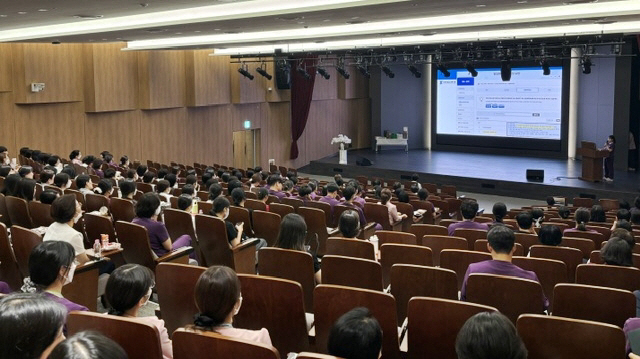
Lee In-gyeong, head of Neurosurgery at Incheon Sejong General Hospital, said, "Just because an MRI confirms spinal stenosis does not mean every patient needs treatment." She added, "Even if the stenosis looks severe on imaging, some patients have little difficulty in daily life. On the other hand, some people with only mild findings on scans may have severe pain." She explained that treatment decisions should be based not only on test results, but also on the severity of symptoms, walking ability, and overall daily function.
◇Treatment should be tailored to the patient's condition
For patients in the early stages of spinal stenosis, conservative treatment such as medication, physical therapy, and exercise therapy is usually tried first. Medication helps reduce inflammation and pain around the nerves, while physical therapy relaxes tense muscles and eases discomfort. Exercise therapy strengthens the muscles that support the spine, reducing strain on the lower back. If pain persists or walking distance decreases despite conservative care, more active non-surgical treatments may be considered.
A representative option is a nerve block.
A nerve block is a treatment that injects medication around an inflamed nerve to reduce swelling and pain. By directly controlling the inflammatory response that causes pain, it can help relieve symptoms and has the advantage of being relatively simple to perform.
If symptoms persist even after a nerve block, epidural neuroplasty may be considered.
In chronic stenosis, inflammation and adhesions often recur around the nerves. Epidural neuroplasty uses a thin catheter to release the adhered tissue and deliver medication, improving the environment around the nerves.
When the stenosis is severe and the space for the nerves itself has become too narrow, balloon dilation may be performed. This method uses a balloon catheter to widen the narrowed area and reduce nerve compression, helping improve walking difficulties and neurogenic claudication.
Lee said, "Treatment for stenosis is not simply a choice between surgery and non-surgical care. What matters is a personalized approach that selects the appropriate treatment stage according to the patient's symptoms and the degree of disease progression."
◇Surgery should be considered if bowel or bladder problems occur
Not every patient with spinal stenosis needs surgery, but there are cases in which surgery is clearly necessary.
Surgical treatment should be considered if symptoms continue to worsen despite sufficient non-surgical treatment, if walking becomes significantly difficult, or if muscle weakness or paralysis develops.
In particular, when bowel or bladder dysfunction is present, the nerve compression may be severe, requiring prompt evaluation and treatment.
Recently, minimally invasive techniques such as single-port spinal endoscopic surgery have advanced, making it possible to relieve nerve compression while minimizing tissue damage. Therefore, if surgery is needed, patients should not simply fear it, but should decide on the right timing for treatment based on an accurate diagnosis.
◇Spinal health is an important asset that must be managed for life
In the past, spinal disease treatment was often viewed as something to address only after pain developed. More recently, however, it has expanded into the concept of "management" to maintain a healthy spine for as long as possible.
In particular, because spinal stenosis is a condition influenced by both degenerative changes and lifestyle factors, treatment that simply eliminates pain is not enough. Patients must improve their habits and manage the condition consistently.
Lee said, "Spinal disease should be understood as a process shaped by aging, lifestyle, muscle function, and body balance." She added, "Treatment is also evolving beyond simply lowering pain scores, toward considering the patient's lifestyle and future quality of life." She advised that healthy habits should be maintained even after spinal treatment, noting that good posture, proper weight control, and regular stretching and strength training help not only manage symptoms but also slow spinal aging.
Jang Jong-ho, bellho@sportschosun.com