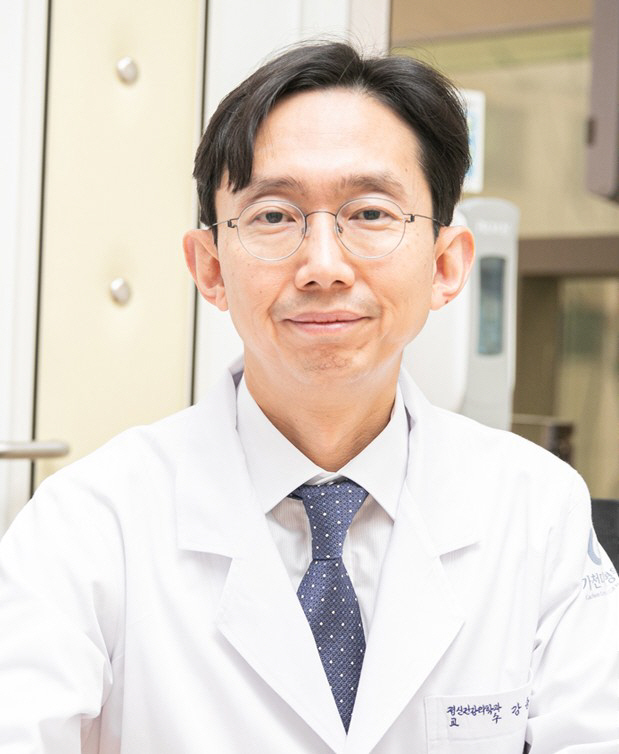


[Sportschosun reporter Jang Jong-ho] Gachon University Gil Hospital and the Incheon Metropolitan City Suicide Prevention Center, led by Professor Kang Seung-geol of psychiatry, will begin developing the nation’s first Korean-style case management program for suicide bereaved families using artificial intelligence (AI).
Gachon University Gil Hospital has been selected as the lead institution for the Ministry of Health and Welfare (MOHW) health care technology R&D project, the "Suicide Intervention Technology Development" initiative, and will launch the "AI-supported evidence-based case management program for crisis management and suicide prevention among suicide bereaved families."
The study, led by Professor Kang Seung-geol of psychiatry, will run for four years from 2026 to 2029 with a total budget of 1.5 billion won. Along with Gachon University Gil Hospital and the Incheon Metropolitan City Suicide Prevention Center, Inha University Hospital, Jaeneung University, and The Catholic University of Korea Incheon St. Mary's Hospital will participate. Jung-gu Mental Health Welfare Center, Michuhol-gu Mental Health Welfare Center, and Bupyeong Mental Health Welfare Center will also cooperate so that the findings can be applied to community-based support services for suicide bereaved families.
Professor Kang Seung-geol, the principal investigator and a psychiatry professor, said, "Suicide bereaved families may face not only shock and difficulties in grieving after a sudden loss, but also depression, isolation, and suicide risk, so they need continuous and specialized support." He added, "Through this study, we will develop a Korean-style program that combines domestic support experience for suicide bereaved families with an evidence-based case management system, and lay the groundwork for providing the support they need at the right time."
He also said, "The Incheon Metropolitan City Suicide Prevention Center's accumulated experience in operating one-stop services for suicide bereaved families, along with its community cooperation network, will serve as an important foundation for this study. We will carry out the research faithfully so that it can help recovery and contribute to strengthening a community-centered suicide prevention system."
The study is expected to help ease the psychological and emotional difficulties faced by suicide bereaved families, including depression, suicide risk, and complicated grief, while also improving quality of life and supporting a return to daily life. It is also expected to strengthen systematic follow-up care and community-based support, thereby increasing the secondary suicide prevention effect.
In particular, the development of an AI-based Korean-style case management program for suicide bereaved families is expected to establish a standardized support system and build a practical foundation that can be used in the field. This is also expected to provide more sustained support for grieving and recovery, while helping reduce social stigma and spread a culture that values life.
Meanwhile, the Incheon Metropolitan City Suicide Prevention Center was established by Incheon Metropolitan City in 2011 and is currently operated by Gachon University Gil Hospital. Since 2019, it has run the one-stop service support project for suicide bereaved families 24 hours a day, providing systematic follow-up care from the initial intake stage through the grieving process. It has also played a leading role in helping bereaved families grieve healthily and return to daily life.
Jang Jong-ho, reporter bellho@sportschosun.com
If you are struggling with depression or other difficult concerns, or if a family member or acquaintance nearby is going through such hardship, you can receive 24-hour counseling from a suicide prevention hotline at 109. You can also use the mental health checkup and online counseling room through the Incheon Metropolitan City Suicide Prevention Center website.