


[Sportschosun reporter Jang Jong-ho] An abdominal aortic aneurysm is one of the most dangerous vascular diseases because it often causes no clear symptoms until it ruptures.
Once the swollen aorta ruptures, it is so deadly that more than half of patients die before reaching the hospital.
In many cases, it is discovered by chance during a health checkup or tests for another condition, since patients usually go about their daily lives without any noticeable pain.
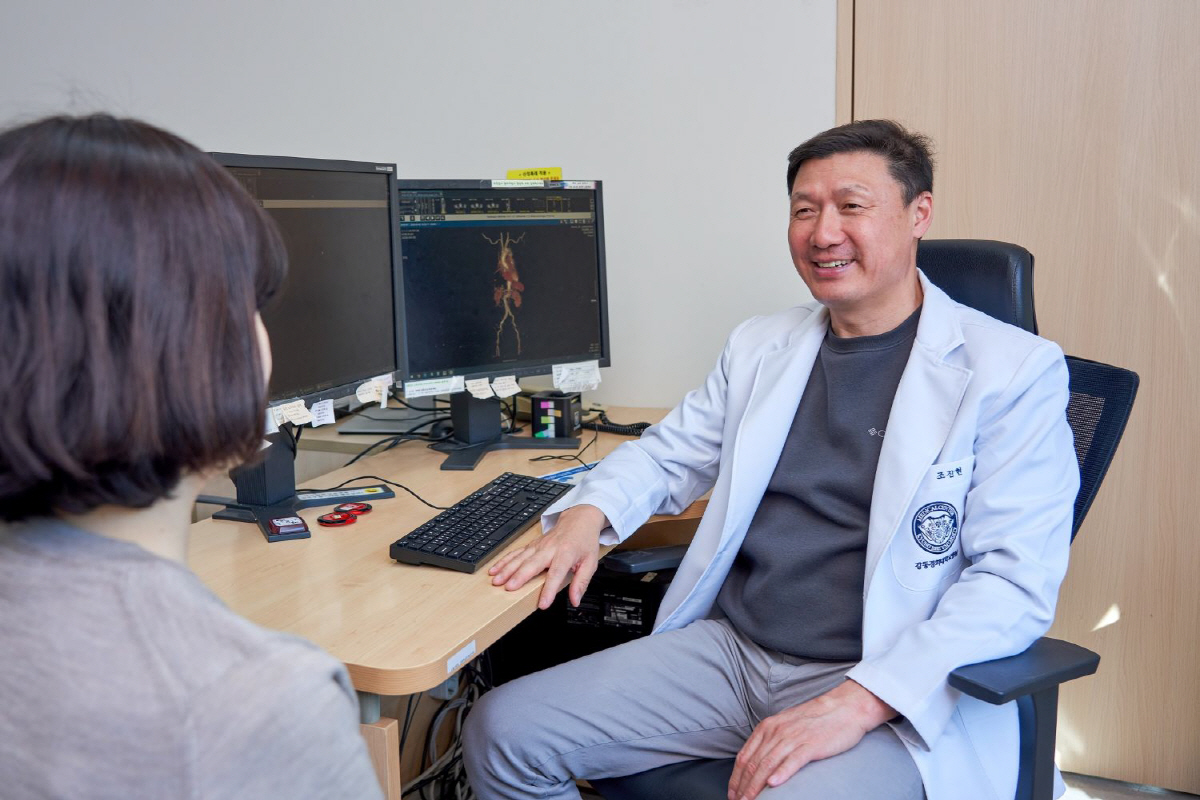
According to statistics from the Health Insurance Review & Assessment Service (HIRA), the number of patients treated for abdominal aortic aneurysm rose from 10,630 in 2020 to 15,650 in 2025, underscoring the need for greater awareness. It is therefore important to closely assess the condition of the blood vessel as soon as it is found and to reduce the risk of rupture through proper treatment. Above all, a diagnosis does not automatically mean surgery. Instead, doctors should monitor how quickly the vessel is changing and whether symptoms are present, then apply tailored treatment at the right time. With help from Professor Cho Jin-hyun of the vascular surgery department at Kyung Hee University Hospital at Gangdong, this article summarizes the symptoms, diagnosis and treatment of abdominal aortic aneurysm.
◇Early detection before rupture is key... Men aged 65 and older with a history of smoking should get checked
Blood vessels play a vital role in sustaining life by delivering oxygen and nutrients throughout the body.
Among them, the aorta is the largest vessel, carrying blood from the heart to the rest of the body. An abdominal aortic aneurysm occurs when the wall of the aorta in the abdomen becomes thinner and weaker, causing it to bulge like a balloon to more than 1.5 times its normal diameter. The problem is that there are often no special symptoms until it becomes quite large.
Professor Cho Jin-hyun explained, "If the vessel can no longer withstand internal pressure and ruptures, massive bleeding occurs, and more than half of patients die before reaching the hospital. Even an abdominal aortic aneurysm found by chance should never be taken lightly. It is important to begin regular follow-up and risk factor management immediately after detection."
Because abdominal aortic aneurysm does not cause clear pain or noticeable symptoms, people may easily assume that it is harmless if they feel fine. However, the need for early screening should be determined based on risk factors, not symptoms. An accurate diagnosis is made by checking the size and shape of the vessel through abdominal ultrasound or CT scans. In particular, men aged 65 and older with a history of smoking are considered a typical high-risk group and should consider getting screened. People with underlying conditions such as high blood pressure, hyperlipidemia or atherosclerosis, as well as those with a family history, should also consult a specialist to determine whether testing is necessary.
◇The speed of change matters more than size... Treatment varies depending on vascular structure
The key to treating an abdominal aortic aneurysm is not simply rushing into surgery, but accurately deciding when to intervene. In general, surgical treatment is considered when the abdominal aorta reaches 5 cm or more in diameter, but size alone is not the absolute standard. The rate of enlargement also matters. Even if the aneurysm is smaller than 5 cm, it is considered high risk if it grows by 0.5 cm within six months or by more than 1 cm within a year. Treatment may also be brought forward when symptoms such as abdominal pain or back pain appear. It is important to analyze the patient's overall condition and the location of the vessel to avoid unnecessary treatment and choose the best timing.
Treatment is broadly divided into open surgery, which involves opening the abdomen and replacing the weakened vessel with an artificial graft, and endovascular treatment, which reinforces the inside of the vessel by inserting a stent through the femoral artery. Open surgery is a definitive treatment because it directly replaces the diseased section, but it requires a longer recovery period due to the larger incision. By contrast, endovascular treatment, which is now performed more often, has the advantages of a smaller incision and faster recovery.
Professor Cho Jin-hyun said, "Endovascular treatment is often preferred because it places less burden on recovery, but it may not be suitable depending on the patient's vascular anatomy, so careful selection is necessary."
Recently, hybrid treatment has also been used for patients with complex vascular anatomy by combining the strengths of both methods. It reduces the scope of surgery while improving treatment effectiveness, and is selectively applied based on the patient's vascular structure and overall condition.
◇Do not let your guard down after treatment; regular follow-up determines the prognosis
Treatment for abdominal aortic aneurysm is not over with a procedure or surgery. It continues as a single process that also includes post-treatment management. If follow-up care is not properly maintained, the disease may progress again or problems may arise in other blood vessels. In particular, lifestyle habits directly affect disease progression and the risk of recurrence.
Professor Cho Jin-hyun emphasized, "Above all, smoking weakens blood vessel walls and causes inflammation, so quitting is essential. Blood pressure and cholesterol must also be managed, and regular exercise should be maintained. Even after surgery, it is most important to continue regular follow-up tests and practice healthy habits consistently to prevent recurrence and progression."
Jang Jong-ho, bellho@sportschosun.com