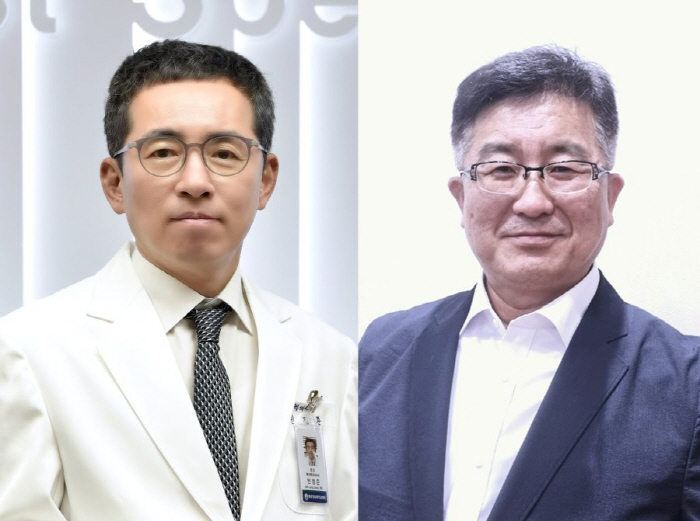


[Sportschosun reporter Jang Jong-ho] A research team led by Professor Min Jeong-jun of the Department of Nuclear Medicine at Chonnam National University Hwasun Hospital has successfully developed a clinical-stage anti-cancer Salmonella strain with dramatically reduced toxicity and identified a new mechanism that restores the function of cancer-fighting immune cells.
The study was carried out in collaboration with Professor Hong Young-jin’s team at the College of Medicine, Chonnam National University, and biotech company C&Qure. The findings were selected as the cover paper for the July issue of Theranostics, a leading international journal in translational medicine with an impact factor of 13.3.
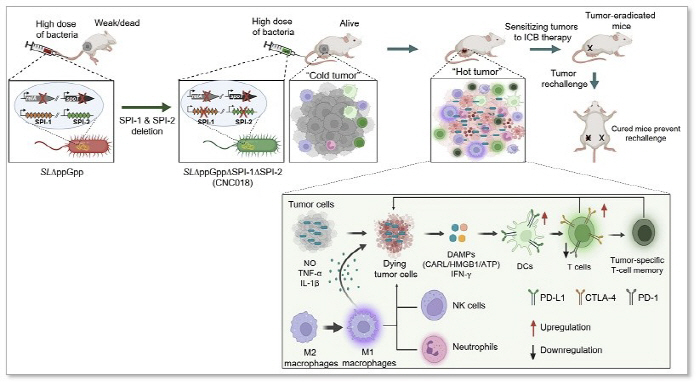
The clinical-stage anti-cancer Salmonella strain developed by the team, named CNC018, is a next-generation strain for cancer immunotherapy. It has irreversibly removed 73 toxicity-related genes, including the Salmonella Typhimurium pathogenicity island 1 (SPI-1), which enables human cell invasion, and pathogenicity island 2 (SPI-2), which supports survival inside immune cells.
Animal studies showed that CNC018 was more than 1 million times less toxic than the wild-type strain. Even after intravenous administration, it showed no significant toxicity. At the same time, it retained its ability to selectively target and proliferate in tumor tissue, while inducing a strong anti-cancer immune response.
In particular, the team became the first in the world to analyze, at the genomic level, how a Salmonella strain affects T lymphocytes in the body.
T cells that attack cancer cells gradually lose function and enter a state known as exhaustion. CNC018 was found to enhance T cell cytotoxicity while suppressing full exhaustion and promoting a continuously renewable state.
When combined with an immune checkpoint inhibitor, it also maximized the activity of regenerated T cells and produced a powerful anti-cancer effect, confirming its potential as a next-generation immuno-oncology platform.
Professor Min Jeong-jun is also working to commercialize the technology through C&Qure, a biotech venture founded on the university’s research achievements. The company has recently established a manufacturing process for the clinical product and completed production of the intravenous formulation. It is now conducting preclinical toxicity tests and plans to begin global clinical trials next year.
Professor Min said, "This study is significant not only because it dramatically improved the safety of the anti-cancer Salmonella strain, but also because it identified, for the first time in the world, a new mechanism that induces immune cell regeneration." He added, "We will do our best in research and development so that we can present a new alternative for cancer treatment through global clinical trials."
Jang Jong-ho, reporter bellho@sportschosun.com