[Sportschosun, Jang Jong-ho] When a headache strikes, many people reach first for the painkillers in their drawer. Because it is such a common symptom, affecting about 80% of the population at least once, people often dismiss it as something that will go away after taking a pill or sleeping it off. But common does not mean harmless. According to data from the Health Insurance Review & Assessment Service (HIRA), nearly 2 million patients have visited hospitals each year over the past five years for headaches, migraines, and headache syndromes (disease codes R51, R43, and R44). It is one of the representative neurological disorders that requires systematic management. With help from Professor Park Seong-uk of the Department of Korean Medicine Internal Medicine at Kyung Hee University Hospital at Gangdong, this article explains how to understand headache as a signal from the body and how to restore balance throughout the body.
◇Primary headaches account for more than 90% of everyday headaches
Headaches are divided into “primary headaches,” which occur without any clear underlying disease, and “secondary headaches,” which are caused by obvious conditions such as brain tumors, cerebrovascular disease, or cervical disc problems. More than 90% of the headaches people experience in daily life are primary headaches, with tension-type headaches and migraines being the most common.
Tension-type headaches are closely linked to stress, fatigue, and poor posture. They usually cause pain on both sides of the head, as if it were being tightly squeezed by a band. Migraines, by contrast, cause throbbing pain on one or both sides of the head in sync with the heartbeat. In severe cases, they are accompanied by nausea, vomiting, and extreme sensitivity to light and sound. Recently, more patients have been experiencing mixed headaches that combine features of both tension-type headaches and migraines, so careful observation is needed.
◇“Dangerous headaches” not to miss
Most headaches are caused by everyday fatigue or stress, but they can also be an early warning sign of serious, life-threatening conditions such as brain tumors or cerebrovascular disease. Although they account for only about 2% of all headache cases, they can lead to fatal consequences, making early response especially important. The most concerning symptom is sudden, severe pain that strikes like lightning. If a headache is accompanied by fever, a stiff neck, paralysis in the arms or legs, or speech problems, it should be treated as a warning sign of a serious brain disorder. Other red flags include a first-time headache after age 50, pain that feels completely different from usual, or headaches that gradually worsen even after taking painkillers. In such cases, immediate detailed testing is necessary.
◇The cause of chronic headaches: blocked circulation of qi and blood
Chronic headaches can be seen as a sign that the body’s balance has been disrupted. In Korean medicine, this is explained by the principle of “if there is no flow, there is pain,” meaning pain occurs when the flow of qi and blood is blocked. When stress builds up, the body may enter a state of liver yang rising, causing heat to accumulate in the head. If digestive function declines, phlegm-fluid may form, leaving the head feeling heavy and causing headaches.
In fact, many headache patients also complain of indigestion, heartburn, and nausea along with pain. When circulation becomes stagnant due to posture problems, blood stasis can develop and pain may repeatedly appear in specific areas. If fatigue and lack of sleep continue, qi and blood may become deficient, and the pain can worsen as the day goes on.
Professor Park Seong-uk said, "Because recurring headaches are a sign of blocked qi and blood circulation, patients should not focus only on suppressing the pain. They need to check their overall physical condition."
◇Acupuncture, Chuna therapy, and herbal medicine offer customized treatment beyond pain relief
The biggest feature of Korean medicine treatment is that it does not simply suppress pain. Its goal is to correct the underlying imbalance in the body that causes headaches. Acupuncture, pharmacopuncture, and cupping help gently relax tense muscles, open blocked meridians, and promote blood circulation. For headaches caused by poor posture, Chuna therapy corrects misalignment in the cervical spine and joints, reducing pressure on nerves and blood vessels.
In addition, herbal medicine tailored to the patient’s constitution and condition helps restore weakened organ function and improve the circulation of qi and blood throughout the body. When such customized treatment is continued consistently, it can ease headaches and restore overall balance, leaving the body feeling lighter and healthier.
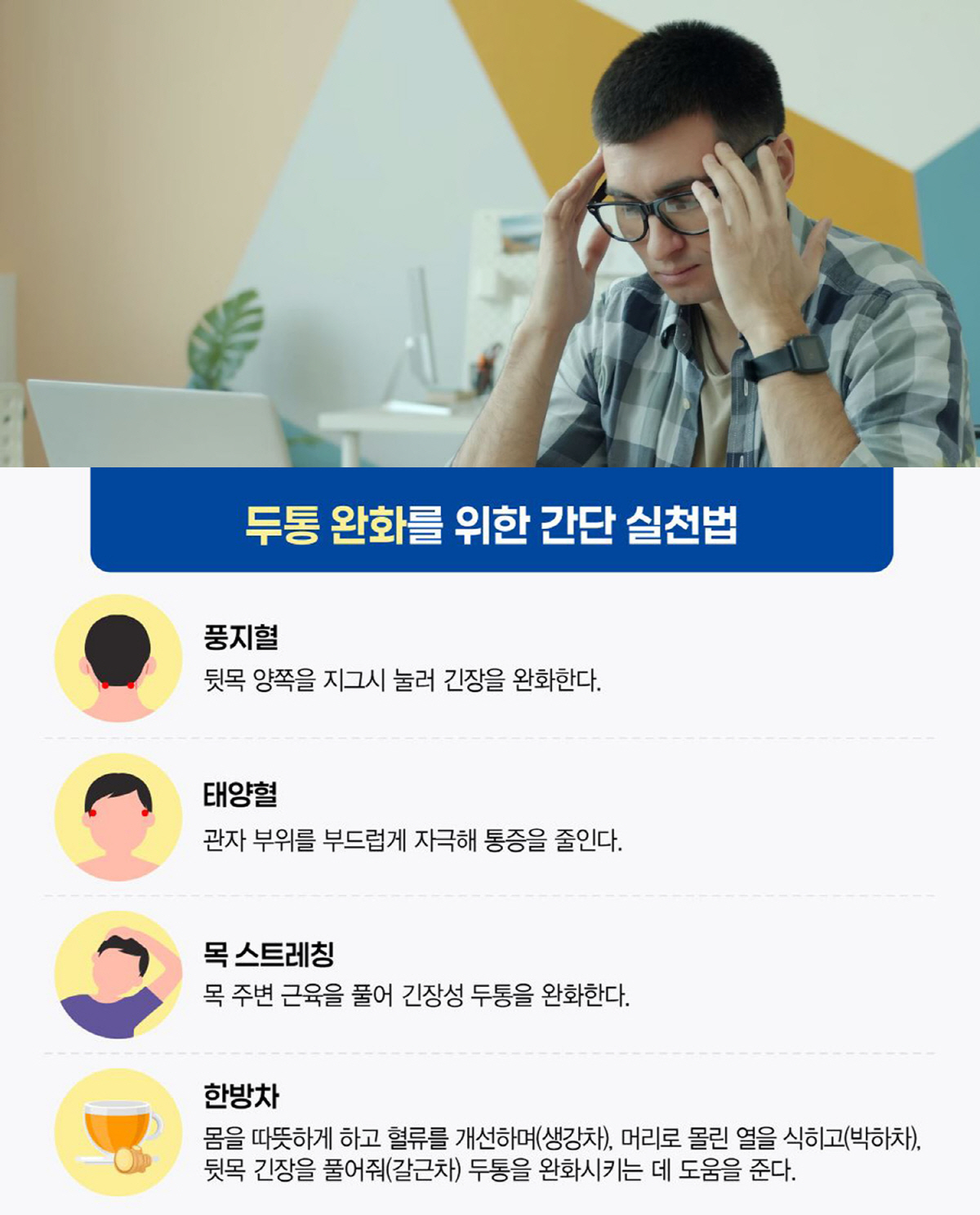
To break free from chronic headaches, treatment must be combined with changes in daily habits. It is important to maintain a regular sleep schedule, eat meals at consistent times, and control excessive caffeine intake. When using a smartphone or PC, people should check their posture often and relax tension in the neck and shoulders. They also need to keep both body and mind at ease by practicing their own healthy ways of relieving stress.
Professor Park Seong-uk said, "Rather than masking temporary pain with painkillers, it is time to look at the circulation of the whole body and one’s lifestyle habits." He added, "If active treatment for the underlying cause is combined with steady daily management, chronic headaches can be overcome."
Jang Jong-ho bellho@sportschosun.com
This article has been translated by GripLabs Mingo AI.