


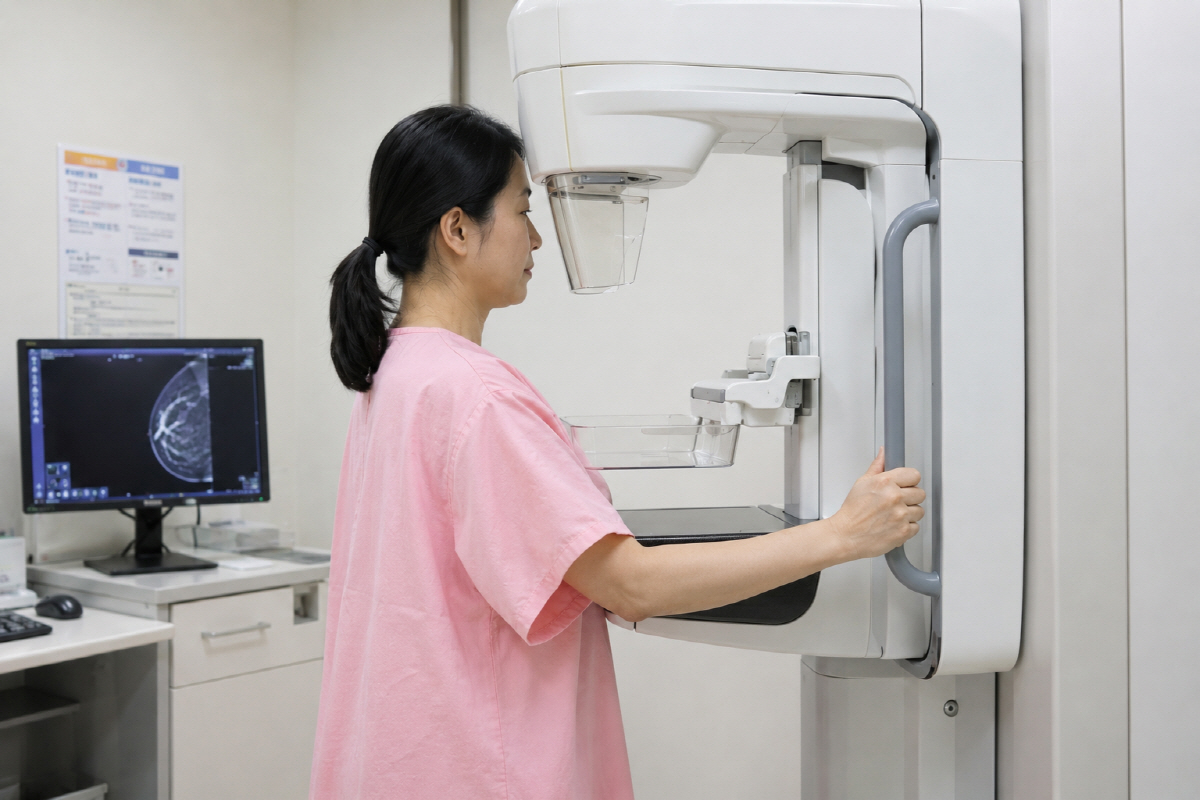
[Sportschosun Reporter Jang Jong-ho] Breast cancer is the most common cancer among women worldwide and is also the most frequently diagnosed cancer overall, affecting both men and women. Fortunately, it has a very good prognosis when detected early and treated properly. In Korea, the overall 5-year relative survival rate for breast cancer reaches 94%, and early-stage breast cancer in stages 1 and 2 shows a survival rate of more than 95%. That is why regular screening and early detection are especially important.
The breast is made up of lobules, which produce milk, and ducts, which carry it to the nipple. Together, these are called mammary tissue, and breast cancer develops in this tissue. When cancer cells remain inside the ducts without breaking through the basement membrane, it is called carcinoma in situ, or non-invasive cancer. In this case, metastasis does not occur in theory. However, if the cancer breaks through the basement membrane and invades surrounding tissue, it can spread to other organs through blood vessels or lymphatic vessels.
In recent years, breast cancer has been increasing among younger women in their 30s and 40s in Korea. One reason is longer exposure to female hormones. As the age of first menstruation has fallen and menopause has come later, the period of lifetime hormone exposure has grown longer. Higher ages at marriage and childbirth, lower birth rates, and reduced breastfeeding are also linked to the rising risk.
Westernized eating habits, obesity, alcohol consumption, and stress are also major risk factors. Obesity caused by increased fat intake raises estrogen levels in the body. In particular, abdominal fat is closely related to the production of female hormones, so belly obesity increases the risk of breast cancer. Alcohol is also a well-known risk factor for breast cancer and is associated with a higher risk of recurrence.
Early detection is crucial in breast cancer. In front of a mirror, women should check the shape of the breasts, symmetry, skin dimpling, and nipple discharge. They should also gently feel the breasts with the tips of three fingers. Rather than focusing on a specific direction, it is important to examine the entire breast and the armpit thoroughly.
Breast cancer surgery is divided into partial mastectomy and total mastectomy. Recently, breast-conserving surgery has been performed in about 70% of cases. Even when a total mastectomy is necessary, techniques that preserve the nipple and skin while removing only the breast tissue and then reconstructing the breast have advanced, helping reduce psychological burden. In addition, sentinel lymph node biopsy has reduced unnecessary lymph node removal, minimizing complications such as lymphedema.
Professor Lee Joon-hee of the Department of Surgery at Soonchunhyang University Seoul Hospital emphasized, "To prevent breast cancer, it is important to make regular mammograms and self-examinations part of daily life, and to reduce abdominal obesity and alcohol consumption through healthy lifestyle habits."
Jang Jong-ho, bellho@sportschosun.com