[Sportschosun reporter Park A-ram] On SBS's "News Story," the program tracks the reality of non-acquaintance stalking in which anyone can become a victim in the digital age, and sheds light on the blind spots in victim protection that continue through the initial investigation, trial, and even after the offender's release.
▶ A seven-year nightmare that hit a 24-year veteran reporter
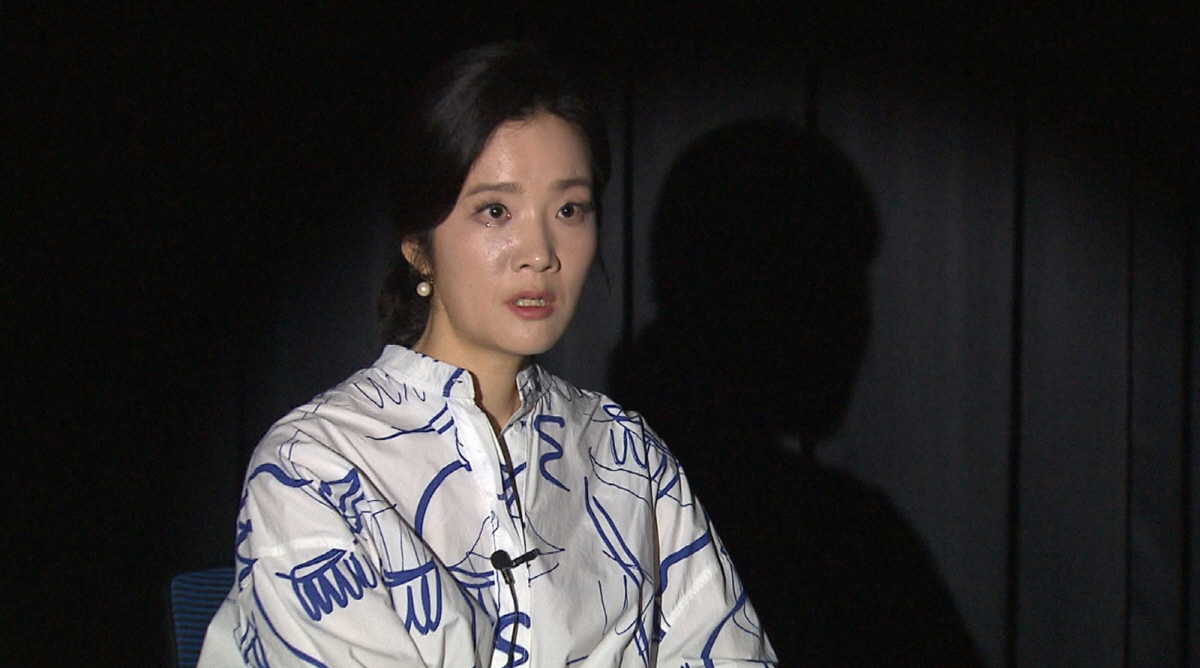
Kwak A-ram, a reporter with 24 years of experience at The Chosun Ilbo, learned one day that a man in his 50s whom she had never met had been posting videos and articles online since 2019 that sexually objectified her. After Kwak filed a complaint, the offender's retaliation and obsession intensified. He posted threatening comments on articles, and even after being sentenced to prison and jailed, he did not stop stalking her. For seven years, he has continued to disrupt Kwak's daily life by sending letters containing sexually humiliating writing and drawings.
Stalking is often thought to happen in intimate relationships, such as with former lovers. But Kwak's case shows the danger of so-called "non-acquaintance stalking," in which a stranger becomes fixated on someone without any prior relationship. According to Kwak, the offender said in court that he had come to know her through newspaper articles and podcasts. Her public professional activity was exploited as a stalking tool by someone who had never even seen her face. Experts warn that in a digital society where personal information can be easily collected through social media and online searches, anyone can become a target of non-acquaintance stalking.
▶ Repeated warning signs, why were they not recognized in time?
Kwak A-ram had to keep explaining her fear to investigators and in court. Other stalking survivors and bereaved families interviewed by the reporters also said authorities failed to prevent further harm because they did not recognize repeated warning signs in time. One victim, who was attacked with a blunt object and a knife by a former partner while suffering stalking abuse, said that the moment the offender was sentenced to 15 years in prison felt like her remaining life had entered a "countdown." She feared that the offender might come looking for her again after serving his sentence.
Victims and bereaved families say sentencing decisions do not fully reflect the seriousness of the harm. A study analyzing 141 stalking rulings found that prison sentences were less likely to be handed down when the offender had no prior criminal record. Bereaved families argue that courts should weigh the fear left behind by repeated stalking and the danger of the crime more heavily, rather than focusing too much on the number of incidents or the offender's age and circumstances.
▶ The offender's claims remained, while the victim's voice disappeared
The bereaved family of a murder victim in a Busan officetel case said they had difficulty checking the offender's claims in time during the trial. They were unable to fully review the materials submitted by the defense, and the documents they later examined included claims suggesting that the deceased victim had actually been obsessed with the offender. In a situation where the victim could not respond directly, the surviving family members had to explain the sequence of events and the victim's position on her behalf.
For Kwak A-ram, who has pursued legal action for years, the anxiety has not ended. In several cases, prison terms for the offenders have been finalized, and in a recent first-instance ruling, one offender was sentenced to three years in prison and ordered to wear an electronic tracking device for three years after release. But even after the sentence ends and the tracking period expires, no one can say for sure whether the offender's long-standing obsession will stop.
How can repeated warning signs be detected before stalking escalates into a more serious crime? The program looks into what systems are needed to truly protect victims from renewed contact after an offender's release.
tokkig@sportschosun.com
This article has been translated by GripLabs Mingo AI.