[Sportschosun] An artificial intelligence model has been developed in South Korea to predict the risk of sudden liver function deterioration before patients with hepatocellular carcinoma begin systemic treatment. The breakthrough provides an objective basis for identifying effective treatment paths for each patient.
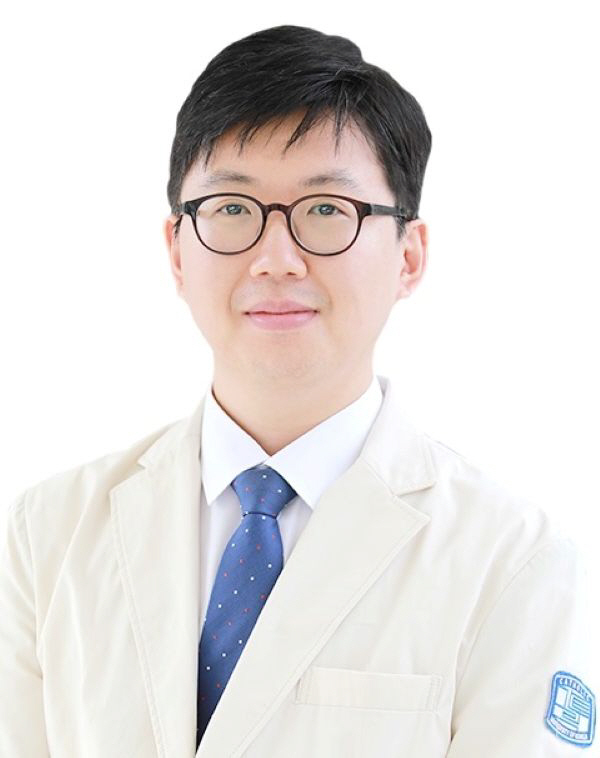
A research team led by Professor Han Ji-won of the Department of Gastroenterology at The Catholic University of Korea Seoul St. Mary's Hospital built the Machine Learning-based Hepatic Safety Score (MHSS) model by analyzing data from 2,026 patients with hepatocellular carcinoma treated at eight hospitals under Catholic Medical Center from 2010 to 2024. The model can be used to select safe and effective personalized treatments by comprehensively reflecting blood test results, liver function indicators, platelet counts, tumor size and number, vascular invasion, and tumor markers.
Traditionally, liver function has been assessed using tools such as the Child-Pugh score, which measures cirrhosis severity based on bilirubin, albumin, and coagulation values; ALBI, a simple index calculated from albumin and bilirubin alone; MELD, a tool used to prioritize liver transplant candidates with end-stage liver disease; and FIB-4, an index that estimates the degree of liver fibrosis using age and blood test results. However, these tools mainly focus on blood test values and liver function, and they do not reflect cancer-specific features such as tumor size or vascular invasion.
By contrast, the newly developed AI-based tool incorporates tumor-related information along with liver function indicators. It was found to predict variceal bleeding and post-treatment liver function deterioration more accurately than conventional tools. The model also showed stable results in an independent validation cohort made up of patients from other institutions.
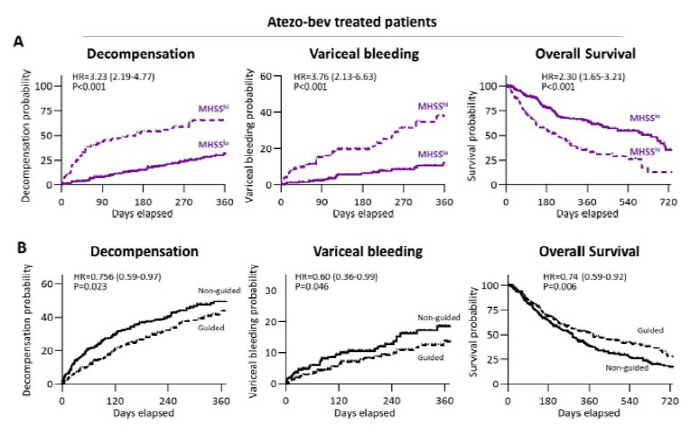
Patients classified as high risk by the model had a 3.25 times higher risk of liver function deterioration during treatment, a 4.90 times higher risk of variceal bleeding, and a 2.21 times higher risk of death than those in the low-risk group. The findings show, through AI analysis, that liver function deterioration during treatment is not determined solely by baseline liver function values, but by a combination of factors including tumor size and vascular invasion by cancer cells.
The research team's analysis of outcomes by treatment choice also offered meaningful insight. Simulation results showed that in the low-risk group, a specific immunotherapy combination, atezolizumab-bevacizumab, provided a superior survival benefit compared with other treatments. In the high-risk group, however, the increased risk of variceal bleeding meant that the survival benefit was not clear.
Based on these findings, the team ran a personalized treatment simulation that prioritized the immunotherapy combination for low-risk patients and treatments with a relatively lower bleeding risk for high-risk patients. As a result, the predicted risk of liver function deterioration fell by 24%, the risk of variceal bleeding by 40%, and the overall risk of death by 26% compared with the non-applied group.
The study is seen as providing clinical evidence that, in choosing treatment for liver cancer patients, doctors can assess not only "which treatment is most effective" but also "which treatment is safest for each patient." It is also expected to be useful for applying pre-treatment endoscopic evaluation and bleeding prevention strategies more precisely, as well as for setting patient-specific treatment intensity and follow-up plans.
Professor Han Ji-won, who led the study, said, "This study is meaningful because it established an objective basis for presenting safe and rational treatment paths for each patient by comprehensively evaluating tumor characteristics, liver function, and portal hypertension risk within a single AI model." She added, "Through future prospective studies and validation with diverse data, we will develop it into a personalized precision medicine tool that can help patients continue treatment safely in real-world clinical settings."
The study, supported by research funding from the Global Physician-Scientist Training Program backed by the Ministry of Health and Welfare and the Korea Health Industry Development Institute, was published in npj Digital Medicine, a leading international journal in digital healthcare and medical AI. The research team has also made the model freely available as a web-based calculator to improve access for patients and medical professionals.
Jang Jong-ho, bellho@sportschosun.com