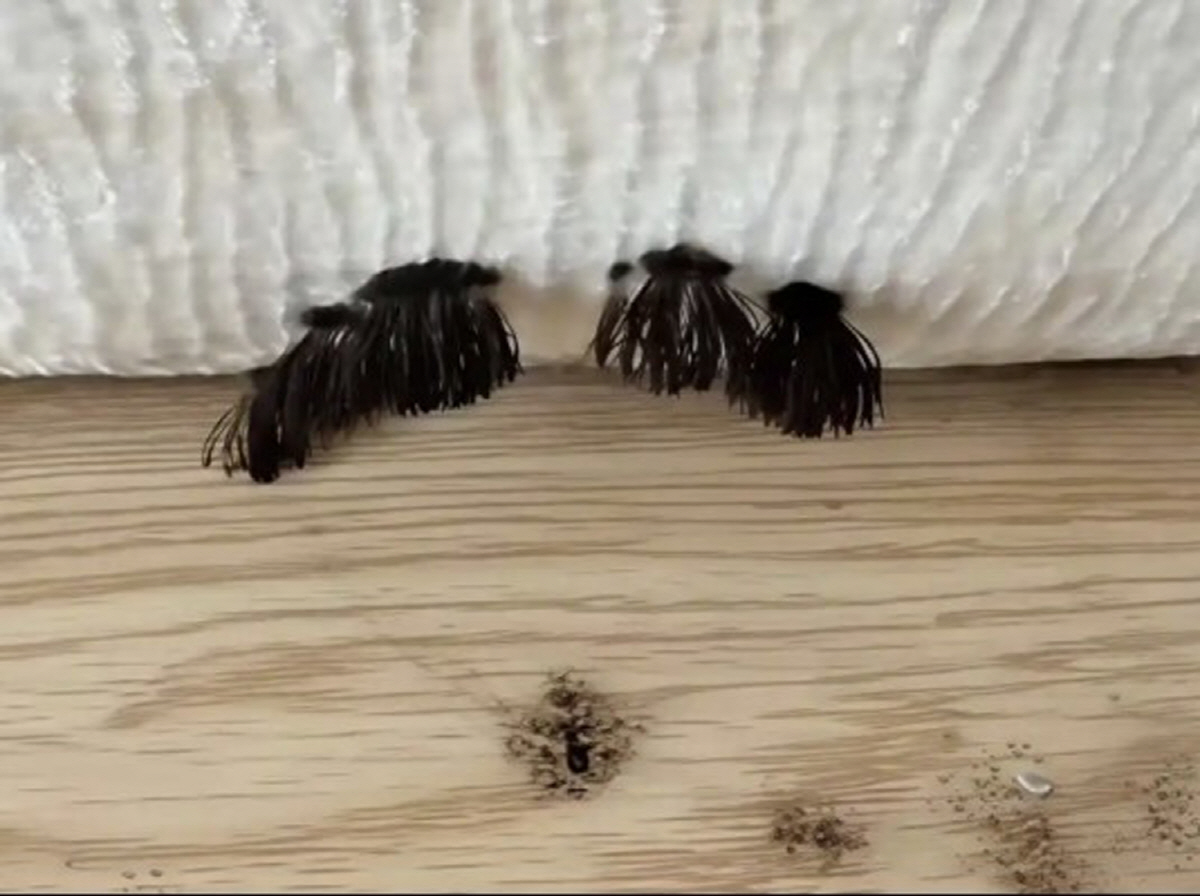
[Sportschosun, Jang Jong-ho] A photo posted on Chinese social media recently drew attention after a user wrote that they had found an unidentified black object under a sofa at home.
A woman living in Guangdong Province claimed, "At first, it looked like a small black dot, but it gradually grew larger over time. When I looked more closely, it had the shape of a black brush, and black powder was scattered around it."
In response to her question, "What should I do?" several netizens warned, "It appears to be Rhizopus mold," adding that "the black powder on the floor may be released spores, and the inside of the sofa may already be widely covered with mycelium."
According to Chinese media outlets including Guangming Net, the recent stretch of hot and humid weather was cited as the cause of the mold. In Guangdong, intense heat and frequent rain have sharply raised indoor humidity. As the wooden frame of the moisture-soaked sofa began to decay, conditions became ideal for fungi that thrive on rotting wood. Mature slime molds release large amounts of spores into the air, and those spores are known to irritate the respiratory system.
Experts stressed that mold should not be treated as a mere cosmetic issue. The greater danger lies not in the visible black stains, but in the microscopic spores that spread through the air. These spores are only a few micrometers in size, making them impossible to see with the naked eye. They can remain airborne for long periods and enter the body through breathing.
It was also explained that if the visible mold area inside a home exceeds about 0.03% of the room's total area, the concentration of some airborne pathogenic molds can rise significantly. In other words, even a small mold spot may mean spores have already spread throughout the room.
Mold spores first attack the respiratory system. They can trigger allergic rhinitis, causing an itchy nose, sneezing, and a runny nose. They may also worsen asthma and lead to chest tightness, wheezing, and nighttime coughing. In severe cases, they can even cause fungal pneumonia.
They can also affect the eyes and skin, not just the respiratory system. Symptoms may include red and watery eyes, skin rashes, and atopic dermatitis. In some cases, hypersensitivity pneumonitis or alveolitis may also develop.
Particular caution is needed for infants and young children with weak immune systems, older adults, people with allergies, and patients taking immunosuppressants. If babies under one year old are exposed to mold spores for a long period, the risk of lower respiratory infections such as bronchitis or pneumonia may increase.
Experts warned that in humid spaces such as bathrooms, spores can spread throughout the room even when doors are opened and closed or when showers and exhaust fans are used. Spores floating in the air can settle on towels, bathroom items, and even toothbrushes, making hygiene management especially important.
Common places where mold tends to grow include tile joints and silicone sealant in bathrooms, areas around sinks and dishcloths or sponges, washing machine rubber gaskets, air conditioner filters and vents, refrigerator door seals, fabric sofas pressed against walls, the underside of mattresses, and plant saucers. If black or yellow-brown spots appear, or if there is a musty mold smell, mold is likely already established.
When removing mold, simply wiping it with a wet cloth can actually spread spores into the air. Experts recommend wearing an N95 mask and rubber gloves, ventilating the area thoroughly, then soaking paper towels with bleach diluted at a 1:10 ratio with water and placing them on the moldy area overnight before scrubbing it off with a brush. After that, the area should be completely dried with a fan or dehumidifier to prevent recurrence.
Jang Jong-ho, bellho@sportschosun.com
This article has been translated by GripLabs Mingo AI.