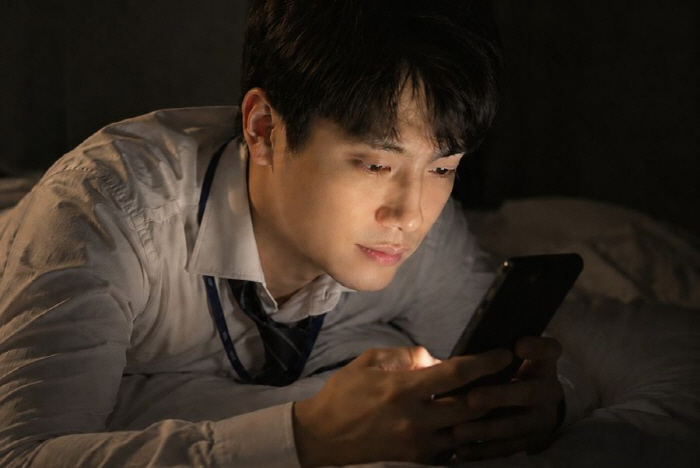
[Sportschosun reporter Jang Jong-ho] Office workers spend most of their day looking at screens, using a computer monitor during work hours and a smartphone after work.
As smartphone use has increased, many people worry about their eye health. But just as important as how long they use devices is the environment and posture in which they use them. Long periods of use in dark places or a habit of staying face down for extended periods can affect eye pressure and require caution.
Eye pressure is the pressure inside the eye that helps maintain its shape and supports normal function. It is kept at a constant level through the production, circulation, and drainage of aqueous humor, the fluid inside the eye. However, if eye pressure rises excessively for various reasons, the optic nerve can be damaged. The environment and posture used when operating smart devices are also known to be factors that can affect eye pressure.
When you focus on a smartphone or tablet from a close distance for a long time, the lens thickens and the iris moves forward. If this state continues, it can affect the flow of aqueous humor and may ultimately contribute to increased eye pressure.
Using smart devices in dark places can also contribute to higher eye pressure. In dark environments, the pupils naturally dilate to let in more light. In people with narrow anterior chamber angles, this change can make it harder for aqueous humor to drain, increasing the likelihood of an acute angle-closure glaucoma attack.
Posture is also linked to changes in eye pressure. In particular, lying face down can raise venous pressure around the eyes as the face remains pointed downward, which may trigger higher eye pressure. If the area around the eyes is also pressed against a pillow or bedding, the pressure on the eyes can increase further and add to the strain.
Of course, these habits alone do not cause glaucoma. However, they can affect eye pressure, and people with narrow anterior chamber angles are relatively vulnerable to pressure changes, making an acute angle-closure glaucoma attack more likely. The risk may also be higher in people with farsightedness, a family history of the disease, or age-related lens thickening, so regular eye exams can help check eye health.
Acute angle-closure glaucoma usually develops suddenly without any special warning signs. Symptoms include severe eye pain, redness, and blurred vision, and some people also see rainbow-colored halos around lights. If eye pressure rises sharply, headaches, nausea, and vomiting may occur as well, and the condition is often mistaken for a migraine or a digestive disorder. If treatment is delayed, irreversible damage to the optic nerve can remain, so anyone with these symptoms should seek ophthalmic care.
When using smart devices in daily life, it is important to check both the environment and posture. It is better to keep the surrounding area properly lit and sit upright rather than lie face down. After long periods of close-up work, it is also advisable to look into the distance at regular intervals to relax the eyes. If eye strain keeps recurring, or if vision problems or eye pain appear, an eye exam should be sought to identify the exact cause.
Jeong Jong-jin, a specialist at the glaucoma center at Kim's Eye Hospital, advised, "Many people worry about simply using smart devices for long periods, but in reality, the environment and posture of use can affect eye pressure." He added, "It is important to avoid habits such as looking at a smartphone for long periods in a dark place or staying face down for too long. If symptoms such as eye pain or blurred vision appear, you should not delay and should seek ophthalmic care."
Jang Jong-ho, bellho@sportschosun.com
This article has been translated by GripLabs Mingo AI.