According to Sportschosun reporter Jang Jong-ho, high temperatures and humidity in summer increase sweating and leave the skin in a moist state for long periods. Strong ultraviolet rays, frequent showers and dryness caused by air conditioning can further weaken the skin barrier, making eczema more likely to develop or worsen. Careful skin management is therefore needed.
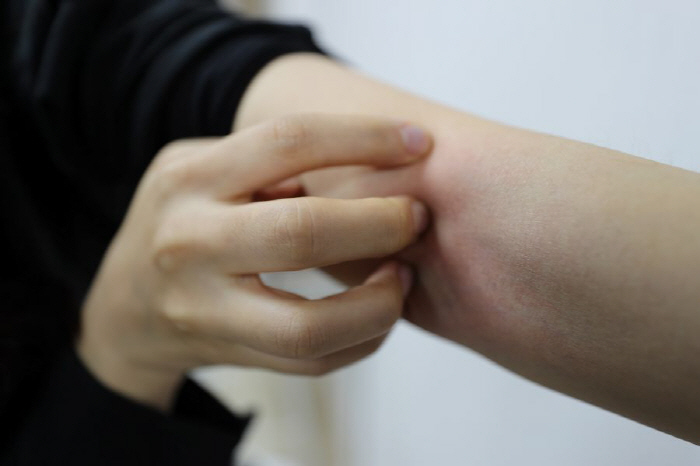
Eczema is an inflammatory skin condition that can trigger hypersensitivity to external irritants when the skin barrier is damaged. Common symptoms include itching, red rashes, dry skin and flaking. In severe cases, oozing or cracking may also occur. During summer, increased sweat and sebum production, along with more frequent skin friction, can make symptoms worse in some cases.
Eczema is more likely to appear or worsen in areas where sweat lingers for a long time or where skin folds and friction occur repeatedly. Common areas that require attention include the inner elbows, behind the knees, the armpits, the neck and the inner thighs.
The inner elbows and behind the knees are areas where skin folds easily, allowing moisture and heat to build up. The armpits and inner thighs are typical areas where sweat and skin friction occur at the same time, and they can be continuously irritated while walking or exercising. As a result, symptoms such as itching, stinging and redness may appear. In severe cases, the skin may become raw or inflammation may worsen.
Wearing tight clothing or garments with poor ventilation for long periods while sweating can further irritate the skin. Sweat itself is not a direct cause of eczema, but if it remains on the skin for too long, it can weaken the skin barrier and increase sensitivity to external irritants, making symptoms worse.
In summer, it is important not to leave sweat on the skin for too long. If you sweat heavily, it is best to wash it off as soon as possible or gently wipe the skin with a soft towel to keep it clean. Showers should be short and taken with lukewarm water so as not to strip away too much of the skin's natural oils, and a mild cleanser is recommended.
After showering, moisturizer should be applied generously before the skin's moisture evaporates in order to maintain the skin barrier. In particular, areas where eczema often occurs should be moisturized regularly even when there are no symptoms. Wearing cotton clothing that absorbs sweat well and allows good airflow, as well as choosing comfortable clothes that reduce skin friction, can also help prevent flare-ups.
The healthier the skin barrier remains, the stronger its defense against external irritants and the lower the risk of eczema developing or recurring. On the other hand, if symptoms are left untreated or if one relies only on folk remedies while symptoms repeatedly improve and worsen, damage to the skin barrier can become more severe.
Professor Kim Dae-hyun of the dermatology department at Korea University Anam Hospital advised, "If a damaged skin barrier is left untreated, inflammation can persist and a vicious cycle may continue in which symptoms easily recur or worsen even with minor irritation." He added, "If itching or rashes keep coming back, or if symptoms persist, it is important not to rely only on self-treatment. Instead, patients should see a dermatologist to identify the exact cause and receive appropriate treatment consistently."
Jang Jong-ho, bellho@sportschosun.com
This article has been translated by GripLabs Mingo AI.