


[Sportschosun Reporter Jang Jong-ho] A study has found a new clue for treating fatty liver disease in lactate, which plays an important role in energy metabolism and recovery.
A research team led by Professor Yoo Ji-hee of the Department of Endocrinology at Korea University Ansan Hospital, Professor Choi Dae-hee of the Department of Gastroenterology at Kangwon National University Hospital, Professor Cho Eun-hee of the Department of Endocrinology at Kangwon National University Hospital, and Nguyen Giang of Kangwon National University College of Medicine identified the molecular mechanism by which lactate induces fat accumulation in liver cells and suggested its potential as a new therapeutic target for metabolic dysfunction-associated steatotic liver disease (MASLD).
MASLD is a chronic liver disease in which fat accumulates excessively in liver cells. It is known to affect about 25% to 30% of adults worldwide. The prevalence is especially high among people with obesity and Type 2 diabetes (T2D), and some cases can progress to cirrhosis and liver cancer.
Current treatment for MASLD is based on weight loss and lifestyle changes, and drug therapy is available for some patients. However, there is still a steady need for new treatment strategies that can fundamentally control the onset and progression of the disease.
To determine how lactate affects fat accumulation in liver cells, the research team treated cultured liver cells with lactate in the laboratory. As a result, the expression of proteins involved in fat synthesis and fat uptake increased, and intracellular fat accumulation also rose. During this process, the expression of the lactate receptor GPR81 also increased.
Further analysis showed that lactate suppresses AMPK activity through GPR81. AMPK is a key enzyme that regulates cellular energy metabolism. When the team artificially activated AMPK, the lactate-induced increase in fat accumulation was reduced. This identified the core molecular mechanism by which lactate promotes liver fat accumulation by activating the GPR81-AMPK signaling pathway.
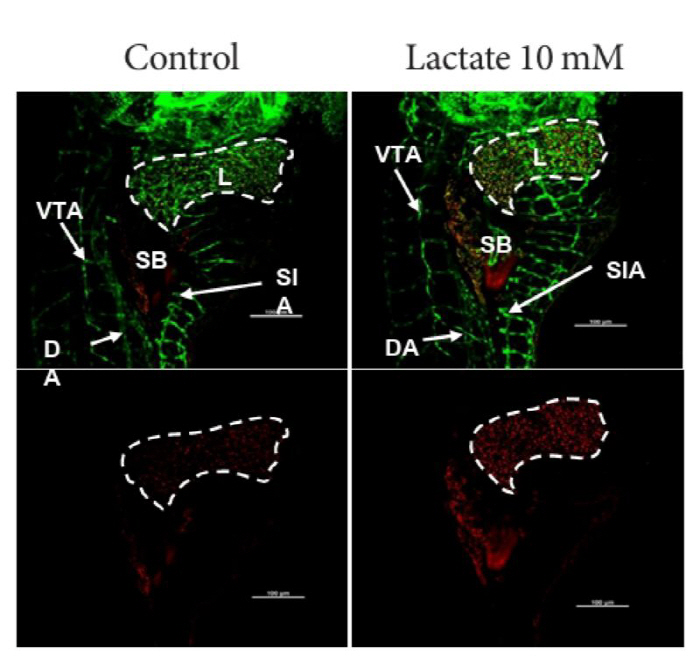
The team also confirmed the findings from cell experiments in animal models. When lactate was administered to zebrafish, fat accumulation increased selectively in the liver. In mice with fatty liver induced by a high-fat, high-cholesterol diet, lactate levels in the liver and GPR81 expression were both elevated. This supports the possibility that the lactate-GPR81-AMPK pathway identified in cell experiments operates through the same mechanism in living organisms.
However, the researchers explained that this study did not analyze the effects of lactate that temporarily rises after exercise. Instead, it was basic research that examined, in cells and animal models, how lactate that may increase in metabolic disease states such as obesity and Type 2 diabetes affects liver fat metabolism.
Professor Yoo said, "Lactate, traditionally regarded as a metabolic byproduct, has recently drawn attention as a signaling molecule involved in metabolic regulation, but the specific process by which it induces liver fat accumulation has not been fully clarified." She added, "This study is meaningful because it identified the action pathway of lactate mediated by GPR81 and offered new insight into the mechanism behind the development of MASLD."
Professors Choi and Cho, co-corresponding authors of the paper, stated, "GPR81 identified in this study could become an important target in the future development of treatments for fatty liver disease, and we plan to continue follow-up research so that the results of basic research can lead to actual patient care."
Meanwhile, the findings were recently published in Diabetes & Metabolism Journal, the official international journal of the Korean Diabetes Association (KDA).
Reporter Jang Jong-ho bellho@sportschosun.com