

This summer is expected to be hotter than ever. Slumped shoulders and an appetite that has already disappeared make a summer getaway even more appealing. This is the season for natural umami drawn from the land and a water festival that cools off the heat. That is why, every year around this time, Jangheung County is the place to go.
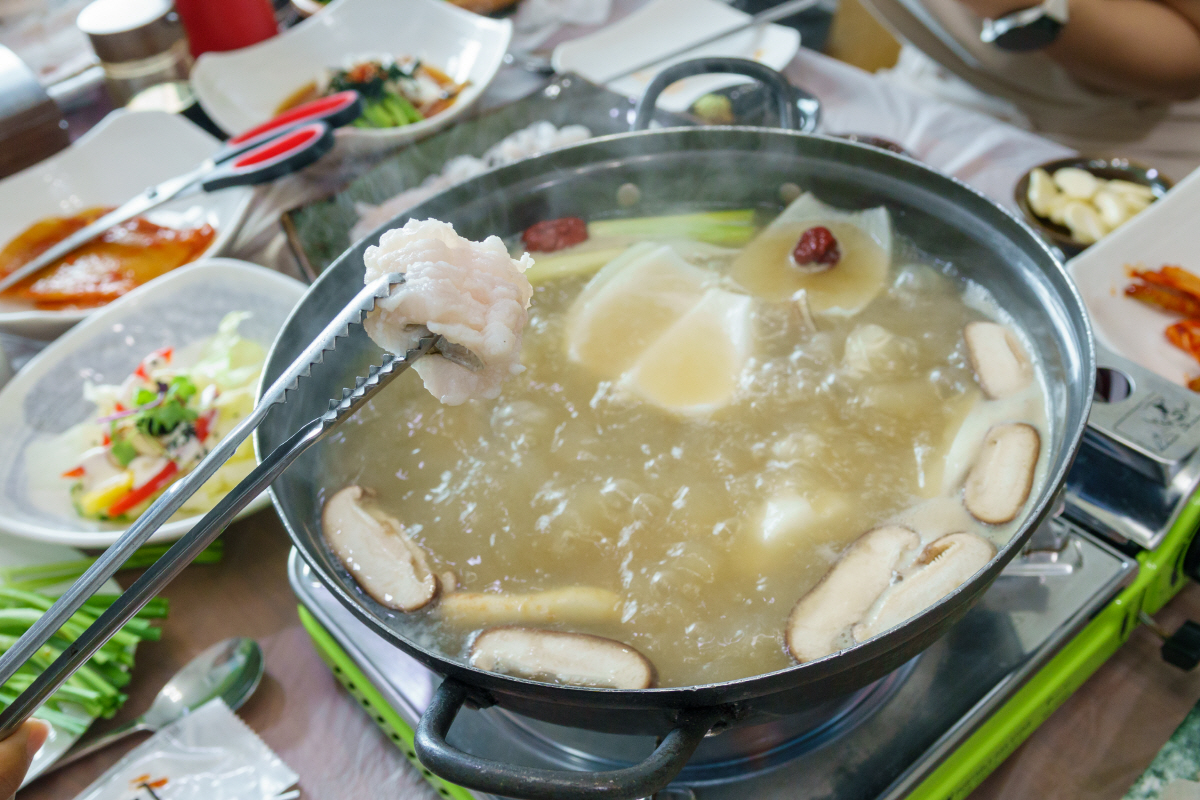
▶ A meal comes first: hairtail shabu-shabu, doenjang mulhoe and Jangheung Samhap
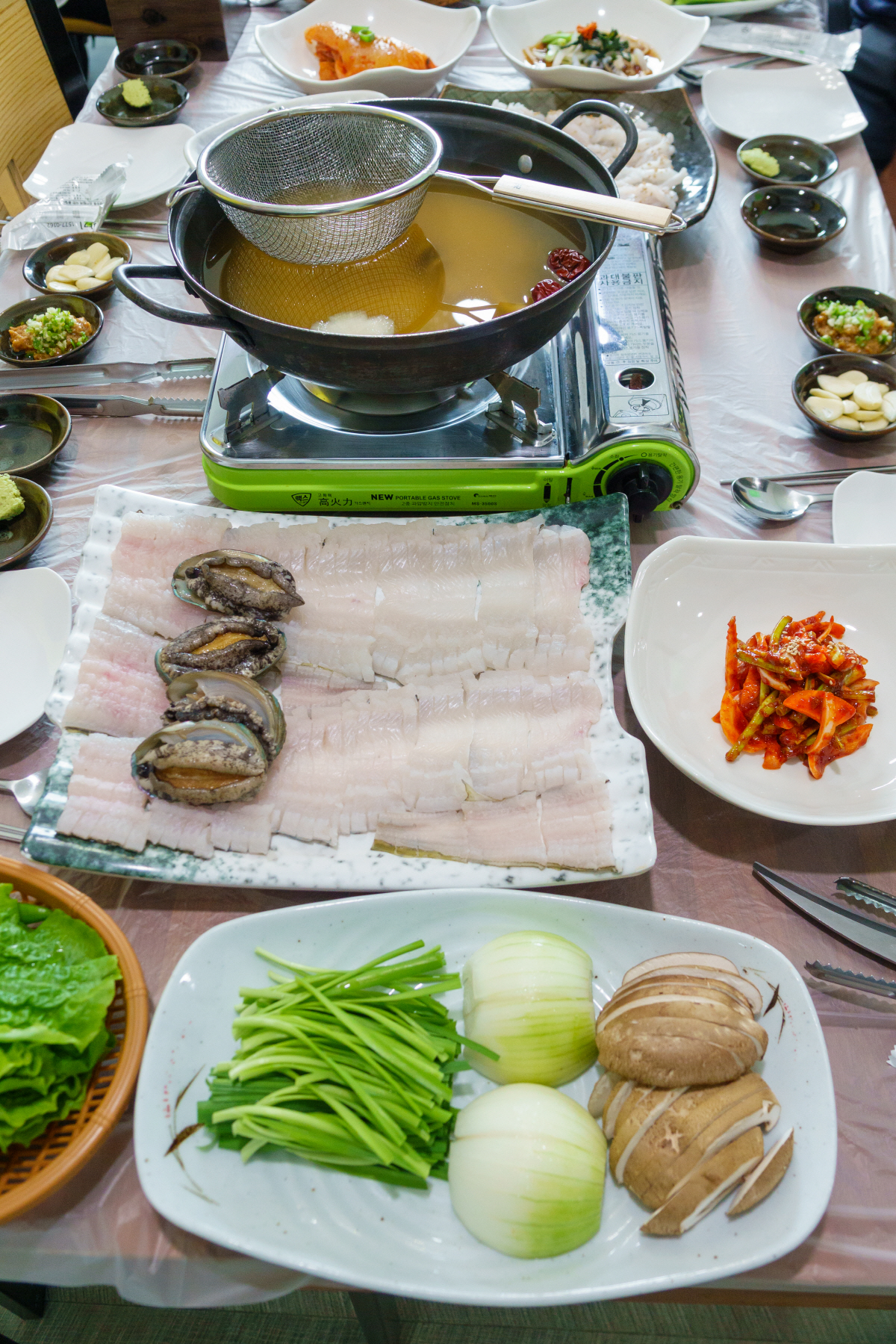
The greatest pleasure of local travel is discovering new flavors. Food has long become an important factor in choosing a destination. Jangheung County in South Jeolla Province is blessed with fertile land and the sea, so it has developed seasonal specialties. The region’s abundance also brings generous hospitality, which adds to the home-style taste of its food. Among Jangheung County’s summer specialties, hairtail shabu-shabu stands out. It is more expensive than winter oyster grilling, but it is worth the price if it can revive a tired appetite.
The broth, simmered with jujubes, angelica root and Kalopanax, is richer than samgyetang broth, and the hairtail becomes more savory the more you chew it. Yeodaji Beach in Anyang-myeon, in the southern part of Jangheung County, was selected by the Korea Tourism Organization (KTO) as the cleanest tidal flat in Korea. Jangheung hairtail is caught here. With medicinal-herb broth, shiitake mushrooms, chives and other vegetables added to the boiling pot, briefly blanching the hairtail and dipping it in soy sauce or spicy red pepper sauce makes for the perfect summer health dish. When the finely scored fish is dipped for just a few seconds, the flesh tightens and turns into a white blossom. Hairtail is a healthy food for people of all ages.
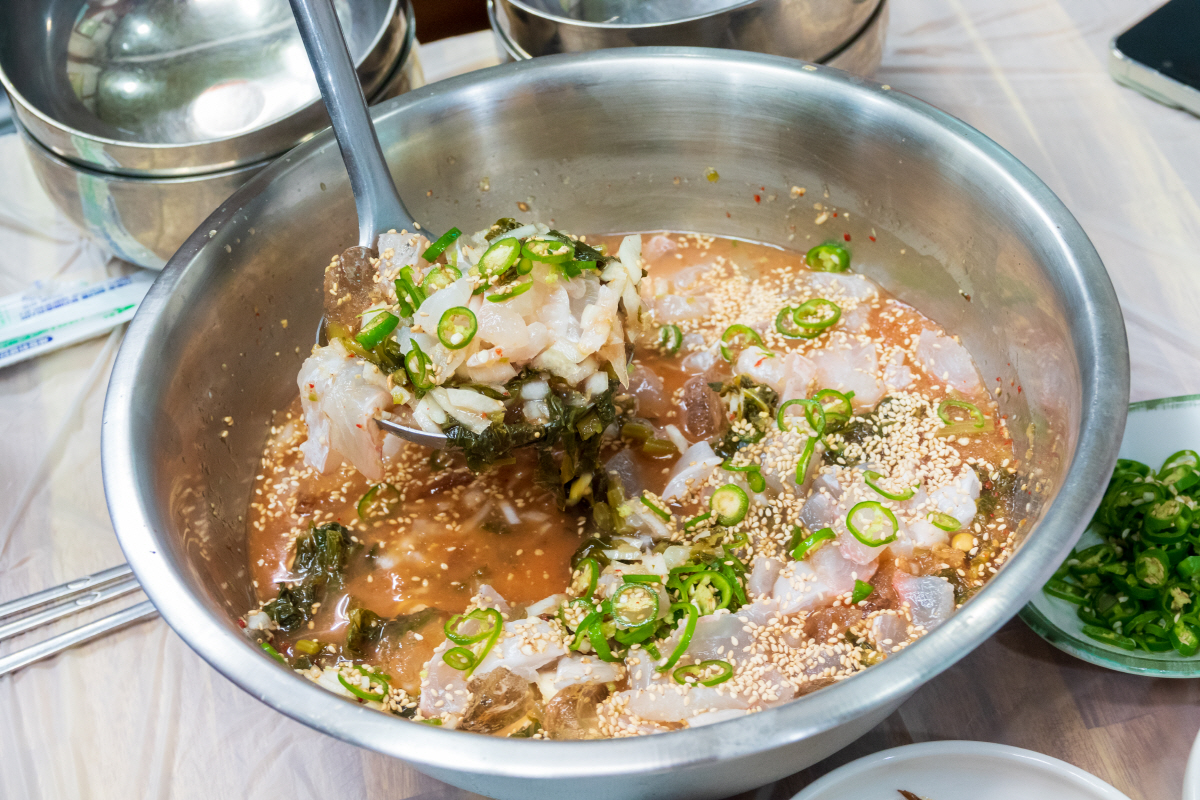
If hairtail shabu-shabu is the hot-weather specialty, then doenjang mulhoe is the cool summer dish. It offers a distinctive taste that is different from the spicy red pepper paste version of mulhoe. Traditionally, doenjang mulhoe is made by mixing tender slices of raw fish with broth made from fermented soybean paste. The sharp heat of Cheongyang chili peppers and the savory depth of doenjang blend well together. It is excellent for relieving a hangover, and it is both refreshing and light. It is delicious on its own, and even better when eaten with rice. Doenjang mulhoe is said to have originated from fishermen who spent several days at sea and mixed the fish they caught with doenjang after their kimchi had turned sour. At home, people used whatever fresh fish they had, such as young sea bass, snapper or eel, but restaurants usually use young sea bass.
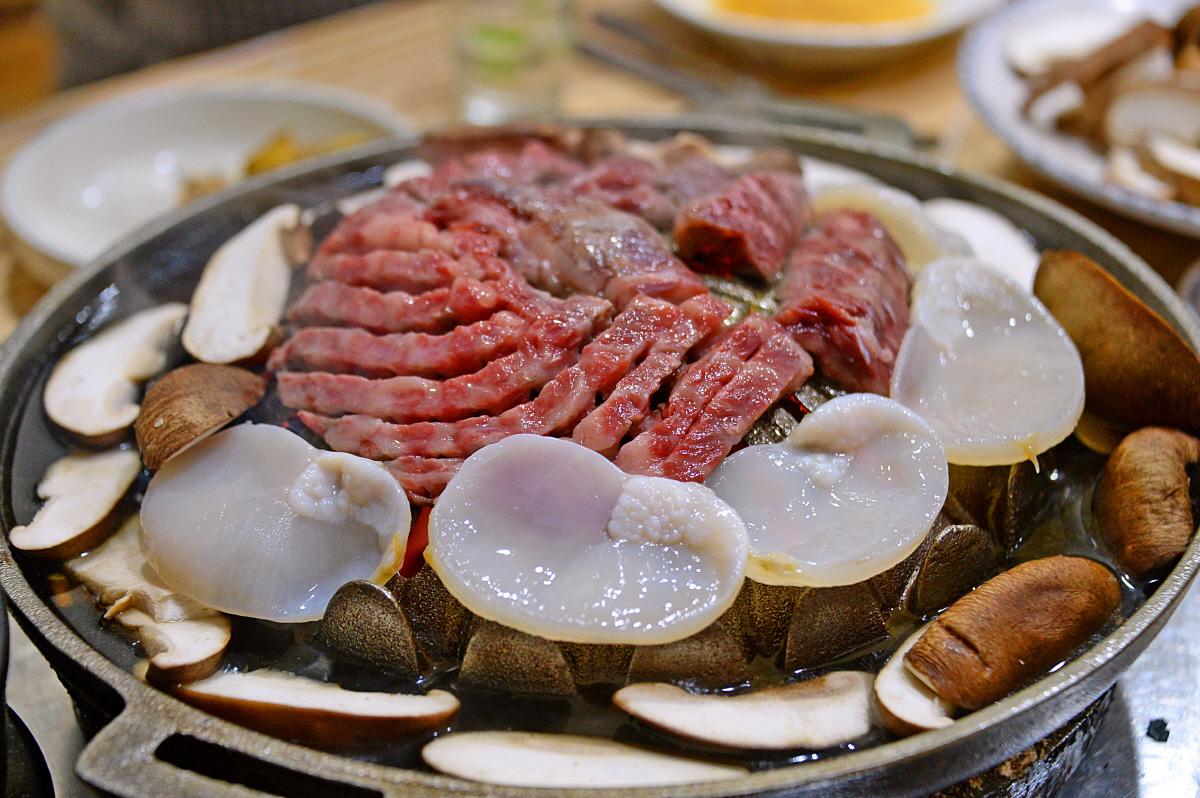
Every region has its signature dish, such as bibimbap in Jeonju, milmyeon in Busan and dakgalbi in Chuncheon. Jangheung County’s signature dish is Jangheung Samhap. It is different from Mokpo Samhap, which is centered on skate. Jangheung Samhap uses scallops raised in the tidal flats, shiitake mushrooms grown on oak logs and Hanwoo beef as its main ingredients. Each ingredient tastes good on its own, but when the three come together, the flavor becomes even deeper. It is not hard to find restaurants serving Jangheung Samhap around Jangheung’s Saturday Market. In many cases, customers buy the beef separately and pay an additional fee for the Samhap setting at the restaurant. Because the ingredients are fresh, they are usually grilled lightly and eaten with ssamjang or seasoned vegetables, filling the mouth with a rich but gentle flavor.
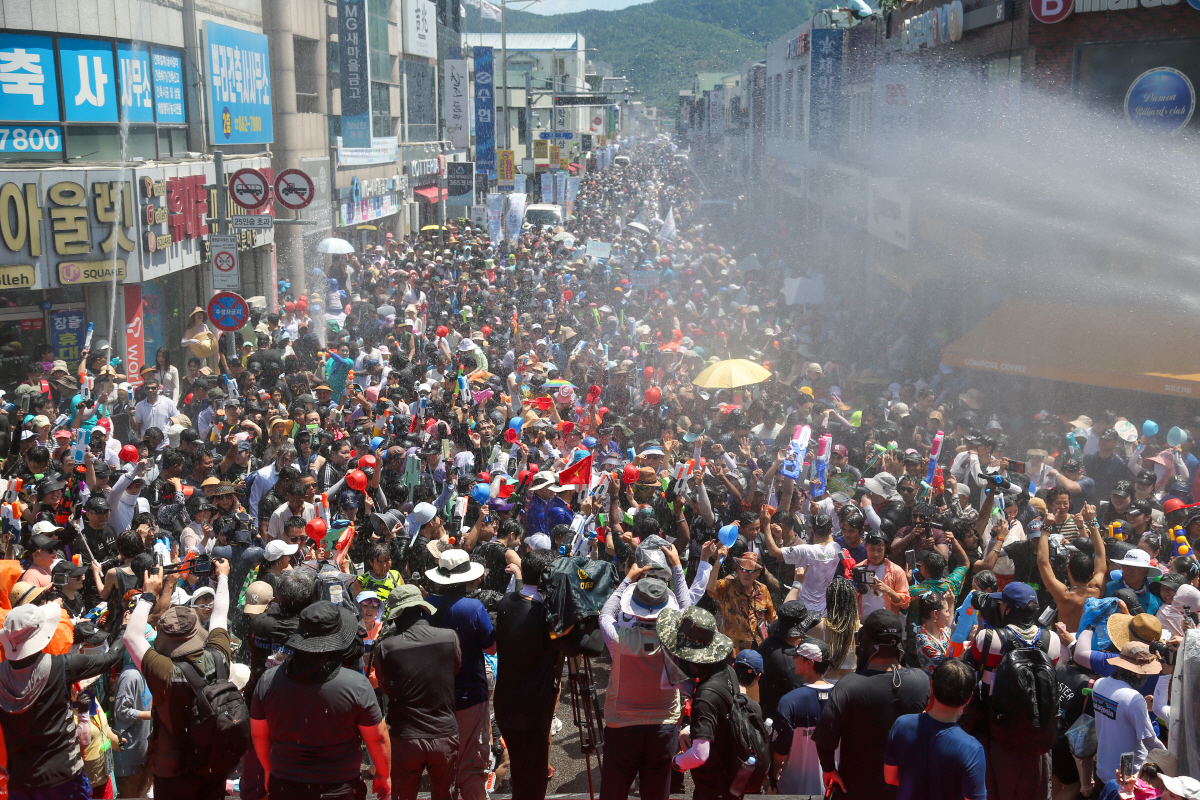
▶ The entire region becomes a water park, bringing joy to people of all ages with lively water play
These days, Waterbomb has become the representative summer festival. In Jangheung County, however, a water festival is held every summer. It is quite different from Waterbomb, which centers on DJ performances, but the excitement of everyone coming together around a water theme is greater than Waterbomb itself. Year after year, more people are visiting Jangheung’s water festival, and it has clearly grown into a family-friendly water-play festival.
The official name of Jangheung’s water festival is the Jeongnamjin Jangheung Water Festival. Now in its 19th year, it will be held for nine days from July 25 to August 2 at Tamjingang Riverside Park, PapillonZip, and the cypress forest woodland area in Jangheung-eup, Jangheung County. This year, the festival focuses on Jangheung’s clean nature, healthy lifestyle and the rest it offers within that setting.
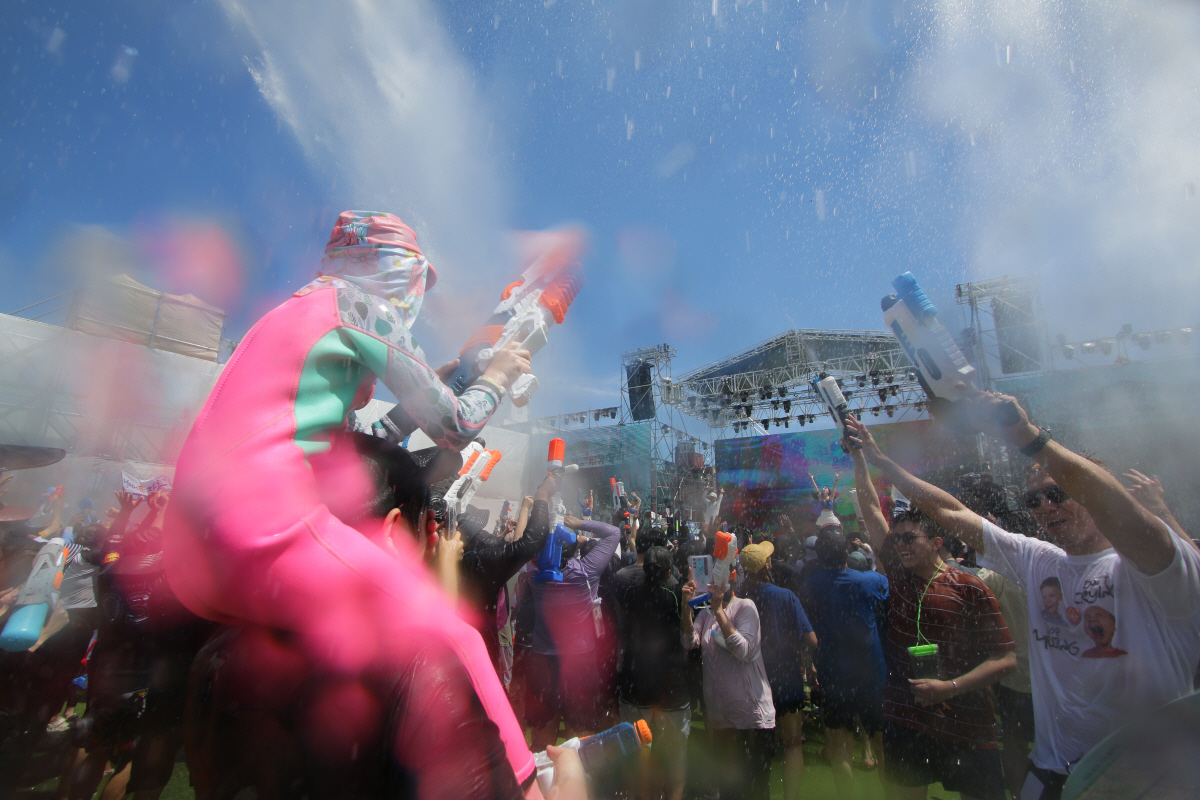
The Jeongnamjin Jangheung Water Festival is, quite literally, all about water. From the street parade Battle of the Water, where guerrilla troops stage water fights, to the largest water fight on earth and the largest water balloon battle, which begin every day at 2 p.m., and a variety of water-based events, it is no exaggeration to say that the festival starts with water and ends with water. Because the largest water fight on earth is held with a different concept over the nine-day run, visitors can enjoy it no matter when they come. Water cannons, water balloons and water guns fly in from all directions, creating the biggest water battle on earth. The street parade Battle of the Water, the signature program that opens the festival, will take place on Saturday, July 25, from 1 p.m. to 2 p.m. It will depart from the Jangheung County Community Center, pass through Jungang-ro and continue to the festival site at the Jangheung Bridge parking lot. Cool streams of water pour down along the streets, and water bombs fall from all sides.
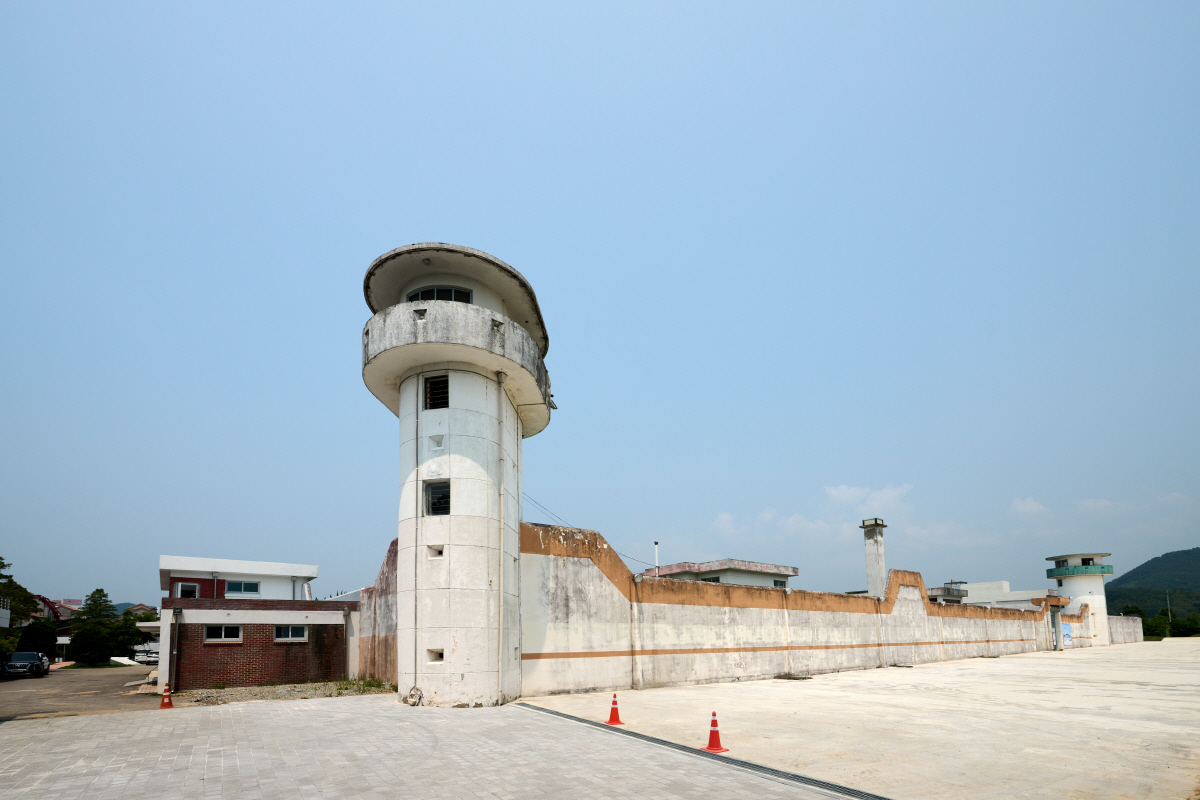
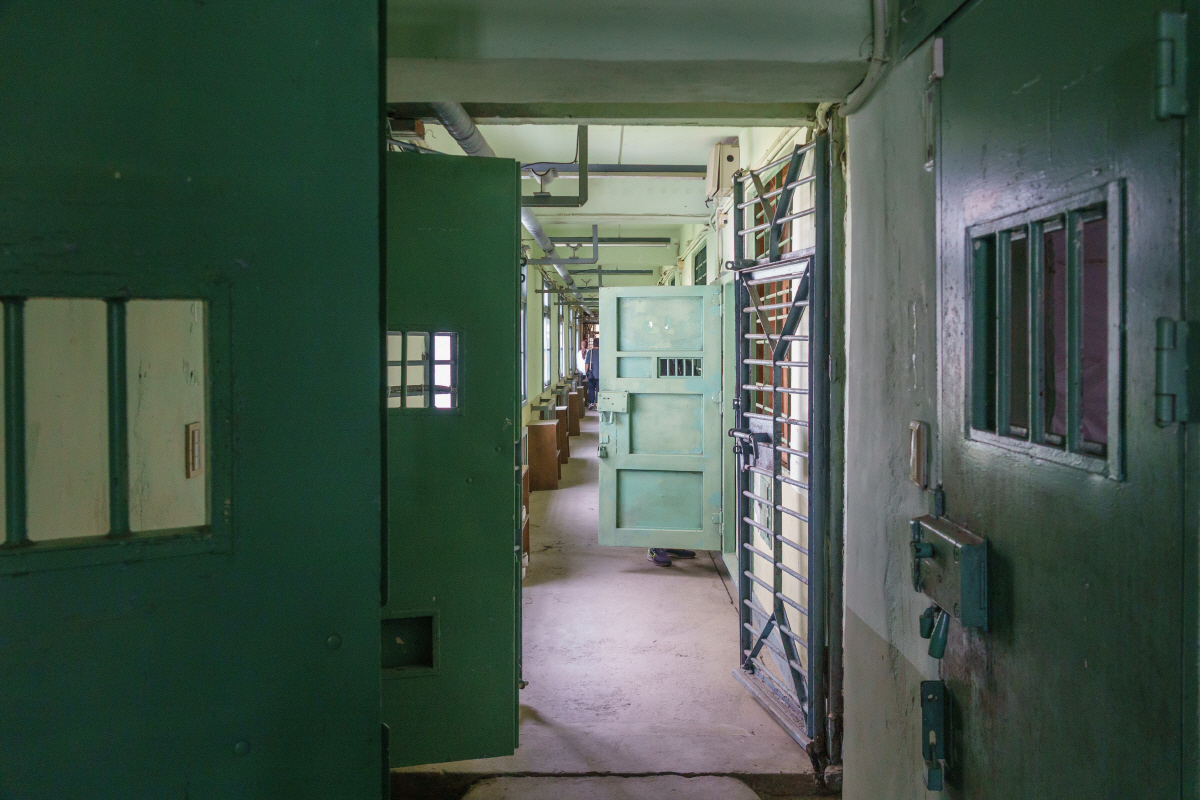
As you move along with the Jeongnamjin Jangheung Water Festival, one place stands out: PapillonZip, formerly Jangheung Prison. Renovated from the old prison, PapillonZip welcomes visitors as a space where a former local building has been reborn as a venue for culture and the arts. Its unique atmosphere makes it ideal for taking memorable travel photos and preserving those memories. It is the only real prison filming site in Korea, and more than 70 dramas and films, including Netflix's The Glory, were shot here. The former prison’s civil service office has been transformed into the Jangheung Prison Archive Hall, while the staff cafeteria has become the Correctional History Exhibition Hall. The gymnasium is now the Movie Bookstore, and the women’s dormitory has been reborn as a space called Word Prison.
▶ Recharge your emotions while walking along the pristine Deukryang Bay and Han Seung-won Literary Trail
The sea in Jangheung County is calm. Because of its geography, surrounded by land, the waves are not strong. Instead, the area offers plenty to enjoy, with beaches and wide tidal flats. Deukryang Bay is a large bay that spans Jangheung and Goheung County. Along its coast, octopus and hairtail are abundant, and aquaculture is carried out for laver, sea mustard, oysters, blood cockles, scallops and clams. The tidal flats around the mouth of Sumuncheon in Jangheung County, which is part of Deukryang Bay, are wetlands with extremely high biodiversity, and the Jangheung branch of the Korea Federation for Environmental Movements uses them as an ecological learning site. In particular, the tidal-flat dunes at the mouth of Sumuncheon are home to large colonies of salt-tolerant plants such as salt grass, glasswort and reeds. In the area where seawater and freshwater meet, the brackish-water snail, a protected species designated by the Ministry of Environment, lives. The tidal-flat area is also home to a wide variety of species, including fiddler crabs, shore crabs, mud crabs, mudskippers, whelks, small snails, black-tailed gulls, herons, sandpipers, plovers and mallards.
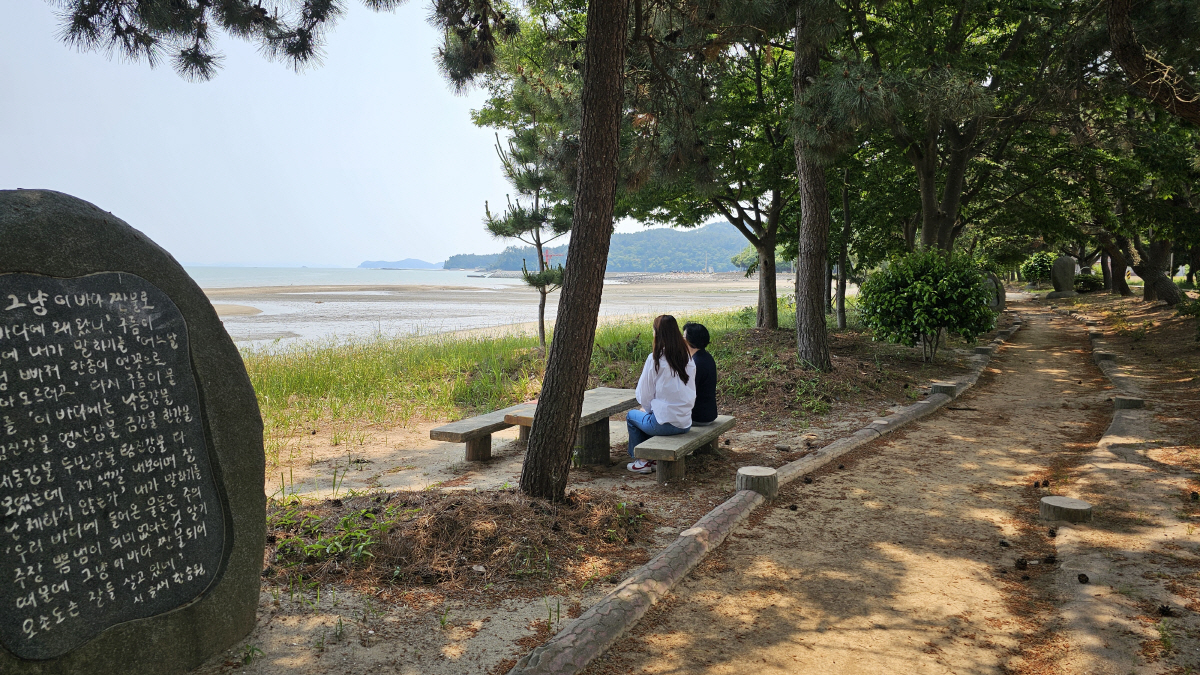
The Han Seung-won Literary Trail is located at Yeodaji Beach in Anyang-myeon, Jangheung County. It is a short path, about 600 meters long, running along a sand dune. Along the trail, 20 or so poem steles by Han Seung-won stand at 20-meter intervals beside simple benches and walkways made of stone and wood, each depicting the sea of Yeodaji and the warm daily life of the villagers. Visitors can enjoy poetry together with the beautiful coastal scenery.
Reporter Kim Se-hyung fax123@sportschosun.com