

[Sportschosun Reporter Jang Jong-ho] More families are heading overseas during the summer vacation season.
In particular, Southeast Asia, with its warm weather and beautiful beaches, is a popular destination for families with children because the flight time is not too long. However, the hot and humid climate year-round, unfamiliar surroundings, and food that differs from what children usually eat can trigger unexpected health problems in children, whose immune systems are weaker than adults'.
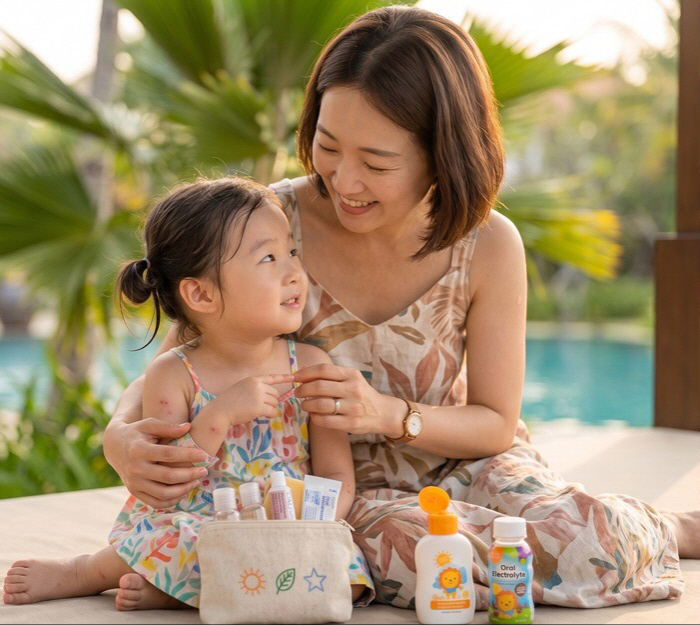
Children are more sensitive than adults to environmental changes, so they can easily develop digestive symptoms such as diarrhea or vomiting. It is also common for mosquito or insect bites to cause swelling or severe itching. On top of that, strong ultraviolet rays can lead to skin conditions such as sun allergy or sunburn. Because it may be difficult to find a medical facility right away while traveling, it is safer to learn in advance about common illnesses and prepare the right medicines so you can enjoy the trip with greater peace of mind.
◇Digestive troubles such as diarrhea and vomiting
The most common symptoms children experience while traveling are diarrhea and vomiting. Often called "traveler's diarrhea," these symptoms are frequently caused by Southeast Asia's hot and humid climate, which can make food spoil quickly, as well as unfamiliar water, such as hard water, or spicy foods that irritate the stomach and intestines.
If a child has diarrhea or vomiting, preventing dehydration is the top priority. Rather than using an antidiarrheal drug first to stop the diarrhea quickly, it is better to replenish fluids and electrolytes. In this case, giving oral rehydration solution in small amounts at frequent intervals is more effective than water alone. It also helps recovery to avoid oily or spicy foods that can burden the stomach and to offer porridge or other soft foods in small portions several times a day.
If the diarrhea continues and the child becomes lethargic, urinates noticeably less, or develops bloody stools, it may not be simple traveler's diarrhea. In that case, seek medical care at a local clinic without delay.
Useful items to bring include ▲ oral rehydration solution (ORS) ▲ a pediatric antidiarrheal or intestinal motility regulator ▲ probiotics ▲ and anti-vomiting medication.
◇Preventing skin problems and insect bites
Another health issue that cannot be overlooked on a Southeast Asia trip is mosquito and insect bites. Tropical regions have many mosquitoes, so children are easily exposed. Most bites only cause itching, but children with sensitive skin may experience significant swelling or a hive-like reaction.
If a child keeps scratching an itchy area, the skin can break and bacteria can enter the wound, leading to secondary infections such as impetigo. It is therefore important to discourage scratching. Washing the bitten area with cool water or applying a cold compress can help reduce itching and swelling.
Prevention is the best approach. Using insect repellent before going out and wearing long-sleeved clothing can reduce insect bites. If severe swelling appears around the eyes or mouth, or if the child develops widespread hives or difficulty breathing, it may be an allergic reaction, and medical attention should be sought immediately.
Useful medicines to bring include ▲ antihistamine ointment or itch-relief ointment ▲ pediatric antihistamines ▲ and insect repellent, such as mosquito spray.
◇Sun allergy and sunburn
Skin damage caused by strong ultraviolet rays is another common problem during travel. UV exposure in Southeast Asia is stronger than many people expect, and children’s skin can be easily irritated after spending long hours outdoors.
To prevent this, apply enough sunscreen for children before going out, and avoid prolonged outdoor activities between 11 a.m. and 3 p.m., when UV rays are strongest. Wearing a hat or a thin long-sleeved shirt can further improve protection.
If the skin turns red or feels stinging, soothe it with a cool wet towel and make sure the child gets plenty of rest. However, if blisters form or the pain is severe, the sunburn may be serious, so it is safest to seek medical care.
Useful medicines and products include ▲ children's sunscreen with SPF 30 or higher ▲ and skin-soothing ointment or lotion.
Professor Lee Jin-cheol of Seongbuk Woori Children’s Hospital said, "Traveling with children creates precious memories that families will cherish for a long time, but unexpected health problems can arise in unfamiliar environments," adding, "If you prepare medicines in advance that match your child's age and health condition, you can respond more calmly even in an emergency. Thorough preparation is the best way to protect your child's health and allow the whole family to enjoy the trip with peace of mind."
Jang Jong-ho, bellho@sportschosun.com