[Sportschosun Jang Jong-ho] A path has now opened for early prostate cancer diagnosis through urine odor.
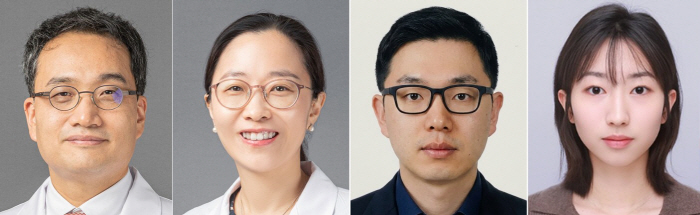
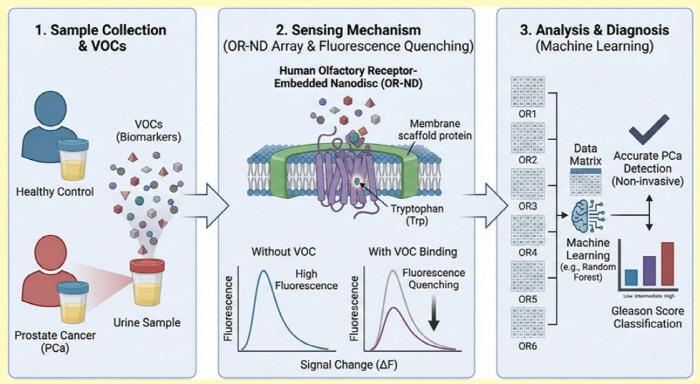
Professor Koo Kyo-cheol of the Department of Urology at Gangnam Severance Hospital, Yonsei University, and Professor Park Tae-hyun of the Department of Food and Nutrition at Ewha Womans University formed a research team to develop an olfactory biosensor-based machine learning model that can diagnose prostate cancer at an early stage, and they presented the results of a study on its usefulness.
The team focused on the need for a noninvasive diagnostic method that could supplement or replace the prostate-specific antigen (PSA) test, which has a low specificity and often led to painful follow-up biopsies even in patients without prostate cancer, creating physical and financial burdens.
First, the researchers developed an artificial olfaction-based diagnostic system by drawing on previous studies showing that trained detection dogs, including German Shepherds, were able to distinguish prostate cancer from patient urine odor with high accuracy.
The team extracted six human olfactory receptor proteins and bound them to nanodiscs, which are tiny artificial cell-membrane nanoparticles made of lipid components. This allowed odor molecules in urine to affect the sensors and reduce fluorescence signals. By measuring these subtle signal changes and combining them with a machine learning algorithm based on pattern analysis, the researchers trained the system to recognize the urine patterns of prostate cancer patients.
For rigorous validation, the team first screened 143 potential participants using strict exclusion criteria, then divided them into 40 prostate cancer patients and 33 controls, for a total of 73 participants. To further improve the AI model's precision, they also built a dataset of 290 urine samples and conducted cross-validation.
The researchers identified three key receptors—OR2W1, OR51E1, and OR51E2—that played the most critical role in detecting prostate cancer molecules, and used them to distinguish between cancer patients and healthy individuals.
As a result of AI training, the machine learning model developed by the team achieved an accuracy of 0.890, showing that it could correctly distinguish prostate cancer patients from healthy individuals with 89% probability. The model's AUC, which reflects both sensitivity and specificity, was 0.964±0.01, a very high score. This means it can diagnose prostate cancer patients and healthy individuals with 96.4% accuracy, placing it in the top statistical tier and demonstrating excellent diagnostic and predictive performance.
Professor Koo said, "It is very important that we have shown the possibility of diagnosing prostate cancer by analyzing urine through a painless and simple noninvasive method. It is also significant that, in addition to showing a high hit rate, the method can identify the aggressiveness of cancer, measured by the Gleason score, which could not be confirmed through the existing prostate-specific antigen test, allowing us to obtain a wide range of related information. We plan to develop this into a diagnostic technology that can be used in actual medical settings through large-scale clinical studies in the future."
The paper was recently published in ACS Biosensors, a leading journal in the field of analytical chemistry.
Jang Jong-ho, bellho@sportschosun.com