"Regular health screenings are the best way to protect your future health assets and one of the smartest investments for improving quality of life in old age. They are the surest winning strategy in the long race of life."
The Korea Health Management Association’s Seoul Western Branch, hereinafter referred to as the Western Branch, said on the 15th that it is offering a customized one-stop comprehensive screening service that can be completed in a single day, from registration to follow-up care, based on advanced precision equipment on par with university hospitals and a team of specialists in each field.
As a member institution of the World Health Organization (WHO)-Health Promoting Hospitals (WHO-HPH) network, the Western Branch has Kim Min-su as its head and employs more than 40 medical specialists and over 200 professionals across different fields. It provides detailed health promotion services, including counseling on healthy lifestyle practices and health education, to support early disease detection and follow-up care for patients with findings. It also recently earned the top 'S grade' in the National Health Screening Program evaluation, further confirming its expertise externally.
At the center of these achievements are two management philosophies: 'field-centered management,' which maintains high-quality medical services without compromise, and 'public value creation,' which ensures that all residents can benefit without being left behind.
The Western Branch has established a virtuous management cycle by maintaining sound and stable operations through efficient resource allocation and cost reduction, then reinvesting its financial capacity boldly into the introduction of high-resolution medical equipment.
A recent example is the addition of a state-of-the-art 3.0T MRI machine. Known for its excellent ability to detect tiny lesions, the 3.0T MRI can quickly handle brain, spine, and joint scans, as well as whole-body screening tests. It has significantly reduced waiting times and improved the overall quality of screenings.
The Western Branch is also accelerating sustainable data-driven management by integrating smart healthcare technology. It has introduced AI-assisted systems in a range of diagnostic areas, including chest X-rays, mammography, chest CT lung nodule detection, MRI acceleration, and quantitative measurement of brain atrophy. These tools help supplement physicians' reading accuracy and improve early disease detection rates.
Last year, it achieved a remarkable result by detecting more than 520 cancer cases at an early stage through screenings. In particular, it upgraded its next-generation MediCheck mobile app, enabling customers to manage their screening records on their smartphones without waiting, marking an innovation in customer experience, or CX.
Unlike private screening centers that focus on profitability, the Western Branch, as a nonprofit health care institution, also concentrates on public goals such as expanding access to medical services and extending the healthy life expectancy of the public.
It provides university-hospital-level screenings at reasonable, accessible prices while also serving as a key partner in government health policies such as the National Cancer Screening Program.
Each year, it offers free university-hospital-level comprehensive screenings to more than 20,000 neighbors, including national merit recipients and veterans' families during the Month of Patriots and Veterans, as well as local residents with disabilities and other vulnerable groups. The screenings cover up to 16 categories and 67 items. Through partnerships with local welfare departments, veterans offices, and other relevant government agencies, it has also built a tailored medical welfare system that proactively identifies neighbors with limited access to care.
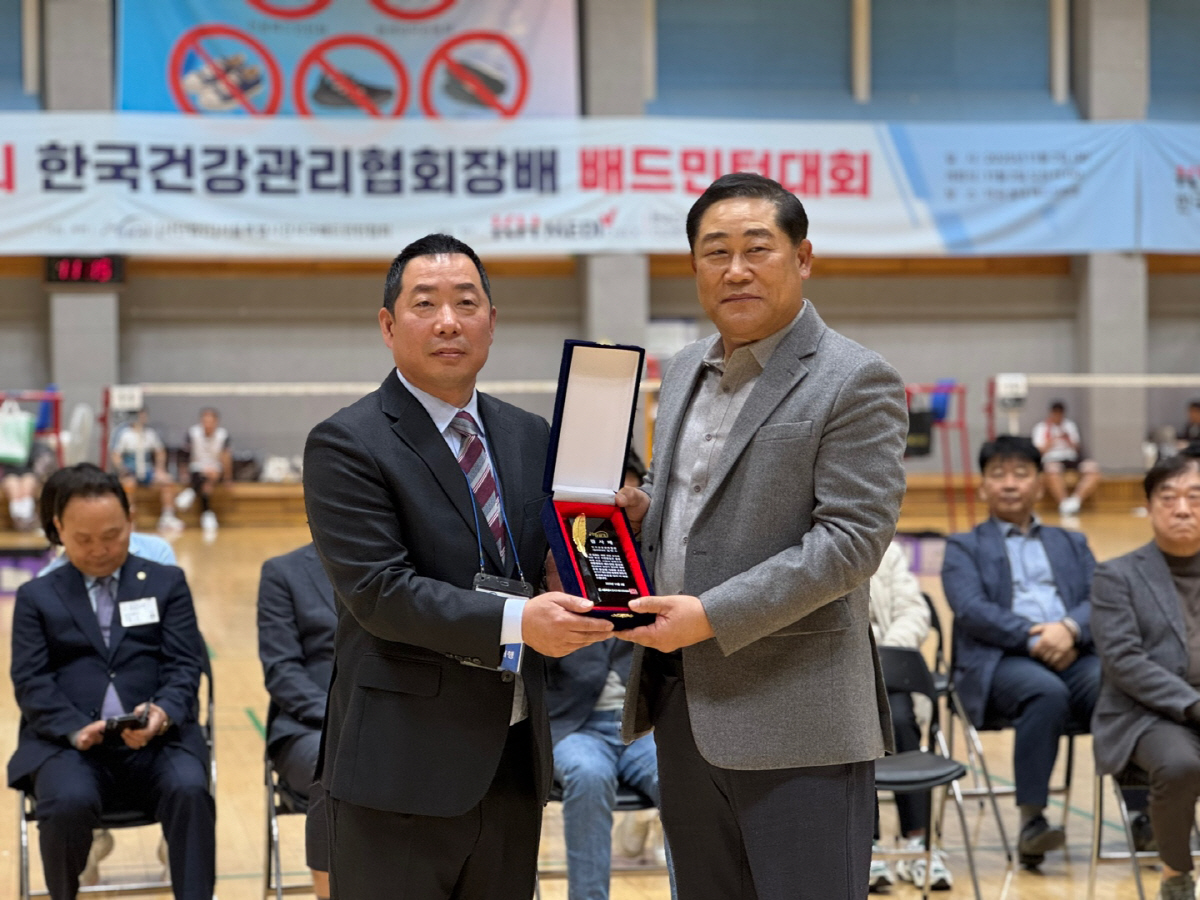
Recently, it launched a large-scale health campaign targeting recreational sports enthusiasts, delivering the message that 'the true completion of physical fitness management is regular checkups.' The campaign expanded contact with health-conscious consumers, such as badminton club members, and boosted brand favorability through targeted marketing.

The Western Branch sponsors competitions by selecting recreational sports events from across the country. Since 2014, it has also supported the Gangseo District Badminton Association, promoting awareness of the importance of health management through recreational sports.
The Western Branch said the key screening points by life stage for maintaining an active life are as follows: for people in their 20s and 30s, the 'basic fitness adjustment stage' to prevent chronic diseases such as liver disorders and hyperlipidemia; for people in their 40s and 50s, the 'golden-age defense stage,' which includes screenings for the five major cancers, such as stomach and colon endoscopy, as well as cardiovascular and cerebrovascular diseases; and for those in their 60s and older, the 'physical vitality maintenance stage,' which focuses on early diagnosis of degenerative diseases through brain MRI and bone density tests.
Kim Min-su, head of the Western Branch, said, "Just as professional athletes thoroughly analyze and check their physical condition before stepping onto the field, we must use regular screenings to check our own health assets in the long race called life." He added, "The Korea Health Management Association will remain a reliable health pacemaker and run alongside you to the very end."
Reporter Kim Se-hyung fax123@sportschosun.com
This article has been translated by GripLabs Mingo AI.