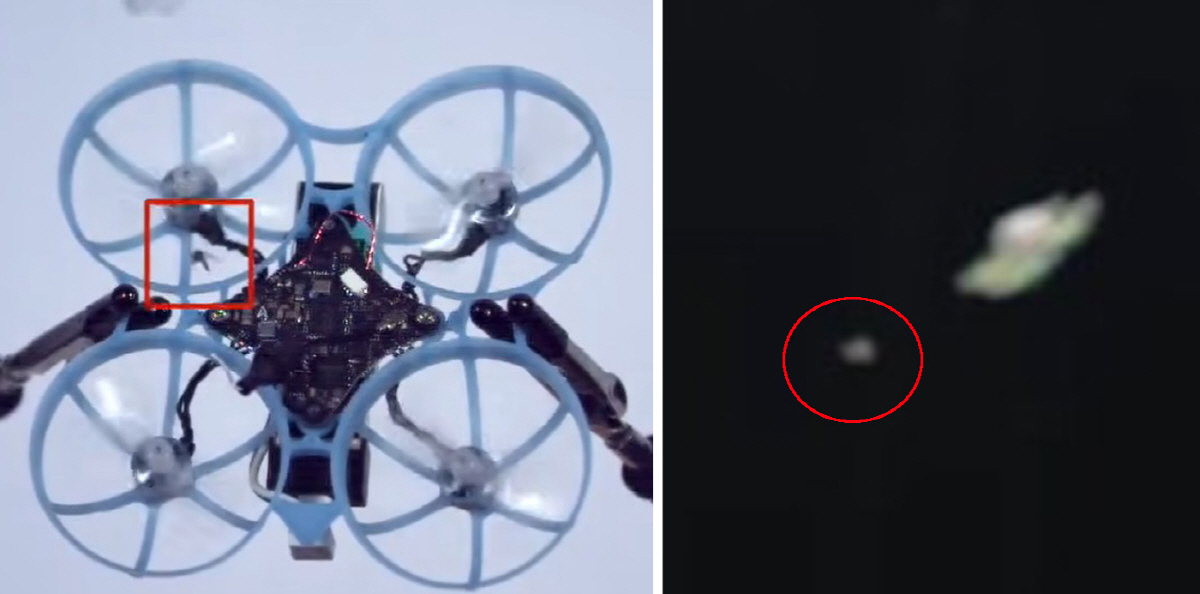
[Sportschosun reporter Jang Jong-ho] An AI-based micro drone that can catch mosquitoes and other insects directly in the air without spraying pesticides has been unveiled, drawing attention.
It is drawing interest as a possible new alternative for mosquito-borne disease control in the future.
According to foreign media outlets including Dexerto, U.S. startup Tornyol said it is developing technology that uses AI-powered micro drones to automatically detect, track and eliminate mosquitoes. The company aims to cut mosquito control costs to as little as one-hundredth of the current chemical pesticide method.
Co-founder Alex Toussaint revealed the company's first "air-to-air kill" test video on social media on the 14th.
The video shows a micro drone in a test area surrounded by black barriers automatically tracking a flying moth before colliding with it in midair and capturing it. The test involved a moth rather than a mosquito and was conducted in a limited environment, but it is seen as an important milestone because it demonstrated the autonomous identification and interception of a flying insect.
The drone Tornyol is developing weighs just about 40 grams. It detects nearby insects using microphones and ultrasonic sensors similar to those used in smartphones, along with proprietary AI signal-processing and control software.
The system works by emitting ultrasound and analyzing the reflected signals through multiple microphones. In particular, it analyzes the unique Doppler acoustic characteristics generated by a mosquito's wingbeats to distinguish them from other insects. The company also aims to identify mosquito species and even distinguish between males and females in the future.
The development team is also envisioning a swarm of multiple drones working together to patrol large areas. The company expects that just 10 drones could effectively eliminate mosquitoes in an urban area of about 1 square kilometer, or 302,500 pyeong. However, this performance has not yet been verified in real outdoor environments, and the project remains in the research and development stage.
Experts say that if the technology is commercialized, it could reduce pesticide use and offer a new tool for controlling mosquito-borne diseases such as malaria and dengue fever. However, they also note that further verification is needed regarding accuracy, safety and ecological impact in real urban environments.
Jang Jong-ho, bellho@sportschosun.com
This article has been translated by GripLabs Mingo AI.