

[Sportschosun Reporter Jang Jong-ho] Severance Hospital said it had successfully performed a robotic Kasai procedure on a newborn just 14 days after birth.
Biliary atresia is a rare and intractable disease that affects about one in 10,000 newborns. It occurs when bile, which helps digest fat, cannot flow into the small intestine and instead builds up in the liver. Severance Hospital performed the Kasai procedure, which connects the liver hilum directly to the small intestine in place of the blocked bile ducts, on a baby weighing only 3.14 kg.
This case is the first reported instance of a robotic Kasai procedure in a child with biliary atresia weighing less than 4 kg. It is also the youngest and lightest patient ever reported in the medical literature.
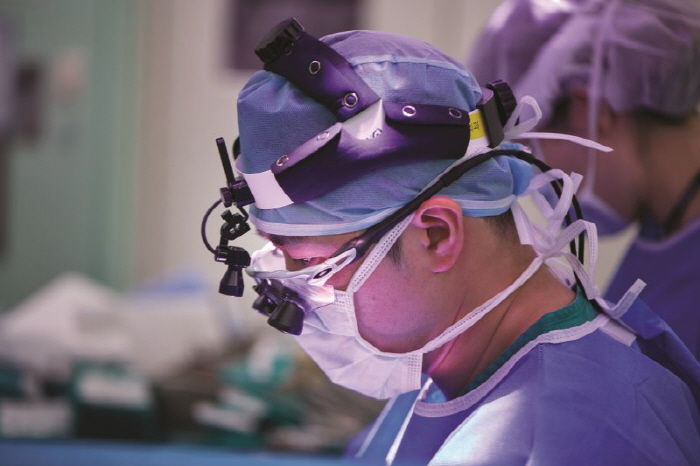
On the 4th of this month, Professor In Kyung of Severance Hospital's Pediatric Surgery department performed the robotic Kasai procedure on a 14-day-old baby girl born with biliary atresia. The operation took a total of 5 hours and 8 minutes. It was stable, with almost no bleeding and no need for a blood transfusion. The baby girl recovered well without complications and was discharged on the 30th of last month.
During pregnancy, the baby's mother was told through prenatal ultrasound that there was a cystic lesion in the lower part of the fetus's liver. If a cystic lesion, which is a fluid-filled sac, is present, there may be an abnormality in the bile ducts, so further testing is required.
The mother immediately received care from Professor Kwon Ja-young of Severance Hospital's High-Risk Maternal-Fetal Integrated Care Center in obstetrics and gynecology. Professor Eun Ho-seon of Neonatology and the Pediatric Surgery team also continued to provide care before delivery, establishing a treatment plan so the baby could undergo surgery safely after birth.
Right after birth, the baby was transferred to the neonatal intensive care unit for detailed examinations. On the second day after birth, an abdominal ultrasound again confirmed a cystic lesion in the lower liver. Additional tests led the medical team to conclude that biliary atresia was highly likely, and they decided to proceed with early surgery.
If biliary atresia is not treated quickly, bile can accumulate and cause liver damage, which can easily lead to cirrhosis and liver failure. In such cases, the standard treatment is the Kasai procedure, which removes the blocked bile ducts and directly connects the liver hilum to the small intestine to allow bile to flow. The procedure is named after the Japanese doctor who developed it.
The robotic Kasai procedure performed by Severance Hospital required a high level of surgical skill because the child's body was very small, making it necessary to remove and reconnect organs within a narrow abdominal cavity. To carry out the operation, Severance Hospital brought together specialists from Pediatric Surgery, Neonatology, obstetrics and gynecology, Anesthesiology and Pain Medicine, the Operating Room Nursing Team, and the Robotic Endoscopic Surgery Center.
Professor In Kyung, who led the surgery, said, "Because biliary atresia can cause progressive liver damage if treatment is delayed, early diagnosis and early surgery are more important than anything else. In this case, treatment could begin at a very early stage thanks to the seamless coordination from prenatal diagnosis and immediate postnatal evaluation to neonatal intensive care and pediatric surgery." She added, "Performing a robotic Kasai procedure on a newborn in the 3 kg range is a very difficult challenge in terms of surgical space and instrument control, but we were able to complete the operation safely thanks to the precision of robotic surgery and Severance Hospital's multidisciplinary cooperation."
Jang Jong-ho, bellho@sportschosun.com