


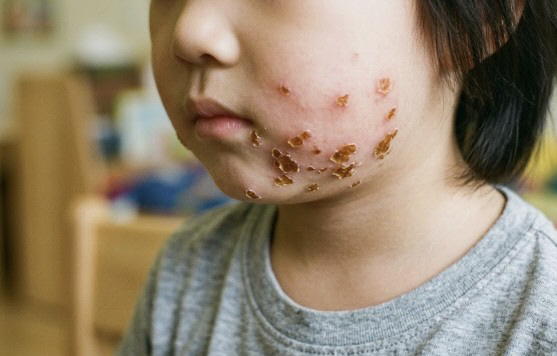
[Sportschosun Reporter Jang Jong-ho] As summer heat and high humidity drive up bacterial skin infections, the number of infants and children with impetigo, a common skin disease, is also rising. The condition can spread easily among children in group settings such as daycare centers and kindergartens, so parents are urged to be especially careful. In a Q&A with Choi Yong-jae, president of the Korea Children's Hospital Association and director of Uijeongbu Ttunttun Children's Hospital, we organized the questions parents ask most often about impetigo.
- What kind of disease is impetigo?
▶ Impetigo is a disease caused by a bacterial skin infection. It is often called a pus-crust infection. It usually develops when bacteria enter small cuts, insect bites, or scratched areas.
- Why does it occur more often in summer?
▶ In summer, people sweat more and humidity is high, creating an environment where bacteria can multiply easily. Children also spend more time outdoors, which increases the chances of insect bites and skin injuries, leading to more cases of impetigo.
- How does it start?
▶ It usually begins as a small blister or red spot. Over time, it bursts and forms a yellow or honey-colored crust. It often appears on the face, around the mouth, and on the arms and legs.
- Can scratching an insect bite cause impetigo?
▶ Yes. If a child keeps scratching an insect bite, the skin can become damaged and bacteria can enter, which may lead to impetigo.
- Is impetigo contagious?
▶ Yes. It is contagious. It can spread to other children through skin contact or through towels, bedding, and similar items.
Siblings who live together are at higher risk of infection, so it is best to use separate towels and clothes and to wash hands thoroughly.
- Should blisters or crusts be removed?
▶ No. Forcing them off can worsen skin damage and aggravate the bacterial infection. It is important not to touch or pick at them.
- Can children take a shower?
▶ Yes. Keeping the skin clean actually helps. However, it is best to avoid scrubbing too hard or rubbing the skin aggressively.
- Can they go to a swimming pool?
▶ It is best to avoid swimming pool use while a child has impetigo. The infection can spread to others, and skin irritation may worsen the symptoms.
- When can they return to daycare or kindergarten?
▶ Once the lesions improve and treatment has started, return can be considered based on the judgment of medical staff. If there is still a risk of contagion, it is better to take a break from group activities for a while.
- Is ointment enough?
▶ If the lesions are small and mild, antibiotic ointment alone may be enough. But if the lesions are widespread or have spread to multiple areas, oral antibiotics may be needed, so it is best to seek medical care.
- When should a hospital visit be made?
▶ It is advisable to visit a medical institution that can treat children if the lesions spread quickly, if there is a lot of pus, if fever develops, if pain and swelling are severe, or if there is no improvement even after applying ointment.
- Can it leave scars?
▶ In most cases, it heals without scarring if treated properly. However, severe scratching or delayed treatment can leave pigmentation changes or scars.
- How can impetigo be prevented?
▶ Make handwashing a daily habit, and if a child is bitten by an insect or gets a wound, wash it clean and care for it properly. Keeping nails short also helps prevent children from scratching their skin.
- Any final advice?
▶ Impetigo is a common skin disease, but because it is contagious, early and proper treatment is essential. If it is mistaken for a simple insect bite or pimple and left untreated, the lesions can spread quickly. If a child develops yellow crusts or blisters on the skin, do not touch or pick at them. Instead, visit a medical institution that can treat children for an accurate diagnosis and treatment. Handwashing and keeping the skin clean are the best ways to prevent it.
Reporter Jang Jong-ho bellho@sportschosun.com