

[Sportschosun reporter Jang Jong-ho] In China, a wife who tried to save her husband after he was bitten by a venomous snake ended up being poisoned herself after sucking the venom out with her mouth.
Medical experts warned that the so-called first aid method often seen on TV and in movies, in which venom is sucked out by mouth, is not effective and can also put the rescuer in danger.
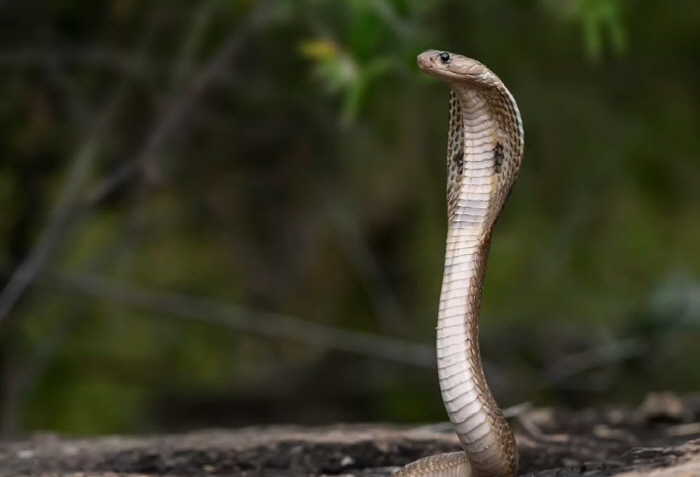
According to Jimu News and the South China Morning Post (SCMP), a man working on a farm in a village in Yunnan Province was recently bitten on the finger by a cobra. Soon afterward, his hand swelled severely, and he complained of dizziness and weakness throughout his body.
Seeing her husband's condition, his wife panicked and recalled the first aid scene she had seen on TV. She immediately tried to suck the venom out of the wound with her mouth. The man was then rushed to a hospital and received treatment.
A few hours later, the wife began showing unusual symptoms. Her mouth, tongue, face, and limbs started to tingle, and by the next day she was also suffering from extreme fatigue. Family members concluded that she too had been exposed to the venom and took her to the hospital.
Medical staff diagnosed both husband and wife with cobra venom poisoning from a species native to the area. After receiving treatment, including antivenom serum, their condition improved, and they were discharged together a few days later.
The medical team warned that sucking venom out of a snakebite wound by mouth is a classic example of incorrect first aid. They explained that the lining of the human mouth contains many capillaries, so if venom comes into contact with the mucous membrane, it can be rapidly absorbed into the rescuer's bloodstream.
They also stressed that most snakebite wounds are tiny, like pinpricks, and by that point the venom has already spread quickly into tissue beneath the skin or into the bloodstream. For that reason, sucking the wound cannot remove the venom. They added that folk remedies such as cutting the wound with a knife to drain blood, cauterizing it with fire, or applying ice directly should also be avoided because they can increase the risk of bleeding and infection.
The medical staff advised that if someone is bitten by a snake, the patient should be kept as still as possible and taken to an emergency medical facility immediately. If possible, remembering the snake's color, pattern, and head shape, or taking a photo from a safe distance to show medical staff, can help them choose the appropriate antivenom.
As the story spread, local internet users reacted by saying, "I learned that copying first aid scenes from dramas can be dangerous," and "I understand the wife's desire to save her husband, but wrong common sense can lead to a bigger accident."
Jang Jong-ho, bellho@sportschosun.com