


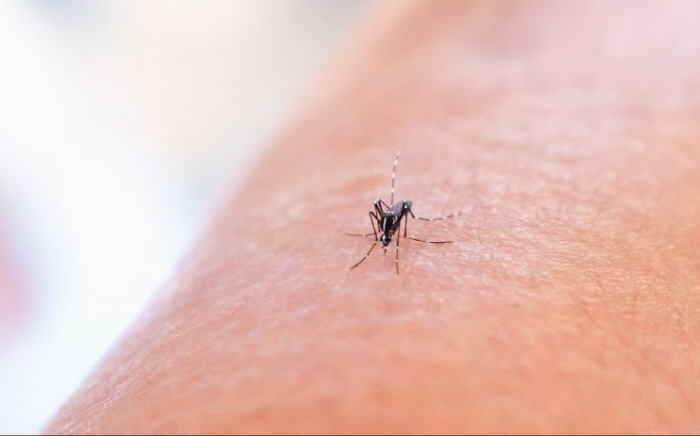
[Sportschosun, Jang Jong-ho] In summer, one of the most unwelcome guests that keeps people awake at night is the mosquito.
Even in the same space, some people seem to get bitten by mosquitoes far more often, while others are rarely targeted. Experts say this may not be a matter of chance, but the result of a combination of body type, lifestyle habits, and surrounding environment.
Against this backdrop, the British outlet Daily Mail, citing advice from medical entomologist Moicha Kristan, introduced ways to reduce mosquito bites and explained why mosquitoes prefer certain people.
Kristan first stressed that removing stagnant water around the home is the most basic preventive measure.
Water left in watering cans, buckets, bird feeders, or plant saucers creates an ideal environment for mosquitoes to lay eggs. If there is standing water in a garden or on a balcony, it is best to empty it regularly.
When using mosquito repellent, it is effective to choose products containing DEET. DEET helps block mosquitoes from detecting human body odor, lowering the chance of being bitten.
Wearing socks on summer evenings can also help. Mosquitoes are drawn to feet and ankles, where sweat and body odor are stronger, and they are especially prone to biting around the ankle area.
By contrast, mosquito-repellent bracelets and bands sold on the market are unlikely to be as effective as expected, Kristan explained. Some products serve mainly as accessories, with only limited actual mosquito-blocking power.
The effectiveness of indoor mosquito-control devices also varies by type. Liquid vaporizers containing insecticidal ingredients can form a protective barrier in the air and interfere with mosquitoes finding people. Electronic devices that use ultrasound, however, have little effect on mosquitoes, Kristan said.
Mosquitoes are most active in the evening and at night, but not all species behave that way. Some bite people at dawn, around sunset, or even during the day, so experts advise against letting your guard down in daylight.
The itching and swelling that follow a mosquito bite are an immune response to proteins in mosquito saliva. In most cases, the symptoms improve naturally within a few days, but some people may experience severe swelling. This can vary depending on an individual's immune response and the mosquito species involved.
Even if the itching is intense, scratching should be avoided. If the skin breaks, it can lead to a bacterial infection. If symptoms are severe, using an anti-itch ointment available at pharmacies may also help.
So why do mosquitoes seem to bite some people much more often than others? Experts say skin microbes, body temperature, and genetic factors may all play a role.
A variety of bacteria live on the skin, and the more fatty acids such as carboxylic acid they produce, the more likely they are to attract mosquitoes. People who exhale more carbon dioxide or have a higher body temperature are also easier targets. Mosquitoes can detect the carbon dioxide people emit from about 30 meters away, and at close range they are also known to sense body heat.
Some studies suggest that mosquito preferences may differ depending on blood type, but Kristan said the degree to which people are bitten is ultimately the result of multiple biological factors working together, including genetic traits and skin conditions.
Jang Jong-ho, bellho@sportschosun.com